How to Get Your Cat Used to Brushing: A Gradual, Low-Stress Introduction
Cat care · Brushing with choice
Some cats lean into a brush as if it were another hand offering a head scratch. Others duck away the moment they see it. If your cat resists brushing, forcing a session can make the brush feel even more threatening. A calmer approach is to let your cat investigate, choose whether to stay nearby, and learn that brief contact can be followed by something pleasant.
The goal is not to make every cat love brushing or finish a full grooming session right away. It is to build tolerance at your cat’s pace, notice early signs of discomfort, and stop before the experience becomes a struggle. This can work with kittens and adult cats, although previous experiences and comfort with handling affect how slowly you need to proceed.
Set Up for a Low-Stress Start
Pick a familiar, quiet spot away from loud activity and other pets. A stable surface may help if your cat chooses to sit there, but do not place them somewhere they cannot leave. Let the cat approach or walk away freely. Avoid cornering them, holding them down, wrapping them tightly, or using restraint to get through brushing.
Start when your cat is settled and receptive to ordinary attention, rather than when they are hiding, startled, playing intensely, or trying to sleep undisturbed. Notice where your cat usually welcomes touch. Many cats accept gentle contact around the cheeks, head, or shoulders more readily than handling around the belly, paws, or tail. Leave those more sensitive areas alone at first.
Have a few small, suitable treats nearby, or use another reward your cat likes, such as gentle petting or a brief play break. The reward should be something the cat willingly accepts; do not keep presenting food if they are too worried to eat.
A Gradual Introduction: Step by Step
1. Let the brush exist nearby
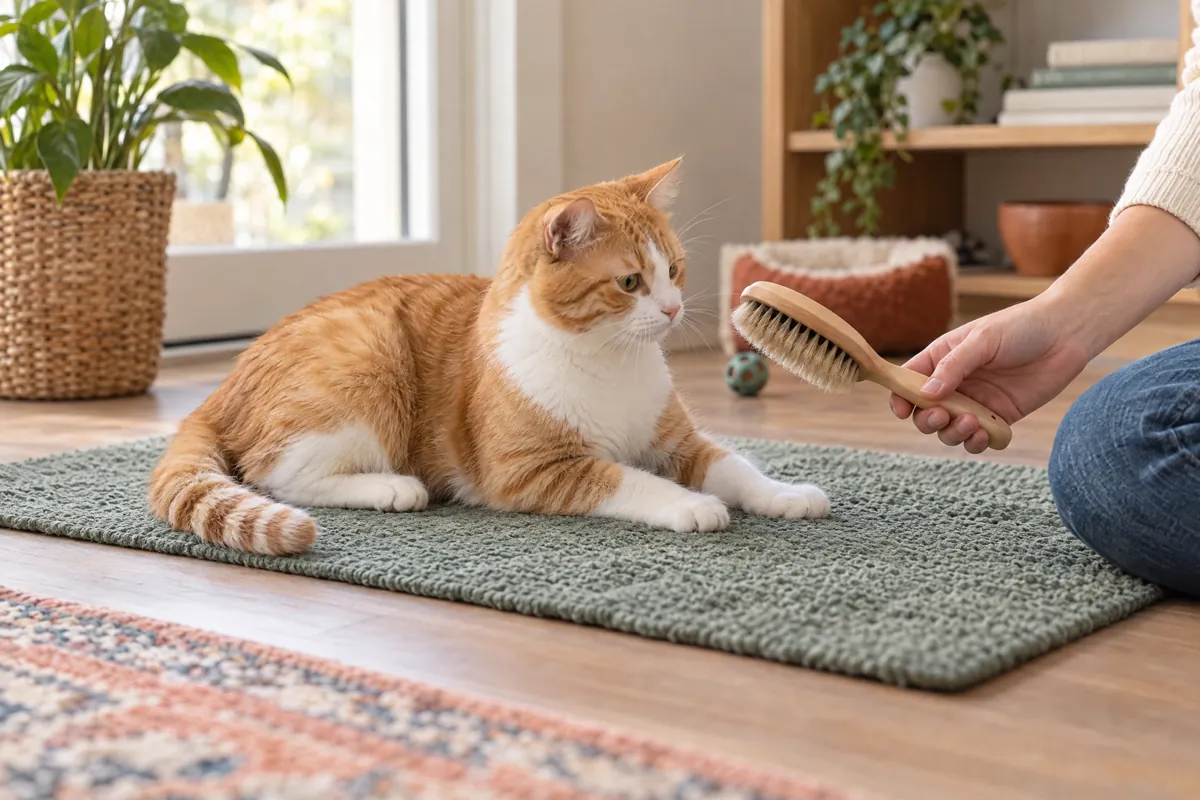
Place the brush at a comfortable distance while your cat is relaxed. Do not move it toward the cat’s face or use it to block their path. Let them look, sniff, or ignore it. Reward calm interest if they choose to investigate, then put the brush away or end the interaction before the cat becomes wary.
Repeat this easy introduction as needed. There is no fixed number of sessions: some cats approach quickly, while others need more time to feel comfortable around a new object.
2. Connect the brush with something pleasant
When your cat is comfortable with the brush nearby, hold it still while offering a small treat or another preferred reward. Keep your hand relaxed and let the cat decide whether to approach. Do not chase them with the brush, touch them unexpectedly, or insist that they sniff it.
If the cat moves away, let them. That is useful information about their current comfort level, not disobedience. At the next opportunity, make the experience easier by increasing the distance or simply placing the brush down nearby.
3. Try a brief touch before a brush stroke
Once your cat is relaxed around the brush, let them see it move slowly near them without making contact. If they remain comfortable, briefly touch the brush to an area where they already enjoy being petted. Follow their response rather than moving straight into a full stroke.
Pair voluntary calm contact with a small reward. If the cat leans away, stiffens, turns their head sharply toward the brush, or tries to leave, stop. Do not keep touching them to see whether they will tolerate it.
4. Add one or a few light strokes
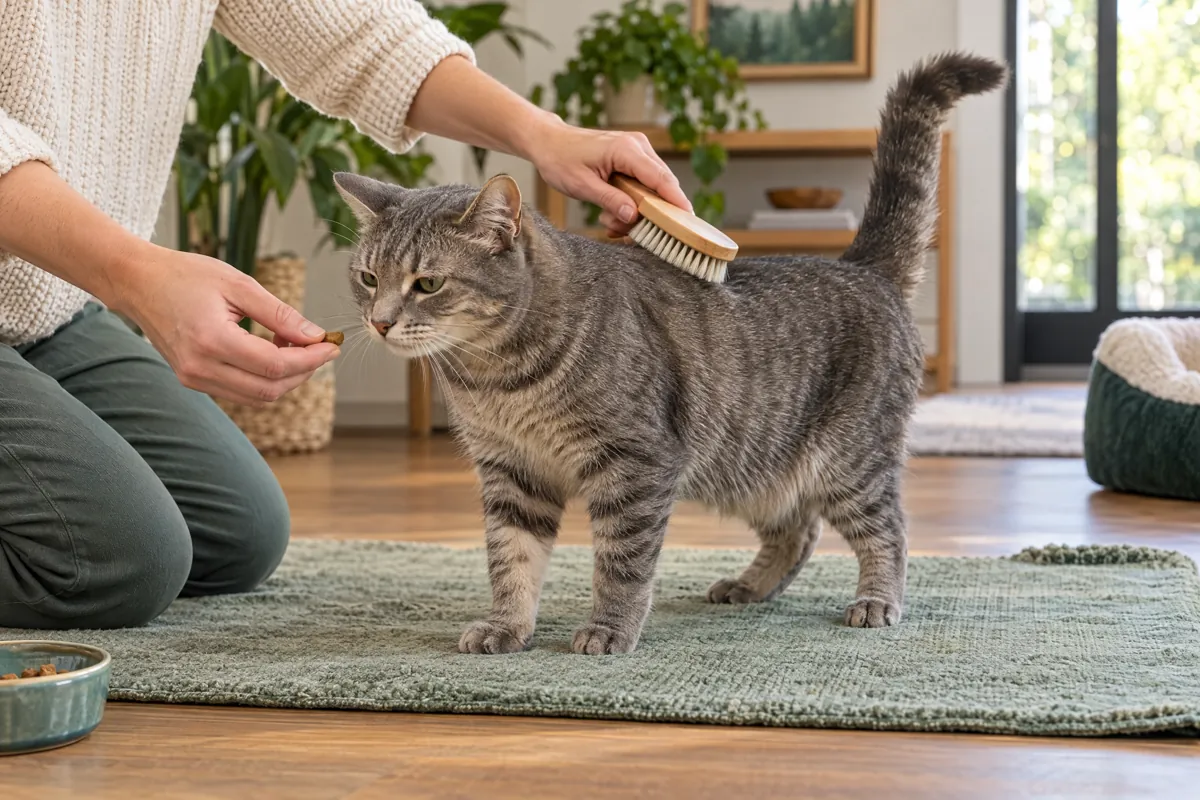
When your cat accepts the brush touching them, try one gentle stroke in the direction the coat lies, in an area they comfortably allow you to handle. Keep the pressure light and avoid dragging the brush across the skin. Pause and observe. If your cat stays relaxed, you may offer another stroke; if not, finish there.
Early progress may mean only a single stroke. End while the cat is still comfortable, offer a reward if they want it, and let them go. International Cat Care recommends gradual tolerance-building, an escape option, watching the cat’s signals, and ending on a positive note. VCA’s kitten grooming guidance also emphasizes gentle handling, rewards, breaks, and allowing the kitten to set the pace.
5. Expand only when the current step feels easy
Over time, if your cat continues to stay relaxed, you can gradually brush a little more of the areas they accept. Change one thing at a time: perhaps slightly more contact, a different comfortable area, or a few more strokes. Do not treat progress as a deadline, and do not assume a kitten will always be comfortable simply because they tolerated brushing when young. Adult cats can learn too, but previous experiences may mean they need a gentler start.
Read Your Cat’s Body Language
Cats often signal discomfort before they growl, hiss, or swat. Pause at early signs instead of waiting for a stronger reaction. Watch for:
Tail swishing or flicking that begins during brushing.
Skin twitching, a suddenly tense body, or freezing in place.
Ears turning back or flattening.
Turning quickly toward the brush, moving away, growling, or hissing.
A relaxed cat may remain loose-bodied, choose to stay nearby, and return for more contact. These are observations, not guarantees that the cat wants a longer session. Check in after each brief contact and allow the cat to leave.
Troubleshooting Common Problems
My cat sniffs the brush but walks away
Let them. Sniffing and leaving is still a low-pressure interaction. Keep the brush at a comfortable distance and reward voluntary approaches rather than trying to turn curiosity into immediate brushing.
My cat accepts petting but flinches at the brush
Return to having the brush visible without touching the cat. Then introduce slow movement nearby before attempting contact. The sensation of a tool can feel different from a hand, so being comfortable with petting does not automatically mean the cat is ready to be brushed.
My cat tolerates one stroke, then swishes their tail
Stop after that stroke and let the cat leave or settle. Next time, aim for an easier experience—possibly just the brush nearby or a brief touch. Do not keep going because the cat accepted the first stroke.
My cat hisses, swats, or tries to escape
End the attempt without scolding or punishment. Give the cat space and restart later at an easier step. If grooming cannot be done safely, ask a veterinarian or professional groomer for help rather than restraining the cat to finish.
When Brushing Resistance May Be More Than Training
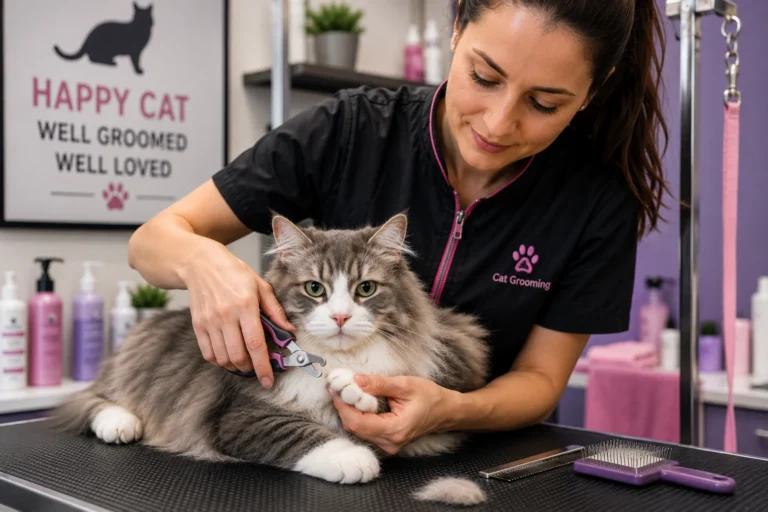
A gradual introduction is useful when a cat is unsure about the brush, but it is not a substitute for checking discomfort or health problems. If a cat that previously accepted brushing suddenly resists, reacts painfully to touch, has irritated skin or unusual hair loss, or cannot groom normally, contact a veterinarian. Tight mats can also be painful and may need professional removal. Do not try to cut mats out with scissors, which can injure skin hidden beneath the fur.
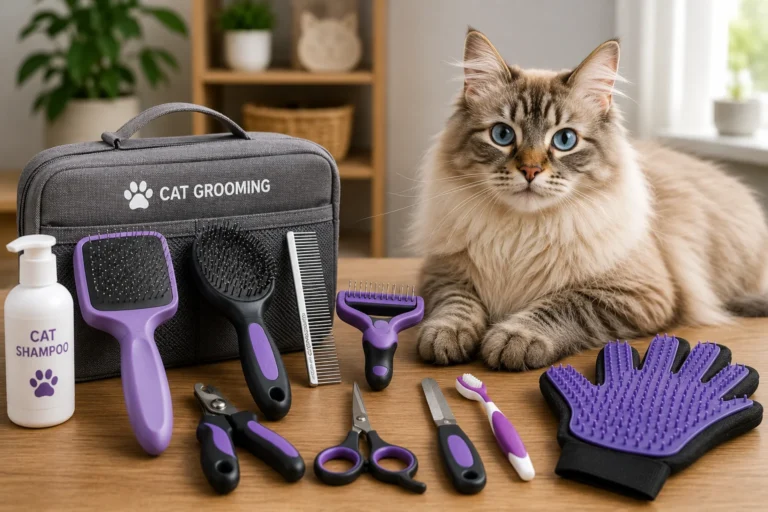
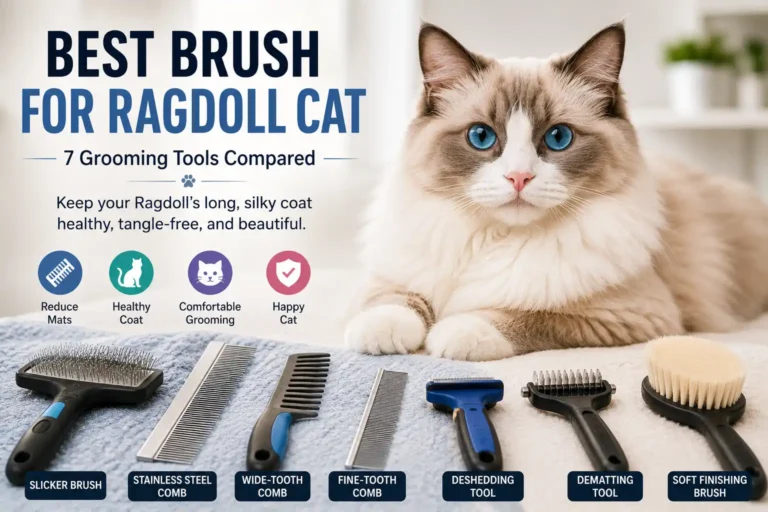
If you need help choosing appropriate equipment, see our guide to cat grooming tools. If brushing is unsafe or your cat’s coat needs more help than you can comfortably provide, explore cat grooming services. The ASPCA recommends professional grooming or veterinary help when a cat’s resistance creates a risk of injury.
Frequently Asked Questions
Can an adult cat learn to accept brushing?
Yes, you can introduce brushing gradually to an adult cat. Begin at a distance the cat can tolerate and progress only when their response remains relaxed. Their pace may differ from that of a kitten.
Should I hold my cat still so I can finish?
No. Do not force restraint or block the cat’s escape to complete a session. Letting the cat leave helps keep the experience low-pressure and reduces the risk of a struggle.
What if my cat never enjoys brushing?
Aim for safe, manageable care rather than insisting that every cat enjoy the process. If the cat remains highly distressed or grooming could injure either of you, consult your veterinarian or a professional groomer.
How long should each brushing session be?
There is no universal session length. Start with an interaction your cat can comfortably handle—even if that means only noticing the brush or accepting one stroke—and stop before stress builds.
Sources
International Cat Care, Grooming Your Cat.
VCA Animal Hospitals, How to Groom a Kitten.
ASPCA, Cat Grooming Tips.
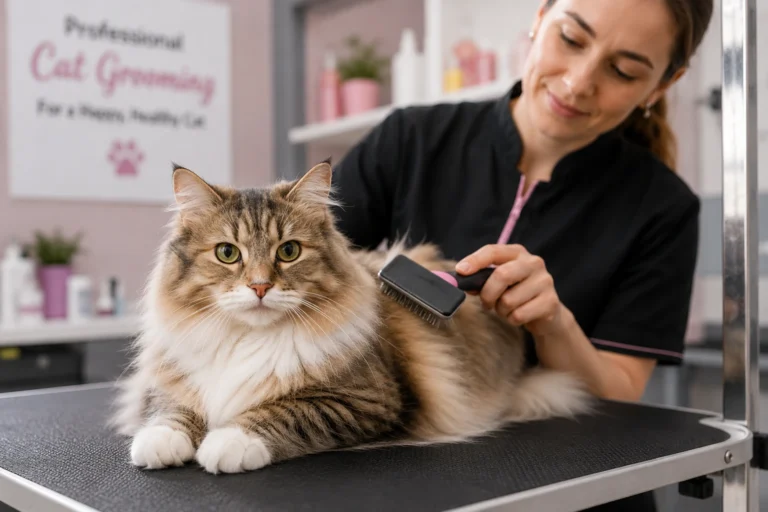
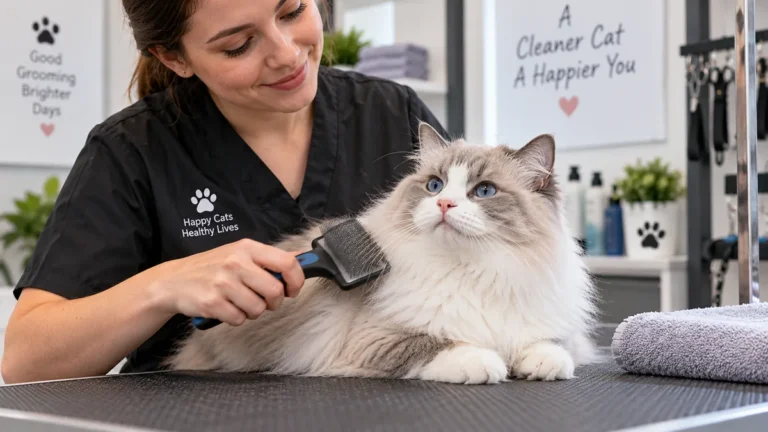
General grooming education, not veterinary diagnosis or treatment. Ask your veterinarian about pain, skin changes, or a coat you cannot care for safely. G1 and G2 are original AI-generated editorial illustrations, not photographs of a tested grooming session.