Cat Grooming Tools: What You Actually Need for Your Cat
The best cat grooming tools depend on your cat’s coat length, shedding level, grooming tolerance, and specific needs. For most cats, a suitable brush or comb and cat-sized nail clippers are the starting essentials; long-haired or heavily shedding cats may also benefit from a metal comb, deshedding tool, or carefully selected dematting tool.
The goal is not to buy the biggest grooming kit. It is to choose the right tools for your cat so grooming is effective, comfortable, and safe.
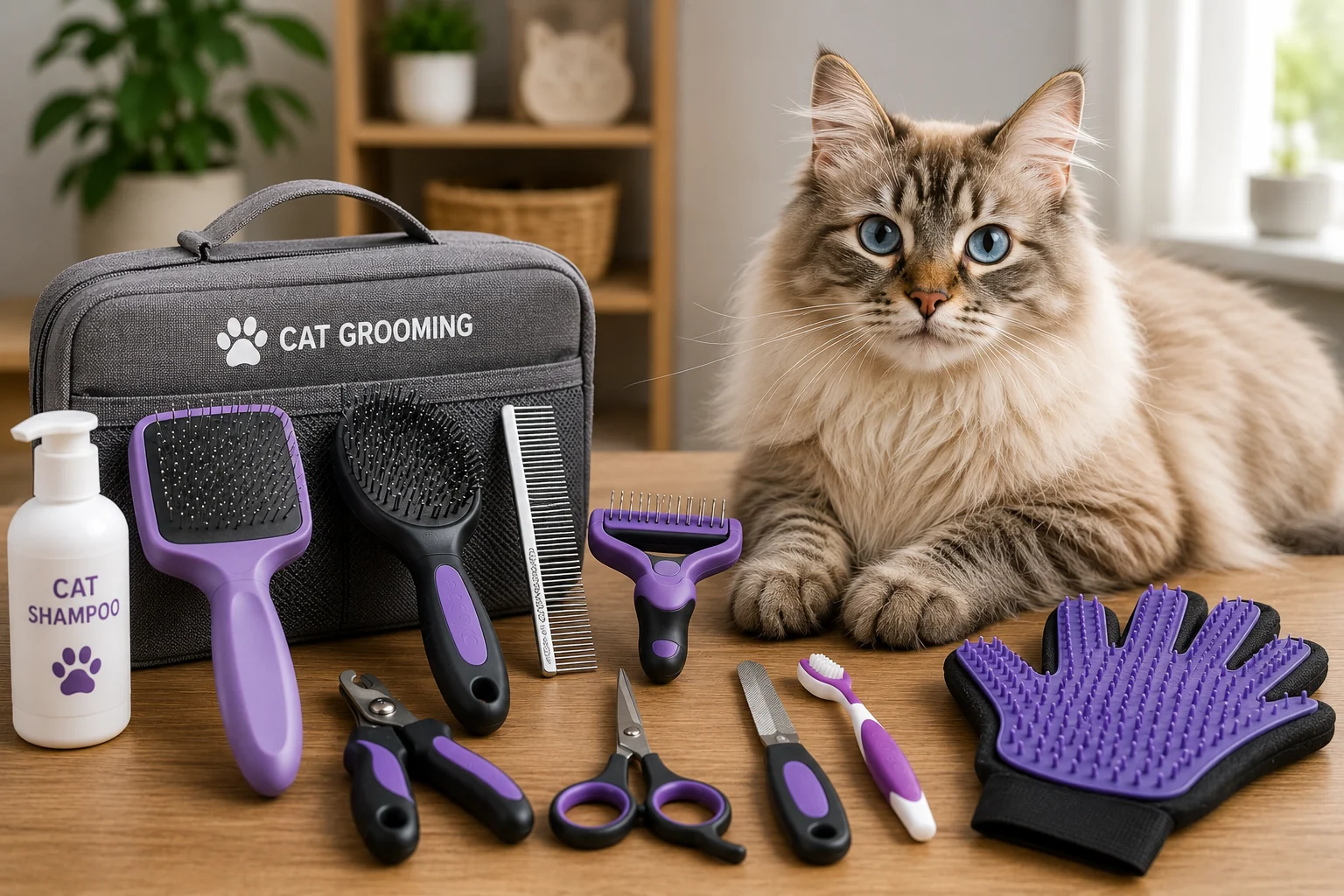
Which Cat Grooming Tools Do You Really Need?
Most cat owners do not need a dozen grooming products. A practical setup can be built around a few tools that match the cat’s coat and routine.
| Grooming tool | Best for | Priority |
|---|---|---|
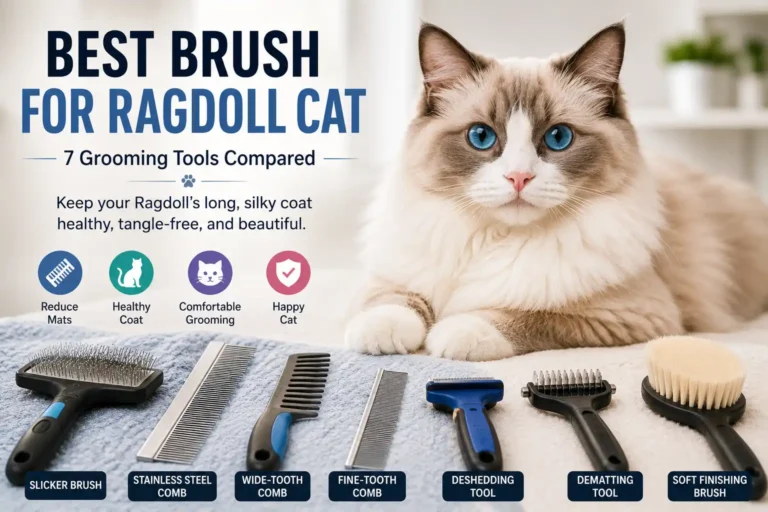
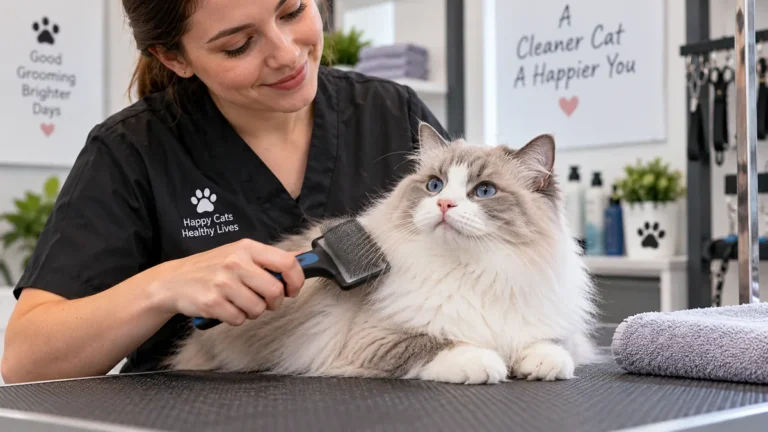
| Slicker brush | Loose fur and light tangles | High |
| Bristle or rubber brush | Short coats and gentle brushing | High |
| Metal comb | Medium and long coats | High |
| Deshedding tool | Heavy shedders | Coat-dependent |
| Dematting tool | Small, manageable tangles | Occasional |
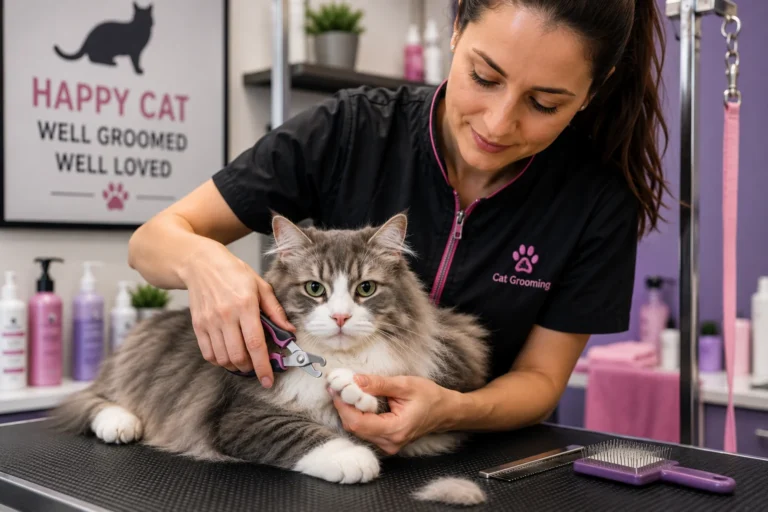
| Cat nail clippers | Routine nail care | High |
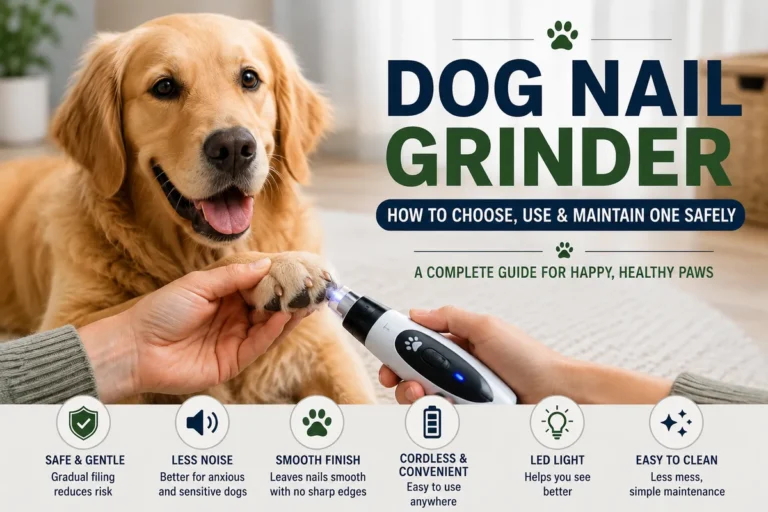
| Nail grinder | Owners who prefer gradual filing | Optional |
| Grooming glove | Cats that dislike conventional brushes | Optional |
| Cat toothbrush | Dental care | Useful |
| Grooming wipes | Spot cleaning | Optional |
Veterinary guidance supports choosing brushes according to coat type. VCA notes that stiff bristle brushes can work well for short coats, while longer-toothed combs or brushes are more useful for medium- and long-haired cats.
Best Cat Grooming Tools by Coat Type
The biggest buying mistake is choosing a tool because it is popular rather than because it suits the cat.
Short-Haired Cats
Short-haired cats usually need less equipment than long-haired breeds. A gentle brush or grooming glove can help remove loose hair, while a small comb can be useful for checking the coat.
For a short-haired indoor cat, start with one comfortable brush rather than purchasing a complete multi-tool kit.
Medium- and Long-Haired Cats
Longer coats usually require more consistent maintenance. A metal comb can help identify small tangles, while a suitable brush can remove loose hair and help keep the coat manageable.
VCA specifically recommends longer-toothed metal combs or brushes for medium- and long-haired cats and emphasizes gentle handling rather than pulling through tangles.
Cats That Shed Heavily
A deshedding tool can be useful when a cat produces substantial loose undercoat, but more aggressive is not necessarily better.
Current 2026 product coverage shows that deshedding tools remain a major part of the cat-grooming market, with current reviews comparing them by coat type and use case.
The important question is whether the tool removes loose hair without causing discomfort or excessive pulling.
Slicker Brush vs. Metal Comb: Which Should You Buy?
These tools do different jobs.
A slicker brush is useful for working through loose hair and some minor tangles. A metal comb is particularly helpful for checking whether a long or dense coat is becoming tangled close to the skin.
For a long-haired cat, having both can make sense:
- Brush gently to loosen surface debris and loose hair.
- Use the comb to check deeper through the coat.
- Stop if you encounter resistance instead of repeatedly pulling.
- Seek professional help when a mat is dense or firmly attached.
The current market reflects this distinction: 2026 cat-grooming guides commonly compare slicker brushes, pin brushes, bristle brushes, combs, and dematting tools by coat type rather than treating one product as universally best.
Are Cat Deshedding Tools Worth It?
They can be—but only when your cat actually needs one.
If your cat sheds heavily, a purpose-built deshedding tool may help remove loose undercoat before it reaches your furniture. However, these tools should not replace normal brushing, and aggressive use can irritate the skin or create an unpleasant grooming experience.
If your cat has a thin coat, sensitive skin, or strongly resists grooming, a softer brush or grooming glove may be a better starting point.
Current 2026 reviews also emphasize an important buying consideration: whether the cat will tolerate the tool can matter as much as how effectively it removes fur.
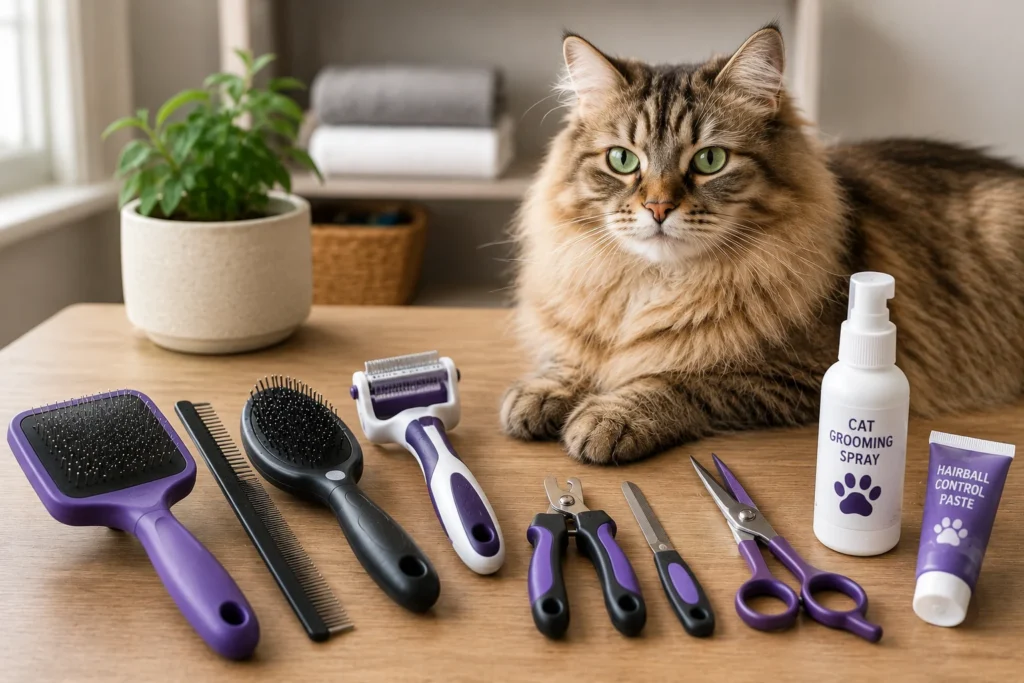
What Nail Tools Should You Buy for a Cat?
Nail care requires cat-appropriate equipment.
A small pair of cat nail clippers is usually the simplest starting point. Nail grinders are another option for owners who prefer to remove small amounts gradually, although the sound and vibration may make some cats uncomfortable.
When choosing nail tools, look for:
- A size appropriate for cat nails
- Comfortable, non-slip handling
- Sharp, clean cutting surfaces
- Easy visibility of the nail
- A design that allows controlled trimming
Current retail data shows dedicated cat nail clippers remain a common grooming purchase, with cat-specific models emphasizing small sizing, grip, ease of use, and safety.
If you are inexperienced with nail trimming, professional instruction from a veterinarian or qualified groomer can be more valuable than simply buying a more expensive tool.
Do Cats Need a Grooming Glove?
A grooming glove can be a useful option for cats that dislike conventional brushes.
The appeal is simple: the tool can feel more like ordinary petting than brushing. Current 2026 testing has found silicone grooming gloves particularly useful for some cats that resist traditional brushes, although results naturally vary between individual cats.
A glove should not automatically replace a comb or brush for a long-haired cat. Think of it as an additional option for gentle surface grooming and loose-fur removal.
What About Dematting Tools?
Use extra caution here.
Small, loose tangles may sometimes be addressed with gentle brushing or combing. A tight mat close to the skin is different.
VCA recommends professional guidance for difficult mats and stresses avoiding excessive pulling.
Do not buy a sharp dematting tool and assume it makes severe mats safe to remove yourself. Cats can move suddenly, and their skin can be damaged easily.
If a mat is large, tight, painful, or associated with irritated skin, a professional groomer or veterinarian is the safer choice.
Cat Grooming Tools for Dental Care
Coat care is only one part of grooming.
A cat-specific toothbrush can be useful for maintaining dental hygiene, and products designed for a cat’s small mouth are preferable to improvised human dental equipment. PetMD’s 2026 veterinary-reviewed guidance highlights small brush heads, soft bristles, and comfortable handling as useful characteristics when selecting cat dental tools.
How to Choose Quality Cat Grooming Tools
Price alone does not tell you whether a grooming tool is a good purchase.
Before buying, consider:
Coat compatibility: Is the tool actually designed for your cat’s coat?
Comfort: Will the bristles, teeth, or blades pull unnecessarily?
Control: Can you hold and operate the tool accurately?
Durability: Is it made for repeated use?
Cleaning: Can loose fur and residue be removed easily?
Noise: If it is electric, will your cat tolerate the sound?
Actual need: Does your cat need this tool, or does the product simply look impressive?
Chewy’s current 2026 cat-grooming selection similarly evaluates tools around factors such as comfort, durability, effectiveness, versatility, and ease of use.
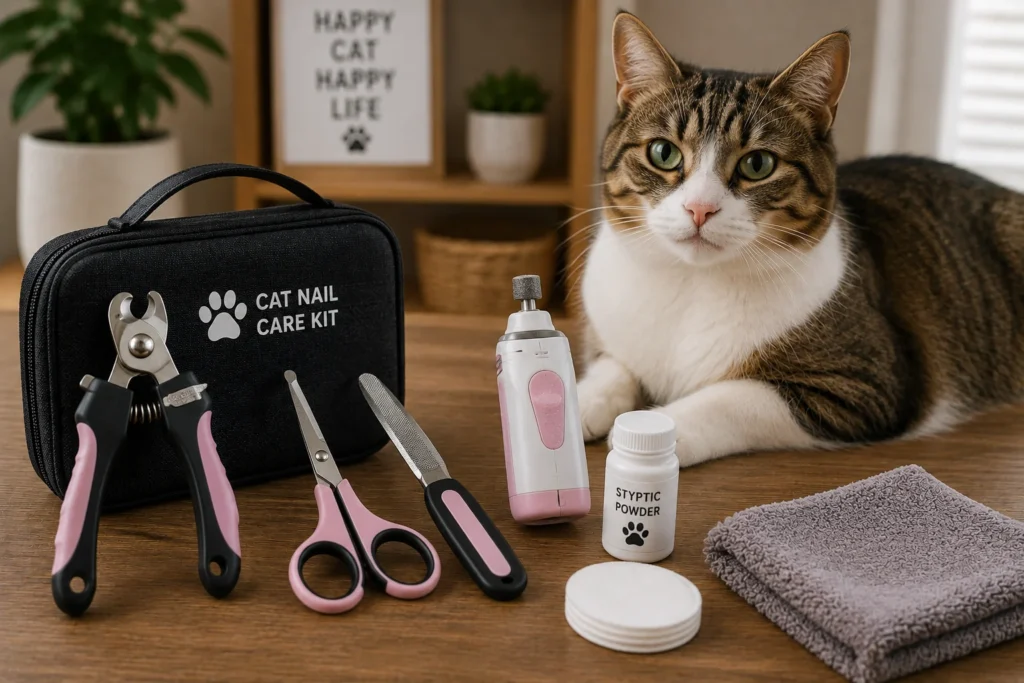
Do You Need a Complete Cat Grooming Kit?
Usually, no.
Large kits can look like better value because they contain many items, but several pieces may never be used. A smaller collection of well-chosen tools is often more practical.
For a short-haired cat, a reasonable starting setup might be:
- One suitable brush
- Cat nail clippers
- A basic comb
- Cat dental-care equipment if you are establishing a dental routine
For a long-haired cat, you may add:
- Long-tooth metal comb
- Suitable slicker or pin brush
- Coat-specific deshedding equipment when appropriate
- A carefully selected dematting tool for minor maintenance
Build the kit around your cat’s actual grooming requirements, not the number of accessories included in a package.
When Should You Stop Home Grooming?
Home grooming should remain calm and manageable.
Stop and reconsider professional help if your cat:
- Becomes extremely distressed
- Tries repeatedly to bite or scratch
- Has severe matting
- Shows pain when a particular area is touched
- Has irritated, wounded, or abnormal skin
- Develops unusual hair loss
- Cannot tolerate nail trimming safely
Grooming can reveal problems that are not simply cosmetic. VCA recommends veterinary guidance when coat or skin concerns are beyond routine grooming.
If your cat consistently struggles with grooming, professional help may be a better investment than buying more equipment.
Frequently Asked Questions
What are the best cat grooming tools for beginners?
Start with a brush appropriate for your cat’s coat, a basic comb, and cat-sized nail clippers. Add specialized tools only when your cat’s coat or grooming routine requires them.
What brush is best for a long-haired cat?
A long-toothed comb and suitable brush are often more useful together than relying on one tool. The exact choice depends on coat density and whether the cat develops tangles.
Are grooming gloves good for cats?
They can be useful for cats that dislike traditional brushes, especially for gentle loose-fur removal. They may not provide enough control for every long-haired coat.
Can I use dog grooming tools on my cat?
Some tools are designed for both dogs and cats, but do not assume that every dog grooming tool is suitable for a cat. Size, blade design, pressure, and coat type matter.
How often should I use cat grooming tools?
There is no single schedule for every cat. Short-haired cats may need less brushing, while long-haired cats generally require more frequent coat maintenance. Adjust the routine according to coat condition and your cat’s tolerance.
Final Takeaway
The best cat grooming tools are the ones that match your cat—not the ones with the most attachments. Start with the essentials, choose equipment according to coat type, and prioritize comfort and control over marketing claims.
For many cats, a quality brush or comb and cat-sized nail clippers are enough to establish a useful home routine. Long-haired or heavy-shedding cats may need additional tools, while severe mats, painful skin conditions, or difficult grooming situations are better handled by a professional.
If you’re deciding whether professional care is right for your cat, our guide to cat grooming services explains what a professional appointment can include, while cat grooming near me can help you evaluate the local-service side of the decision.