Pet Grooming Tools for Dogs: What You Actually Need
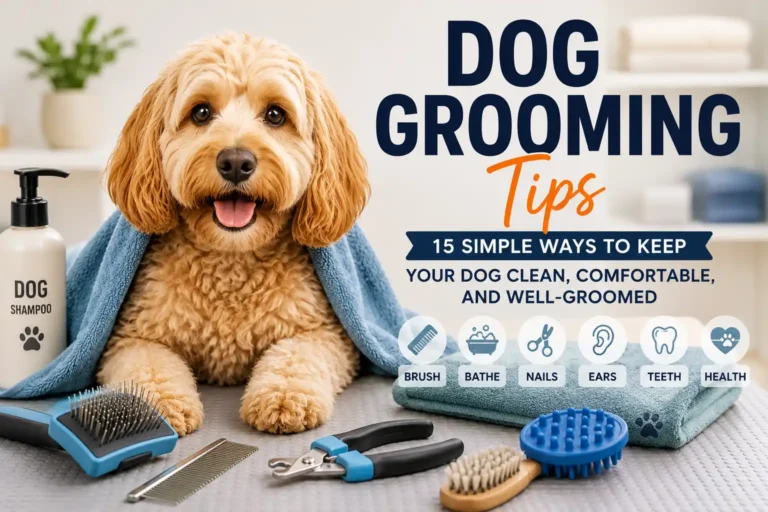
The best pet grooming tools for dogs depend on your dog’s coat, size, grooming needs, and comfort with handling. For most owners, the essentials include a suitable brush or comb, dog nail clippers or a grinder, dog-safe shampoo, a towel or dryer, and basic dental-care tools; long-haired or heavily shedding dogs may need additional equipment.
Choosing the right tools matters more than buying the biggest grooming kit. The wrong brush can be ineffective, an unsuitable clipper can create safety problems, and human grooming products should not be substituted for products formulated for dogs.

Which Pet Grooming Tools for Dogs Do You Actually Need?
You do not need every grooming product available. Start with the tools that match your dog’s coat and routine.
| Tool | Best For | Essential? |
|---|---|---|
| Slicker brush | Removing loose hair and some tangles | Often |
| Bristle brush | Short or smooth coats | Often |
| Pin brush | Long or flowing coats | Often |
| Metal comb | Checking and working through tangles | Useful |
| Dog nail clippers | Routine nail trimming | Yes |
| Dog nail grinder | Gradual nail shortening | Optional |
| Dog shampoo | Bathing | Yes |
| Dog toothbrush + toothpaste | Dental care | Yes |
| Towels | Drying | Yes |
| Dog dryer | Faster coat drying | Optional |
| Grooming clippers | Coat trimming | Coat-dependent |
| Styptic powder | Nail-trimming emergency kit | Recommended |
The right combination depends heavily on coat texture and length. AKC specifically recommends choosing brushes according to the dog’s coat rather than using one brush for every breed.
Best Dog Brushes for Different Coat Types
A brush is usually the first grooming tool most dog owners should buy, but one brush does not work equally well for every dog.
Short or Smooth Coats
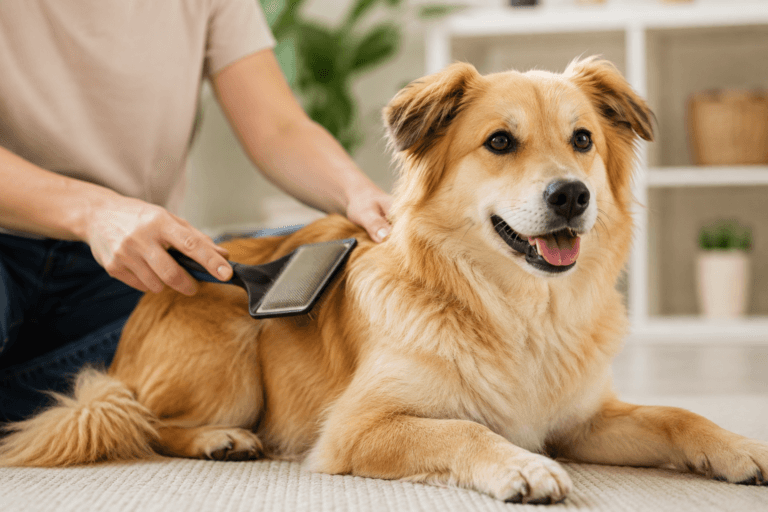
Short-coated dogs often do well with a bristle brush or rubber grooming brush. These tools can help loosen dirt and remove dead hair without unnecessarily pulling on the coat.
A grooming mitt can also be useful for dogs that dislike traditional brushes.
Long or Thick Coats
Long-haired dogs generally require more regular maintenance. A pin brush, slicker brush, and metal comb may work together better than relying on one tool.
The brush should reach through the coat appropriately without aggressively scraping the skin.
Dogs Prone to Mats
A slicker brush and suitable comb can help with routine maintenance, but owners should be cautious with dense mats.
Never use household scissors to cut a tight mat close to your dog’s skin. AKC warns that attempting to remove mats yourself can cause serious injury, particularly when a dog moves suddenly. Severe matting may be better handled by a professional groomer or veterinarian.
Dog Nail Clippers vs. Nail Grinders
Nail care is another essential part of your home grooming setup.

You can choose between:
- Scissor-style nail clippers
- Guillotine-style nail clippers
- Dog-specific nail grinders
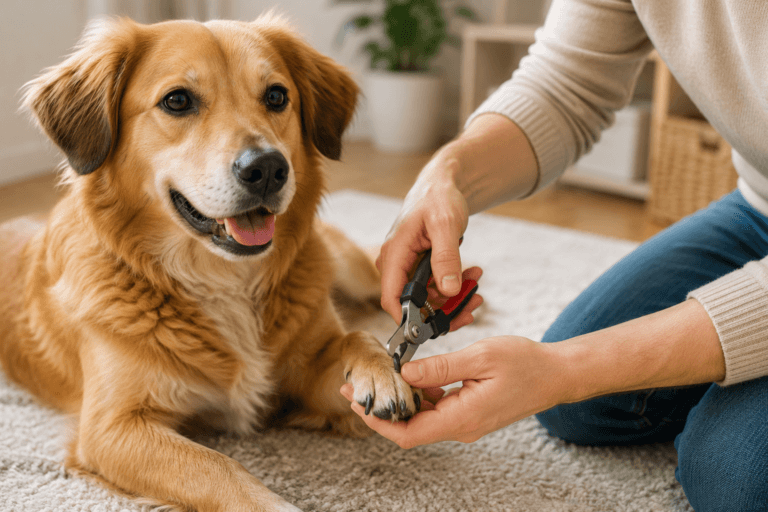
Clippers are usually quicker, while grinders allow you to remove small amounts of nail gradually. Some dogs tolerate one method much better than the other.
If your dog has dark nails or you are inexperienced with nail trimming, getting hands-on guidance from a veterinarian or professional groomer can be worthwhile. Cutting into the quick can cause pain and bleeding. Keeping styptic powder available is also a sensible precaution.
Dog Shampoo and Bathing Supplies
Your grooming kit should also include a shampoo specifically formulated for dogs.
Do not substitute human shampoo, conditioner, or other human hygiene products simply because they are already in your bathroom. AKC recommends veterinarian-approved hygiene products designed for dogs.
A practical bathing setup can include:
- Dog-safe shampoo
- Towels
- Washcloth
- Non-slip bath surface
- Detachable shower sprayer
- Dog-friendly conditioner when appropriate
- Dog dryer if your dog’s coat requires thorough drying
Always consider your dog’s coat and skin needs rather than buying products based solely on fragrance or marketing claims.

Do You Need Dog Grooming Clippers?
Not every dog needs clippers at home.
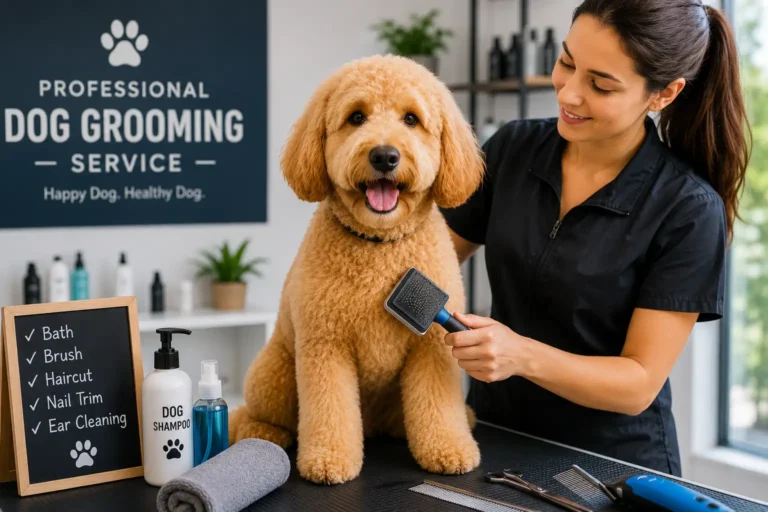
Clippers become more relevant for owners whose dogs have coats that require regular trimming. Poodles and other continuously growing or high-maintenance coats may require specialized grooming, while many short-coated dogs need little or no clipping.
If you are inexperienced, avoid attempting complicated haircuts around the eyes, ears, paws, or other sensitive areas. Professional groomers have the training and equipment to handle these areas more safely.
For many owners, buying quality brushes and basic nail-care equipment first makes more sense than immediately investing in professional-grade clippers.
Dog Grooming Tools for Shedding
If shedding is your main concern, choose your equipment based on the type of coat rather than simply buying the tool advertised as a “deshedding” solution.
A suitable brush can help remove loose hair before it ends up on furniture and floors. Dogs with heavy or seasonal shedding may require more frequent brushing.
However, aggressive brushing is not automatically better. Use the appropriate tool gently and stop if your dog shows discomfort.
Regular brushing can also give you an opportunity to notice mats, skin abnormalities, cuts, or other changes that deserve attention.
Dog Dental Grooming Tools You Should Not Ignore
Grooming is not just about the coat.
A basic home kit can include:
- Dog toothbrush
- Dog-specific toothpaste
- Finger brush if appropriate
- Dental-care products recommended for your dog
AKC recommends regular tooth brushing and notes that daily brushing is best, with brushing several times per week as another practical target. Human toothpaste should not be used because some formulations contain ingredients that are dangerous to dogs.
Dental care is therefore worth treating as part of your dog’s overall grooming routine rather than an optional cosmetic extra.
What Should Be in a Beginner Dog Grooming Kit?
If you are building your first kit, keep it simple.
A practical starter setup could include:
1. Coat brush — Choose it according to your dog’s coat.
2. Metal comb — Useful for checking areas where tangles develop.
3. Dog nail clippers or grinder — Select the method you can use confidently and safely.
4. Styptic powder — Keep it available when trimming nails.
5. Dog-safe shampoo — Choose a product formulated specifically for canine use.
6. Towels — Essential after bathing.
7. Dog toothbrush and toothpaste — For regular dental maintenance.
You can add clippers, dryers, specialty combs, or other pet grooming tools for dogs as your dog’s actual needs become clear.
How to Choose Quality Pet Grooming Tools for Dogs
Don’t choose grooming equipment simply because it has the highest number of features.
Before buying, consider:
- Coat compatibility: Will the tool work with your dog’s coat?
- Comfort: Can you use it without pulling or irritating the skin?
- Safety: Does the design help you maintain control?
- Durability: Is it built for repeated use?
- Ease of cleaning: Can hair and residue be removed easily?
- Dog tolerance: Will your dog accept its sound, vibration, or sensation?
- Actual need: Does your dog genuinely require it?
A $10 tool that does the wrong job is not a better purchase than a properly selected tool that lasts for years.
When You Should Skip DIY Grooming
Home grooming is useful for routine maintenance, but it has limits.
Consider professional help if your dog:
- Has severe matting
- Becomes highly distressed during grooming
- Has dark nails and you are unsure how to trim them
- Requires a complicated haircut
- Has wounds, sores, or irritated skin
- Has an ear problem or unusual discharge
- Cannot safely be restrained for grooming
AKC advises owners not to attempt to treat wounds themselves during grooming and recommends veterinary care when injuries or concerning abnormalities are found.
Professional grooming can also be useful when your dog’s coat requires specialized equipment or techniques.
Frequently Asked Questions
What are the most important pet grooming tools for dogs?
For most owners, the essentials are a coat-appropriate brush, comb, nail-care tool, dog-safe shampoo, towels, and dental-care equipment. Additional tools depend on the dog’s coat and grooming requirements.
What brush should I buy for my dog?
Choose based on coat type. Short coats may work well with bristle or rubber brushes, while long or thicker coats may require pin brushes, slicker brushes, and combs.
Are dog nail grinders better than clippers?
Neither is universally better. Some dogs tolerate gradual grinding better, while others prefer the speed of clippers. Choose the method you can use safely and confidently.
Can I use human shampoo on my dog?
No. Use shampoo formulated specifically for dogs. Human grooming products are not an appropriate routine substitute for canine products.
Do I need professional grooming tools at home?
Usually not. Most owners can maintain routine grooming with a small selection of appropriately chosen tools. Specialized equipment is more relevant when a dog’s coat requires regular trimming or professional-style maintenance.
Final Takeaway
The best pet grooming tools for dogs are not necessarily the most expensive or the largest collection. Start with equipment that matches your dog’s coat, nail needs, bathing routine, and dental-care needs, then add specialized tools only when they provide a genuine benefit.
A well-chosen grooming kit can make routine maintenance easier, but safety comes first. When matting is severe, a haircut is complicated, or your dog becomes difficult to handle, a qualified groomer or veterinarian can be a better choice than trying to solve the problem with more equipment.