
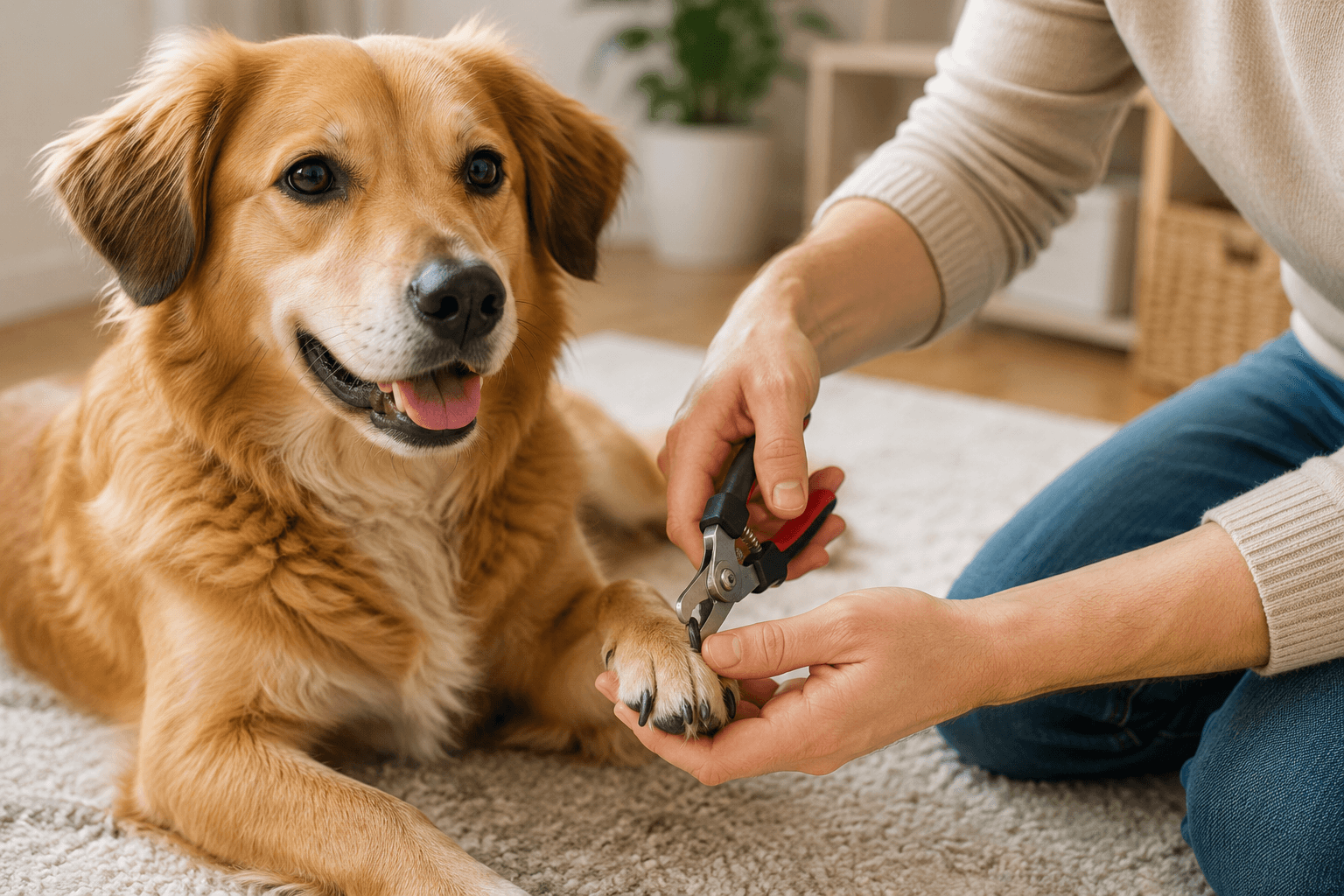
How to Trim Dog Nails: A Safe Step-by-Step Guide
Learning how to trim dog nails safely starts with using the right dog nail clippers or grinder, keeping your dog calm, trimming only small amounts at a time, and avoiding the quick—the sensitive part of the nail containing blood vessels and nerves. If your dog becomes highly stressed or you are unsure where to cut, it is safer to have a veterinarian or professional groomer demonstrate the technique rather than risk an injury.
Regular nail care is an important part of dog grooming. Nails that become too long can affect how a dog walks and may become uncomfortable or even cause injury over time. The good news is that with patience and the right technique, many dogs can learn to tolerate routine nail trims at home.
This guide explains how to prepare your dog, choose the right tools, identify the quick, trim safely, handle dark nails, and know when professional help is the better option.
Why Dog Nail Trimming Matters
Dog nail care is not just about appearance.
When nails become excessively long, they can change how a dog places its feet and walks. AKC notes that long nails can reduce traction and contribute to changes in the feet and leg structure.
Overgrown nails can also:
- Catch on carpets or other surfaces
- Break or split
- Become uncomfortable when walking
- Affect normal paw positioning
- Cause problems with dewclaws that are not naturally worn down
Regular trimming helps maintain a comfortable nail length and can also make future trims easier because the quick can gradually recede with consistent maintenance.
How Often Should You Trim Dog Nails?
There is no single schedule that works for every dog.
VCA says many dogs need their nails trimmed about once a month, while some dogs that spend little time on hard surfaces may need trims more frequently. Dogs that regularly walk on pavement or concrete may naturally wear their nails down and need less frequent trimming.
A practical way to check your dog’s nails is to look at them regularly rather than relying only on the calendar.
Signs that your dog may be due for a trim include:
- Nails touching the ground while standing or walking
- A noticeable clicking sound on hard floors
- Nails becoming visibly long or curved
- Dewclaws becoming overgrown
- Nails catching on surfaces
If you hear that familiar click-click when your dog walks across a hard floor, check the nail length. It can be a useful sign that the nails need attention.
What You Need to Trim Your Dog’s Nails
Before you start, gather everything you need.
Dog Nail Clippers
Dog-specific nail clippers come in several designs, including scissor-style and guillotine-style clippers.
Choose a size appropriate for your dog’s nails and make sure the cutting edges are sharp. Dull tools can crush rather than cleanly cut the nail and may make the experience more uncomfortable.
Dog Nail Grinder
A dog-friendly grinder can gradually shorten and smooth the nail instead of making a single cut.
Some dogs tolerate grinders better than clippers, while others dislike the sound or vibration. Either option can work when introduced properly.
Styptic Powder
Keep styptic powder or another appropriate clotting product nearby before beginning.
Accidentally cutting the quick can cause bleeding, so having a product ready is an important safety precaution.
Treats
Treats and praise can help create a positive association with nail care, especially when you’re training a dog that is nervous about having its paws handled.
Step 1: Get Your Dog Comfortable With Paw Handling
Before learning how to trim dog nails, make sure your dog is comfortable with having its feet touched.
If your dog immediately pulls its paw away when you reach for it, don’t start cutting.
Instead, practice:
- Touching the shoulder or leg.
- Moving your hand toward the paw.
- Gently holding the paw.
- Touching individual toes.
- Showing the nail clipper.
- Rewarding calm behavior.
For nervous dogs, this process may take several sessions.
AKC recommends gradually introducing the dog to the tool and rewarding calm behavior rather than rushing straight into the first nail trim.
A calm dog is easier and safer to work with than one that is trying to pull away.
Step 2: Choose a Calm, Well-Lit Location
Pick a quiet location where you have good visibility.
Good lighting is particularly important because you need to see the nail clearly and identify the safest area to trim.
Have your dog sit, stand, or lie in whichever position allows you to control the paw gently without forcing an uncomfortable posture.
If your dog is extremely resistant, don’t turn the session into a physical struggle.
ASPCA advises against forcing dogs that show serious fear or distress during nail trimming and recommends seeking professional help when necessary.
Step 3: Identify the Quick
The quick is the living portion inside the nail. It contains blood vessels and nerves.
Cutting into it can cause pain and bleeding.
If Your Dog Has Light Nails
The quick is often visible as a pink area inside the nail.
Leave a safe margin rather than cutting right up against it.
If Your Dog Has Black Nails
Dark nails are more difficult because the quick cannot be seen clearly from the outside.
In this situation, the safest approach is to remove very small amounts at a time and inspect the cut surface frequently. VCA recommends taking small slices and watching for changes in the center of the nail as you approach the quick.
If you’re uncomfortable identifying the quick on dark nails, ask a veterinarian or professional groomer to demonstrate the technique.
Step 4: Trim Only a Small Amount
Once your dog is relaxed and you have identified the safest cutting area, take a small amount from the nail.
Do not try to shorten an extremely long nail in one large cut.
Instead:
Small trim → inspect → reward → continue if your dog remains calm.
For dogs with dark nails, taking tiny amounts is particularly important because the quick is difficult to see.
Don’t Forget the Dewclaws
Dewclaws are the smaller nails located higher on the inside of the leg.
Because they often do not touch the ground, they may not wear down naturally.
An overgrown dewclaw can curl around and potentially grow into the paw pad, so check them during every nail-care session.
Step 5: Smooth Rough Edges
After clipping, check the nail for sharp or rough edges.
If appropriate for your dog, an emery board or suitable grinder can help smooth the edge. ASPCA includes smoothing rough edges as part of basic nail care.
If you use a grinder, work slowly and avoid keeping it against one part of the nail for too long. VCA recommends very short grinding periods because excessive friction can heat the nail and make the dog uncomfortable.
What If You Cut the Quick?
Accidents can happen, especially when learning how to trim dog nails.
If you accidentally cut the quick, stay calm.
Apply styptic powder or another appropriate clotting product to the bleeding nail and apply gentle pressure as needed. ASPCA also notes that cornstarch can be used as an emergency option.
If the bleeding does not stop after several minutes, contact your veterinarian.
After an accident, don’t immediately force yourself to finish every remaining nail.
Your dog may associate the painful experience with nail trimming, so ending the session calmly can be the better choice.
How to Trim Black Dog Nails Safely
Black nails deserve extra caution because the quick is hidden.
A safer approach is:
- Hold the paw gently.
- Extend one nail.
- Remove only a tiny amount.
- Examine the cut surface.
- Continue only if the nail still appears safe.
- Stop before reaching the quick.
If you have several black nails and little experience trimming them, getting a demonstration from a veterinarian, veterinary technician, or experienced groomer can save you from an avoidable mistake.
What If Your Dog Is Afraid of Nail Trimming?
Some dogs strongly dislike having their paws handled.
Signs of significant stress can include:
- Panting
- Trembling
- Drooling
- Whining
- Freezing
- Cowering
- Tail tucking
- Growling
- Snapping
ASPCA recommends not forcing a fearful dog through nail trimming. Professional grooming, veterinary assistance, or qualified behavior support may be more appropriate for dogs with severe reactions.
Build Tolerance Gradually
You can work on the process outside actual nail-trimming sessions.
For example:
Touch paw → treat
Then:
Hold paw → treat
Then:
Show clipper → treat
Then:
Touch clipper to paw → treat
Only progress when your dog remains comfortable.
AKC and VCA both emphasize gradual handling and positive associations with grooming equipment.
Clippers vs. Nail Grinder: Which Is Better?
Both can be useful.
| Tool | Advantages | Considerations |
|---|---|---|
| Clippers | Quick and simple | Requires careful control |
| Nail Grinder | Gradual shortening and smoothing | Noise/vibration may bother some dogs |
| Emery Board | Gentle finishing option | Takes longer |
There is no universally best tool for every dog.
The best choice is the one you can use safely and the one your dog can learn to tolerate. AKC notes that individual dogs may prefer different tools.
How to Make Nail Trimming Easier
Consistency usually works better than occasional stressful sessions.
Try these habits:
- Handle your dog’s paws regularly.
- Keep sessions short.
- Reward calm behavior.
- Trim only a few nails if necessary.
- Use sharp, appropriate tools.
- Keep styptic powder available.
- Stop when your dog becomes significantly stressed.
- Practice even when the nails don’t urgently need trimming.
For puppies, early positive exposure can make future grooming considerably easier.
And remember that nail care is only one part of a broader grooming routine. Bathing, brushing, coat checks, and other grooming tasks also need to fit your dog’s individual needs. For example, if you’re planning a bath, our guide explains how to bathe a dog safely at home.
When Should a Professional Trim Your Dog’s Nails?
You don’t have to trim your dog’s nails yourself.
Professional help may be the better choice when:
- Your dog is extremely fearful.
- Your dog tries to bite during nail handling.
- The nails are severely overgrown.
- You cannot identify the quick safely.
- A nail is broken or injured.
- Your dog has a painful paw condition.
- You have tried gradual training without success.
A veterinarian or professional groomer can also demonstrate proper nail-trimming technique.
AKC specifically recommends asking a veterinarian or veterinary technician for a lesson if you’ve never clipped a dog’s nails before.
If the issue involves pain, bleeding that won’t stop, an injured nail, or another medical concern, veterinary care is the appropriate choice.
Common Dog Nail-Trimming Mistakes
Cutting Too Much at Once
Large cuts increase the chance of reaching the quick.
Take small amounts instead.
Ignoring Dark Nails
Don’t use the same visual approach you would use with clear nails. Dark nails require more conservative trimming and frequent inspection.
Forgetting Dewclaws
Dewclaws can become excessively long because they may not contact the ground.
Using Dull Clippers
Dull tools can crush the nail instead of making a clean cut.
Forcing a Terrified Dog
A frightened dog can become more fearful and may react unpredictably.
Stop and use a gradual training approach or seek professional help.
Starting Without Styptic Powder
Always have a clotting product available before trimming.
Frequently Asked Questions
How often should I trim my dog’s nails?
Many dogs need nail trims about once a month, but the actual frequency varies with nail growth, activity, and the surfaces your dog walks on. Dogs that spend more time on hard surfaces may naturally wear their nails down.
How do I know when my dog’s nails are too long?
Nails that touch the ground or make a noticeable clicking sound on hard floors can indicate that they are too long.
Is it better to clip or grind dog nails?
Both methods can work. Clippers are fast, while grinders allow gradual shortening and smoothing. Your dog’s tolerance and your confidence with the tool should influence the choice.
What should I do if I cut the quick?
Apply styptic powder or another appropriate clotting product and gentle pressure. If bleeding continues for more than a few minutes, contact your veterinarian.
Can I trim my dog’s nails if they are black?
Yes, but black nails require extra caution because the quick is difficult to see. Remove very small amounts and inspect the nail frequently.
What if my dog won’t let me trim its nails?
Don’t force the dog. Start with gradual paw handling and positive reinforcement. If your dog remains highly fearful or aggressive, seek help from a professional groomer, veterinarian, or qualified behavior professional.
Final Answer: How to Trim Dog Nails Safely
The safest way to trim dog nails is to keep your dog calm, use the correct tool, remove only small amounts at a time, and avoid the quick. Check the nails regularly rather than waiting until they become obviously overgrown.
If you’re inexperienced, especially with dark nails, having a veterinarian or professional groomer show you the technique can make the process much safer.
With gradual training and consistent maintenance, many dogs can become comfortable with routine nail care.