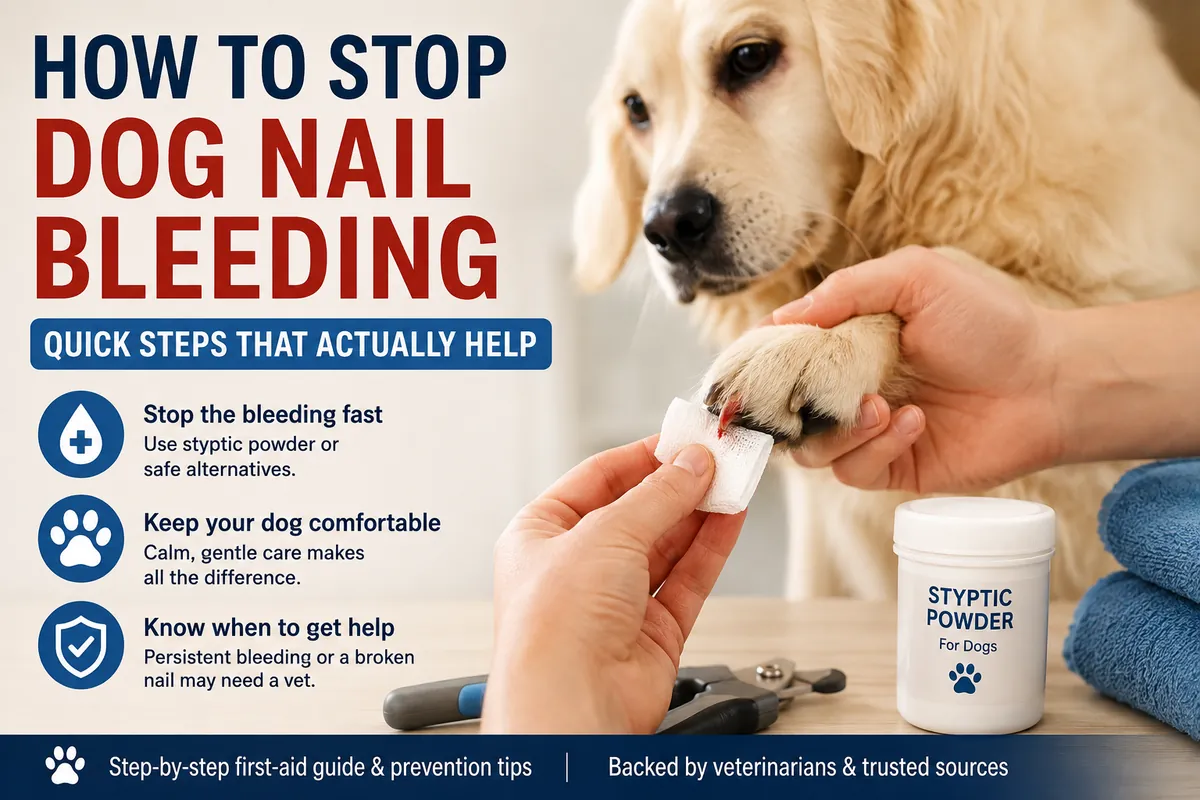
How to Stop Dog Nail Bleeding: Quick Steps That Actually Help
If you accidentally cut your dog’s nail too short, the fastest way to stop the bleeding is to apply a styptic product directly to the nail tip. If you don’t have one available, cornstarch or flour may help with a minor nail-trimming accident.
A small cut into the quick can look dramatic because the quick contains blood vessels and nerves. However, heavy bleeding, bleeding that doesn’t stop, severe pain, or a split or badly damaged nail should be evaluated by a veterinarian.
You were trimming your dog’s nails, everything seemed fine, and then suddenly—blood.
It’s one of those grooming moments that can make even an experienced dog owner panic. Your dog may pull away, lick the paw, or look at you as if something terrible just happened.
Take a breath.
Accidentally nicking the quick is a common grooming mistake, and a minor nail-trimming injury can often be handled calmly with basic first aid. The key is knowing what to do immediately and recognizing when the problem is more than a simple quick nick.
Why Is Your Dog’s Nail Bleeding?
Inside every dog’s nail is a sensitive area called the quick. It contains blood vessels and nerves, which is why cutting into it can cause both bleeding and discomfort.
Following a consistent dog grooming schedule can also help you notice overgrown nails before they become difficult to trim.
Veterinarian Dr. Laci Schaible, DVM, explains that the quick is a vascular structure, so even a relatively small injury can produce noticeable bleeding. She also distinguishes a simple nail-trimming accident from a fractured nail, which may require more extensive veterinary care.
The most common reasons a dog’s nail starts bleeding include:
- Cutting the nail too short during trimming
- Accidentally clipping into the quick
- A cracked or broken nail
- A nail catching on carpet, furniture, or another surface
- A nail injury during running or rough play
A quick nick and a broken nail may look similar at first, but they’re not always the same problem. If the nail itself is split, loose, hanging, or damaged near the base, it’s safer to treat it as a potential injury rather than just a trimming mistake.
How to Stop Dog Nail Bleeding Quickly
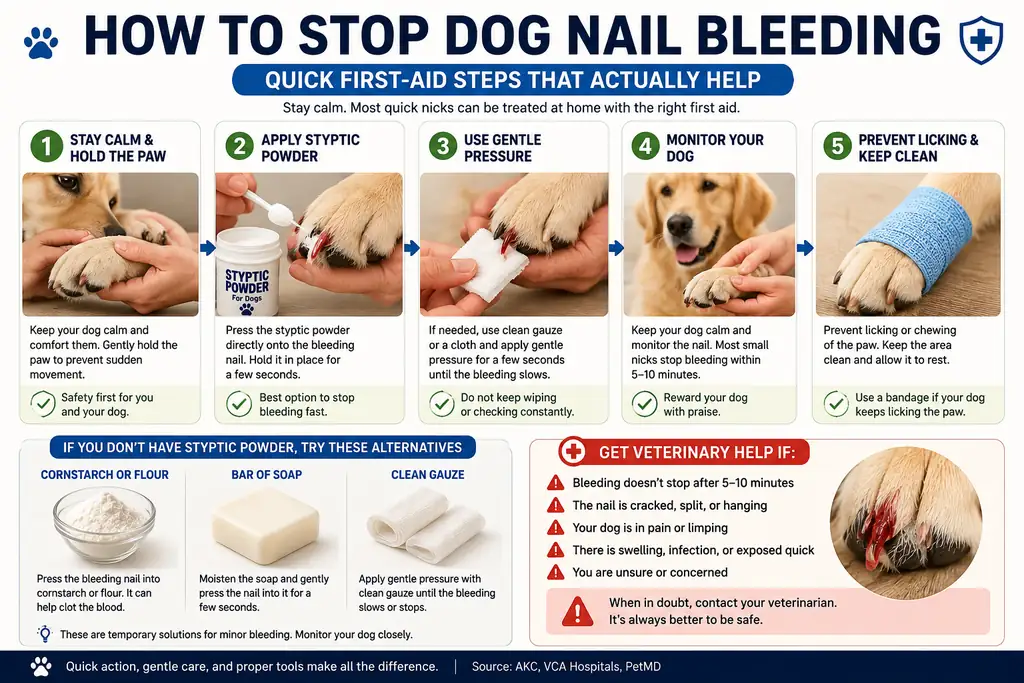
If you just cut the quick during a nail trim, stay calm and keep your dog as relaxed as possible.
Step 1: Keep Your Dog Still and Calm
Your dog may be surprised or uncomfortable, especially if this happened suddenly. Speak calmly and avoid rushing into the next step.
If possible, have another person gently help hold your dog while you deal with the nail. Pain can make even a normally calm dog react unpredictably, so keep your hands and face safely positioned.
The goal isn’t to wrestle your dog into position. It’s simply to prevent excessive movement while you address the bleeding.
Step 2: Use Styptic Powder if You Have It
Styptic powder is one of the most useful items to keep nearby when trimming dog nails.
The American Kennel Club recommends having styptic or another clotting powder available in case you accidentally cut a nail too short. Dr. Jerry Klein, Chief Veterinarian for the AKC, also advises getting guidance from a veterinarian or veterinary technician if you’re new to nail trimming.
To use a styptic product:
- Put a small amount where you can easily access it.
- Gently press the bleeding nail tip into the powder or apply the product according to its directions.
- Hold the product against the nail long enough for it to adhere.
- Check whether the bleeding is slowing or stopping.
Don’t keep repeatedly wiping the nail every few seconds. Constantly disturbing the area can interfere with clot formation.
What if You Don’t Have Styptic Powder?
It happens. You start trimming your dog’s nails and realize the styptic powder is nowhere to be found.
Veterinary sources including VCA Animal Hospitals list cornstarch or flour as possible alternatives for minor bleeding when a styptic product isn’t available. VCA also notes that pressing the nail tip into a bar of soap may help in some situations.
Cornstarch or Flour
For a minor quick nick:
- Put a small amount of cornstarch or flour into a clean container.
- Gently press the bleeding nail tip into it.
- Apply gentle pressure and give it time to work.
This isn’t a substitute for professional care when a nail is seriously injured, but it can be a useful backup during a minor grooming accident.
A Bar of Soap
VCA also mentions pressing the tip of the nail into a bar of soap as another possible option when appropriate clotting supplies aren’t available.
The important thing is not to panic and start experimenting with multiple random household products. Stick with established first-aid options and monitor your dog.
Should You Apply Pressure to a Bleeding Nail?
Yes, gentle, steady pressure can help control external bleeding.
For a nail injury, use clean gauze or a clean cloth and apply gentle pressure without repeatedly checking every few seconds. VCA recommends pressure as part of first aid for bleeding injuries.
Avoid squeezing the toe aggressively. A dog with an injured nail may already be uncomfortable, and excessive handling can make the experience more stressful.
How Long Should a Dog’s Nail Bleed?
A minor quick nick should begin improving after appropriate first aid, but there isn’t one exact timeline that applies to every situation.
VCA advises seeking further attention when bleeding doesn’t stop within roughly 5 to 10 minutes, particularly in the context of an injured or broken nail. PetMD similarly advises contacting a veterinarian when bleeding continues beyond several minutes.
Don’t focus only on the clock.
Also pay attention to:
- How much blood is coming from the nail
- Whether the bleeding is slowing down
- Whether the nail looks cracked or split
- Whether your dog appears to be in significant pain
- Whether your dog keeps licking or chewing the injured area
A tiny quick nick and a severely damaged nail are completely different situations.
Dog Nail Bleeding First-Aid Checker
Answer a few quick questions for general guidance on what to do next.
How much is your dog’s nail bleeding?
Did the bleeding start after trimming the nail?
How long has the bleeding continued?
Is the nail cracked, split, loose, or partially torn?
Is your dog showing significant pain or difficulty walking?
When Should You Call a Veterinarian?
A bleeding nail deserves more attention when the injury appears serious.
Contact your veterinarian if:
- Bleeding is heavy or doesn’t stop after reasonable first-aid efforts
- The nail is split deeply
- The nail is broken close to the base
- The quick appears exposed after a significant injury
- Your dog is in obvious or significant pain
- The toe looks swollen or severely damaged
- You suspect the nail injury could become infected
Veterinarian Dr. Sandra Mitchell, DVM, DABVP, notes that deeply split nails, severe bleeding, exposed quicks, and significant pain can require veterinary treatment. Her PetMD article was updated in December 2024 and medically reviewed by Dr. Michael Kearley, DVM.
If you’re unsure whether you’re dealing with a quick nick or a more serious nail injury, calling your veterinarian for guidance is the safer choice.
Should You Let Your Dog Lick the Bleeding Nail?
Try to prevent excessive licking.
Dogs naturally investigate painful areas with their mouths, but repeated licking or chewing can irritate the injured nail and make it harder to leave the area alone.
If your dog won’t stop bothering the paw, calmly redirect them and consider temporarily limiting access to the injured area. A veterinarian may recommend additional protection for a more significant nail injury.
What Not to Do When Your Dog’s Nail Is Bleeding
When you’re stressed, it’s easy to overreact. Avoid these common mistakes:
Don’t Keep Trimming the Same Nail
If you accidentally hit the quick, stop trimming that nail.
Trying to immediately “fix” the shape can make the injury worse.
Don’t Pull Off a Broken Nail
A loose or hanging piece of nail may look tempting to remove, but damaged nails can be painful and may require veterinary treatment. VCA specifically notes that while a very loose sliver might occasionally be easy to trim, many damaged nails are best handled by a veterinarian.
Don’t Use Random Chemicals
Avoid applying household chemicals, harsh disinfectants, or products that aren’t appropriate for your dog’s injury.
More products do not necessarily mean better first aid.
Don’t Ignore Persistent Bleeding
A minor quick nick is one thing. Continued bleeding or a damaged nail is another.
If you’re concerned, contact a veterinary professional rather than hoping a serious injury will resolve on its own.
How to Prevent Cutting the Quick Next Time
The best way to handle nail bleeding is to reduce the chance of it happening again.
Learning proper dog nail trimming technique is one of the best ways to reduce the risk of cutting into the quick.
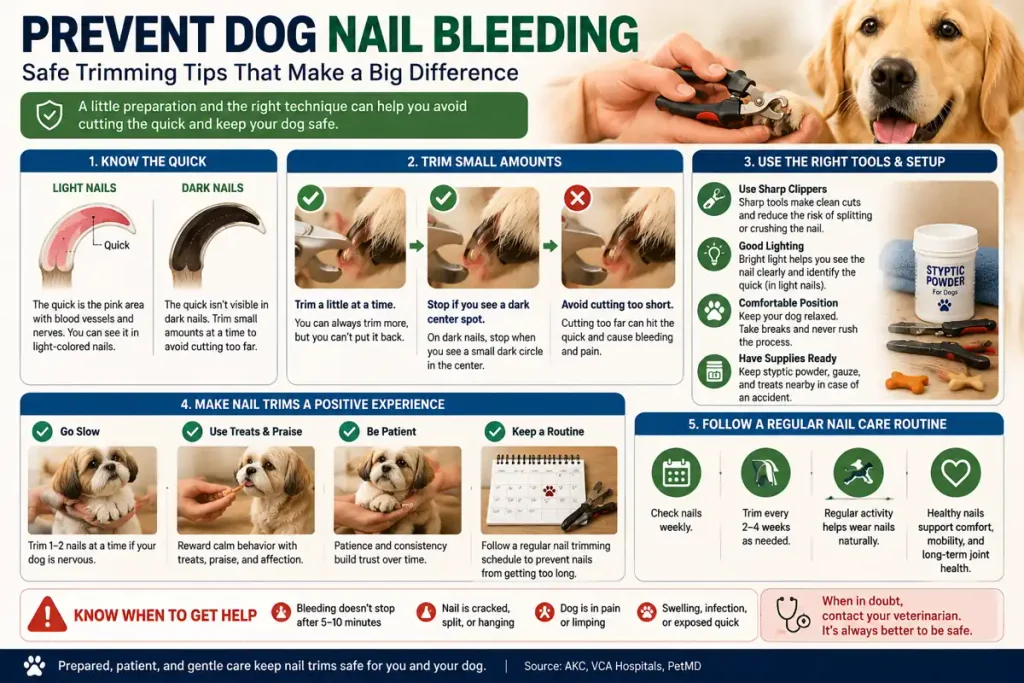
Trim Small Amounts at a Time
This is especially important with dark nails, where you can’t easily see the quick.
PetMD recommends taking very small amounts at a time when trimming black nails rather than making one large cut.
Slow progress is better than accidentally taking off too much.
Use Sharp Dog Nail Clippers
Dull clippers can crush the nail rather than creating a clean cut.
Use clippers specifically designed for dogs and keep them in good condition.
Keep a Styptic Product Nearby
Don’t wait until there’s blood on the floor to remember you need it.
A safe home setup starts with reliable pet grooming tools for dogs, including properly maintained nail clippers or grinders.
Have your nail-trimming supplies ready before you start:
- Dog nail clippers or a nail grinder
- Styptic product
- Clean gauze or cloth
- Treats
- Good lighting
The AKC specifically recommends keeping a clotting product available during nail trims in case the quick is accidentally cut.
Make Nail Trims Less Stressful
Some dogs hate having their paws handled. The more anxious your dog becomes, the harder it can be to trim accurately.
VCA recommends positive reinforcement, including treats, to help dogs develop a better association with nail trimming.
For nervous dogs, it may also help to:
- Handle their paws regularly between grooming sessions
- Trim one or two nails at a time
- Take breaks
- Reward calm behavior
- Stop before the session becomes overwhelming
For more help, see our guide on dog grooming for anxious dogs.
Clear Nails vs. Dark Nails
Clear nails are generally easier because you may be able to see the pink quick inside.
Dark nails are more challenging because the quick isn’t visible from the outside.
The AKC recommends trimming cautiously and focusing on small amounts rather than trying to remove a large portion at once.
If you’re uncomfortable trimming dark nails, there’s no shame in asking a groomer, veterinarian, or veterinary technician to demonstrate a safe technique.
A Simple Dog Nail First-Aid Kit
Keeping a small kit with your grooming supplies can save you a lot of stress.
Consider having:
- Styptic powder or another suitable clotting product
- Clean gauze
- A clean towel
- Dog nail clippers
- A nail grinder if you use one
- Treats for positive reinforcement
You probably won’t need every item during every grooming session. But having them ready means you’re not searching through cabinets while your dog is walking around with a bleeding nail.
If you regularly groom your dog at home, keeping basic first-aid supplies near your grooming tools can make accidents much easier to handle.
Frequently Asked Questions
Can I use cornstarch to stop my dog’s nail from bleeding?
Cornstarch is listed by veterinary sources as a possible backup option for minor nail bleeding when a styptic product isn’t available. Apply it carefully and monitor whether the bleeding slows. Persistent or heavy bleeding should be discussed with a veterinarian.
Can I walk my dog after its nail stops bleeding?
That depends on the injury. A simple quick nick is different from a broken or deeply split nail. If the nail appears damaged, your dog is limping, or the area starts bleeding again, contact your veterinarian for advice.
Does cutting the quick hurt a dog?
The quick contains nerves and blood vessels, so cutting into it can cause discomfort or pain in addition to bleeding.
Why does my dog’s nail keep bleeding?
Repeated bleeding can happen if the area is disturbed before it has settled, if the dog keeps licking or chewing it, or if the injury is more significant than a simple trimming accident. A broken or deeply damaged nail may require veterinary treatment.
Should I finish trimming my dog’s nails after cutting the quick?
Usually, it’s best to pause and deal with the bleeding first. If your dog is stressed or painful afterward, continuing the grooming session may create a negative experience.
The Bottom Line
Knowing how to stop dog nail bleeding can turn a stressful grooming accident into a manageable situation. For a minor quick nick, stay calm, use a styptic product when available, and monitor your dog closely. Cornstarch or flour may be useful backup options for minor bleeding.
But don’t assume every bleeding nail is just a quick nick. Heavy or persistent bleeding, severe pain, a deeply split nail, or significant nail damage should be evaluated by a veterinarian.
The best long-term solution is preparation: trim small amounts at a time, use proper grooming tools, keep a clotting product nearby, and don’t rush the process.
For more practical home-care advice, explore our collection of dog grooming tips.
A calm nail-trimming routine is safer for you—and much easier on your dog.