How to Groom Your Dog at Home: A Safe Step-by-Step Guide
You can groom your dog at home by regularly brushing the coat, bathing when needed, trimming nails, and keeping the ears, eyes, teeth, and paws clean. The safest routine depends on your dog’s coat type, grooming experience, and comfort level, while complicated haircuts, severe mats, or health problems are better handled by a professional groomer or veterinarian.
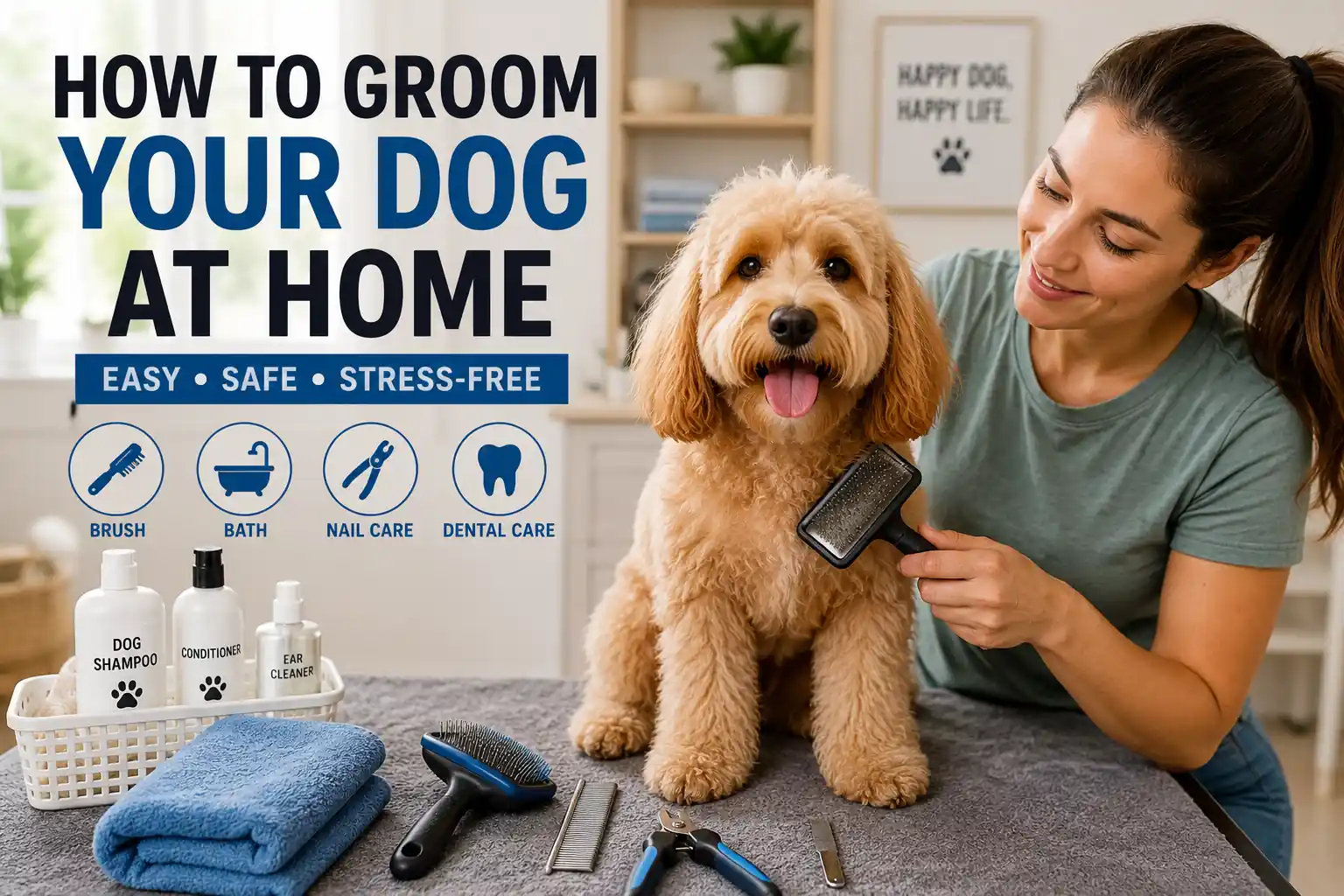
Learning how to groom your dog at home can save time, reduce the need for frequent professional appointments, and help you notice changes in your dog’s coat, skin, paws, ears, or nails early. The key is not trying to do everything at once. A calm, consistent routine with the right tools is usually much easier for both you and your dog.
What You Need to Groom Your Dog at Home
Before you start, gather the basic supplies you actually need. The right equipment depends heavily on your dog’s coat, size, and grooming requirements.
A basic home grooming kit may include:
- A brush suited to your dog’s coat
- A steel comb for longer or easily tangled coats
- A dog-specific shampoo
- Dog conditioner if appropriate
- Microfiber towels
- Dog nail clippers or a dog nail grinder
- Styptic powder for accidental nail bleeding
- A dog toothbrush and dog-safe toothpaste
- Cotton balls or a soft cloth
- Blunt-ended grooming scissors
- Clippers with appropriate guide combs, if you have experience using them
AKC and Humane World for Animals both emphasize how to groom your dog at home choosing grooming tools according to coat type rather than buying a one-size-fits-all kit.
If you’re building your kit from scratch, see our guide to pet grooming tools for dogs for a more detailed equipment breakdown.
Step 1: Get Your Dog Comfortable Before Grooming
The best home grooming session starts before you pick up a brush.
If your dog is nervous around grooming equipment, introduce each item gradually. Let your dog sniff the brush, hear the clipper from a distance, or have their paws touched without immediately starting a full grooming session.
Reward calm behavior with praise or treats.
This is especially important for puppies and dogs that have had stressful grooming experiences in the past. AKC recommends gradually getting dogs comfortable with handling and grooming tools rather than forcing them through the process.
Keep early sessions short. You might brush for only a few minutes, take a break, and try again later.
The goal is to teach your dog:
Grooming is predictable. Grooming is safe. Grooming ends with something positive.
Step 2: Brush Your Dog Before Bathing
Always check the coat before getting it wet.

Brushing removes loose hair, dirt, debris, and manageable tangles. It can also help prevent mats from becoming more difficult to remove.
This matters because water can make existing mats tighter, making them harder and potentially more uncomfortable to deal with. Humane World for Animals specifically recommends brushing before bathing.
How Often Should You Brush Your Dog?
There isn’t one schedule for every dog.
A short, smooth coat may need brushing around once a week, while long, silky, or curly coats may require daily attention. Dogs with double coats may benefit from regular de-shedding in addition to normal brushing.
Use the brush that matches the coat.
For example:
- Short, smooth coat: rubber or bristle brush
- Long coat: pin or slicker brush followed by a comb
- Curly coat: slicker brush and comb
- Double coat: appropriate undercoat rake or de-shedding tool
Work gently from the coat toward the skin without aggressively pulling through knots.
If a mat is tight against the skin, don’t keep yanking at it. Severe matting can require professional removal.
Step 3: Bathe Your Dog Safely
Not every dog needs frequent baths.

How often your dog should be bathed depends on coat type, lifestyle, outdoor activity, skin condition, and the recommendations appropriate for that individual dog. Over-bathing can contribute to dryness and irritation in some dogs.
When it is time for a bath:
- Brush the coat first.
- Use comfortably warm water.
- Use a shampoo specifically formulated for dogs.
- Keep shampoo away from the eyes and inside the ears.
- Massage the coat gently.
- Rinse thoroughly.
- Towel-dry carefully.
- If using a dryer, use a low setting and keep it moving and away from the skin.
Never substitute human shampoo or toothpaste for products made for dogs. AKC specifically advises owners to use products formulated for canine use.
If your dog has recurring itching, redness, odor, sores, or another skin concern, talk with your veterinarian rather than trying to solve the problem by bathing more often.
For more detail, follow our guide on how to bathe your dog.
Step 4: Dry the Coat Completely
Drying is an important part of grooming, especially for thick, long, or curly coats.
Start with a towel and gently remove excess moisture. If your dog tolerates a dryer, use a low setting and keep the airflow moving rather than concentrating it on one area.
Humane World for Animals recommends keeping the dryer away from the skin and using a back-and-forth motion to reduce the risk of burns.
Never rush the drying process simply because your dog is impatient.
A damp, tangled coat can become much harder to manage.
Step 5: Trim Your Dog’s Nails Carefully
Nail care is one of the most useful grooming skills to learn at home—but it is also one of the areas where owners should know their limits.
Long nails can interfere with comfortable movement and may break or become painful.
If you can hear your dog’s nails clicking consistently on hard floors, they may need attention. AKC recommends trimming only the portion before the quick, the blood-vessel and nerve-containing part inside the nail.
With light-colored nails, the quick can often be easier to see. Dark nails are more difficult because the quick isn’t as obvious.
If you’re inexperienced:
- Trim tiny amounts at a time.
- Keep styptic powder nearby.
- Give your dog breaks.
- Reward calm behavior.
- Stop if your dog becomes highly distressed.
If you don’t feel confident, have a veterinarian or professional groomer demonstrate the technique before trying it yourself.
Step 6: Keep Your Dog’s Ears Clean—But Don’t Dig Inside
Routine ear checks are useful during grooming.
Look for unusual:
- Redness
- Swelling
- Discharge
- Strong odor
- Excessive wax
- Frequent scratching
- Head shaking
You can gently clean the outer ear with an appropriate soft cloth or product recommended for dogs.
Do not push cotton swabs or other objects deep into the ear canal.
AKC advises owners to seek veterinary attention when they notice significant redness, swelling, discharge, or a strong unusual odor because these can indicate an ear problem.
Step 7: Brush Your Dog’s Teeth
Dental care is easy to overlook because it isn’t visible from across the room—but it is an important part of routine grooming.
Use:
- A soft dog toothbrush
- Toothpaste formulated specifically for dogs
Never use human toothpaste. Some human toothpaste ingredients can be dangerous to dogs, including xylitol.
If your dog isn’t comfortable with a toothbrush, start by allowing them to lick a small amount of dog-safe toothpaste from your finger. Gradually introduce the brush.
Regular brushing is more useful than occasionally attempting a long dental session.
Step 8: Check the Eyes and Paws
Home grooming is also an opportunity for a quick body check.
Look at your dog’s:
- Eye corners
- Paw pads
- Between the toes
- Skin
- Coat
- Ears
- Nails
A soft, damp cloth can be used to gently wipe ordinary eye discharge from the surrounding area. Don’t rub directly across the eyeball, and don’t attempt to remove an object stuck in the eye.
Check paw pads for cracks, cuts, swelling, or foreign objects.
If you find a wound or something embedded in the paw, don’t turn the grooming session into a DIY medical procedure. Contact your veterinarian.
Can You Cut Your Dog’s Hair at Home?
Yes, some basic trimming can be done at home, but that doesn’t mean every haircut should be a DIY project.
Simple maintenance around areas such as the feet or hair that interferes with vision may be manageable for an experienced owner using appropriate equipment.
Full haircuts are different.
If your dog has a complicated coat, severe matting, sensitive areas, or you have never used clippers or grooming scissors, professional help is usually the safer choice.
AKC specifically cautions owners against attempting difficult clipping or shaving without proper training and advises against trying to cut mats out with household scissors.
What About Severe Mats?
Don’t try to aggressively brush out severe matting.
Tight mats can pull on the skin and make grooming painful. Trying to cut them out with scissors can also cause accidental injury.
A professional groomer can assess the coat and determine the safest way to remove severe mats.
How to Make Grooming Easier for Your Dog
The best grooming routine is one your dog can tolerate consistently.
Try these habits:
Keep Sessions Short
You don’t need to complete every grooming task in one session.
Brush today. Trim nails another day. Practice teeth brushing separately.
Use Positive Reinforcement
Praise and treats can help your dog associate grooming with positive experiences.
Follow a Routine
Dogs often handle predictable routines better than random, extended grooming sessions.
Don’t Force a Struggle
If your dog is panicking, snapping, or trying desperately to escape, stop and reassess.
Safety matters more than finishing the haircut.
Common At-Home Grooming Mistakes to Avoid
Even well-intentioned owners can make grooming harder by rushing.
Avoid these common mistakes:
Using human products: Use products specifically formulated for dogs.
Bathing without brushing first: Mats can become tighter when wet.
Cutting nails too aggressively: Take small amounts and learn where the quick is.
Using household scissors on mats: This can result in accidental skin injuries.
Forcing a frightened dog: Stop and build tolerance gradually.
Trying to treat medical problems through grooming: Redness, wounds, infection-like discharge, severe irritation, or unexplained changes deserve veterinary attention.
Trying to express anal glands yourself: AKC recommends leaving this to a groomer or veterinarian unless a veterinarian has specifically trained you.
When Should You Use a Professional Groomer?
Home grooming is excellent for routine maintenance, but professional grooming still has an important place.
Consider professional help if your dog has:
- Severe matting
- A complicated breed-specific haircut
- A very thick or high-maintenance coat
- Strong grooming anxiety
- Difficulty tolerating clippers or scissors
- Repeatedly difficult nail trimming
- A grooming requirement you aren’t confident handling
A professional groomer has specialized equipment and experience handling different coat types and grooming situations. Combining home maintenance with professional appointments can be a practical approach for many dogs.
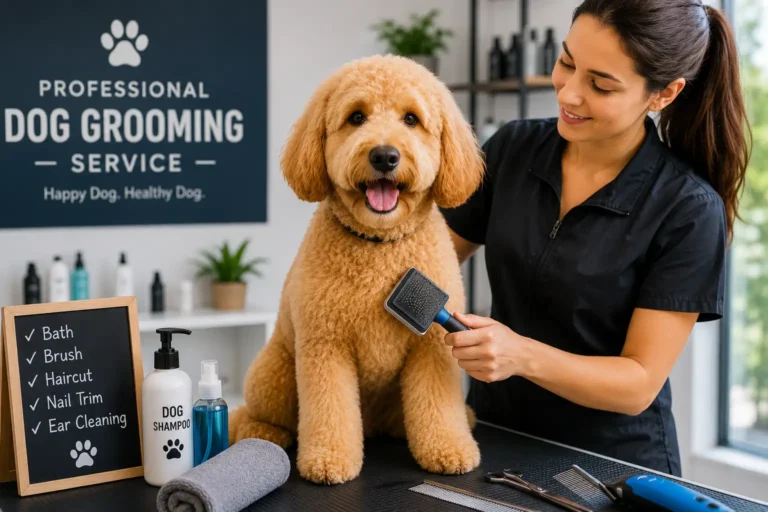
If you’re deciding between DIY maintenance and professional care, our guide to a dog grooming service can help you understand what professional grooming typically includes.
A Simple At-Home Dog Grooming Routine
If you want to keep things simple, use this routine as a starting point:
Weekly:
Brush according to your dog’s coat, check paws, ears, eyes, skin, and nails.
As needed:
Wipe away dirt, brush after outdoor activities, and bathe according to your dog’s individual needs.
Every few weeks:
Check nail length and maintain dental care consistently.
Every 4–8 weeks when appropriate:
Long-haired or high-maintenance dogs may need a more complete grooming session, either at home or professionally, depending on the coat. Humane World for Animals notes that long-haired dogs may need full grooming at roughly four- to eight-week intervals.
The exact schedule should always be adjusted for your dog’s coat and individual needs.
Frequently Asked Questions
Can I groom my dog completely at home?
Some dogs can have most routine grooming maintained at home, but complicated haircuts, severe mats, difficult nails, and certain behavioral or health situations are better handled by a professional.
How often should I groom my dog at home?
It depends on the coat. Short coats may need weekly brushing, while long, silky, or curly coats can require daily brushing to control tangles and mats.
What should I groom first?
Start with brushing and a quick body check. If a bath is needed, brush out manageable tangles before bathing.
Can I use human shampoo on my dog?
No. Use shampoo specifically formulated for dogs. Human grooming products can be inappropriate for canine skin and may cause problems.
Should I cut my dog’s hair myself?
Simple maintenance trimming may be possible with the right training and tools, but complicated cuts and severe mats are better left to a professional groomer.
How do I know when my dog’s nails need trimming?
If the nails are regularly clicking against hard floors or becoming long enough to affect comfortable movement, it’s time to check them.
Final Takeaway
Learning how to groom your dog at home doesn’t mean you need to become a professional groomer. Start with the basics: brush the coat appropriately, bathe when needed, maintain the nails, support dental hygiene, check the ears and paws, and keep every session calm and controlled.
The smartest approach is to know what you can safely handle yourself—and when a professional should take over. With the right tools, a little patience, and a consistent routine, home grooming can become a simple part of everyday dog care rather than a stressful chore.