How to Bathe a Dog: A Safe Step-by-Step Guide
The best way to bathe a dog is to brush the coat first, prepare all supplies, use lukewarm water and a dog-specific shampoo, rinse thoroughly, and dry the coat completely while keeping your dog calm and comfortable. How often a dog needs a bath depends on factors such as coat type, lifestyle, outdoor activity, skin condition, and how dirty or oily the coat becomes.
Learning how to bathe a dog properly can make bath time safer and less stressful. You don’t need complicated equipment, but preparation matters. Using the wrong shampoo, bathing too frequently, leaving shampoo in the coat, or using excessive heat can cause unnecessary skin irritation or discomfort.
This guide explains what you need, how to prepare your dog, each bathing step, drying techniques, common mistakes, and when professional or veterinary help may be appropriate.
Quick Answer: How to Bathe a Dog
To bathe your dog safely:
- Brush the coat before the bath.
- Gather shampoo, towels, and other supplies before starting.
- Use lukewarm water, never hot water.
- Wet the coat thoroughly.
- Apply a shampoo specifically formulated for dogs.
- Keep shampoo away from the eyes, nose, mouth, and inside of the ears.
- Gently work shampoo through the coat.
- Rinse until all shampoo is removed.
- Towel-dry and use a pet-safe dryer if appropriate.
- Keep your dog warm until completely dry.
For long or heavily coated dogs, removing mats and tangles before bathing is particularly important because water can make existing tangles harder to manage.
What You Need Before Bathing Your Dog
The easiest way to make how to bathe a dog less stressful is to prepare everything before your dog gets wet.
Have these supplies ready:
- Dog-specific shampoo
- Several absorbent towels
- A bathtub, dog bath, or suitable wash area
- A handheld shower sprayer or container
- Non-slip mat or towel
- Brush or comb
- Washcloth
- Treats for positive reinforcement
- Pet-safe dryer, if appropriate
For dogs that are nervous about water, treats can help create a more positive association with bath time. AKC recommends preparing supplies in advance rather than leaving a wet dog unattended while you search for something.
Step 1: Brush Your Dog Before the Bath
Before you turn on the water, brush your dog thoroughly.
Brushing helps remove loose hair, dirt, and manageable tangles. It is particularly important for dogs with longer coats because mats can become more difficult to deal with once they are wet.
This is also where our previous article connects naturally.
If you need a detailed brushing technique, see our guide on [how to brush a dog properly].
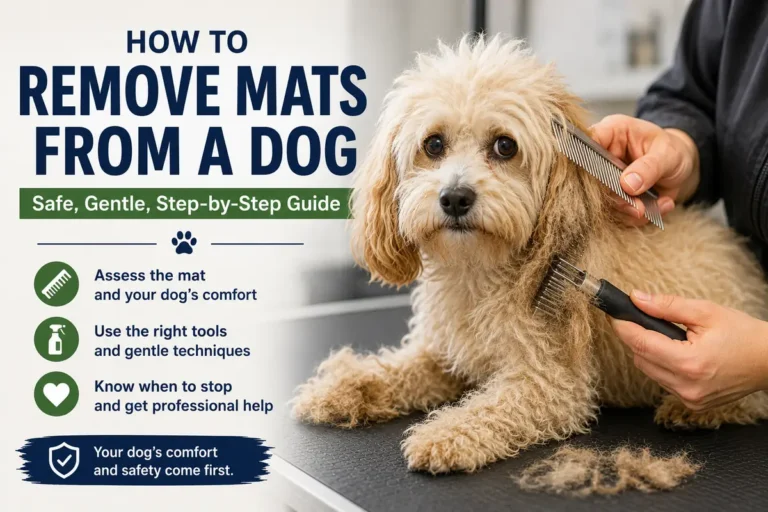
Important Matting Warning
Don’t try to force a brush through a severe mat just because the dog needs a bath.
Tight or extensive mats may require professional grooming. Cutting mats with household scissors can also cause serious injury if the dog suddenly moves.
Step 2: Make the Bathing Area Safe
A slippery bathtub can make a dog nervous and increases the risk of slipping.
Place a non-slip mat or towel on the bottom of the tub or bathing area.
Keep the room comfortably warm, especially if your dog has a thin coat or you are bathing during cold weather.
Avoid bathing outdoors in cold temperatures because a wet dog can lose body heat.
Never leave your dog unattended around water.
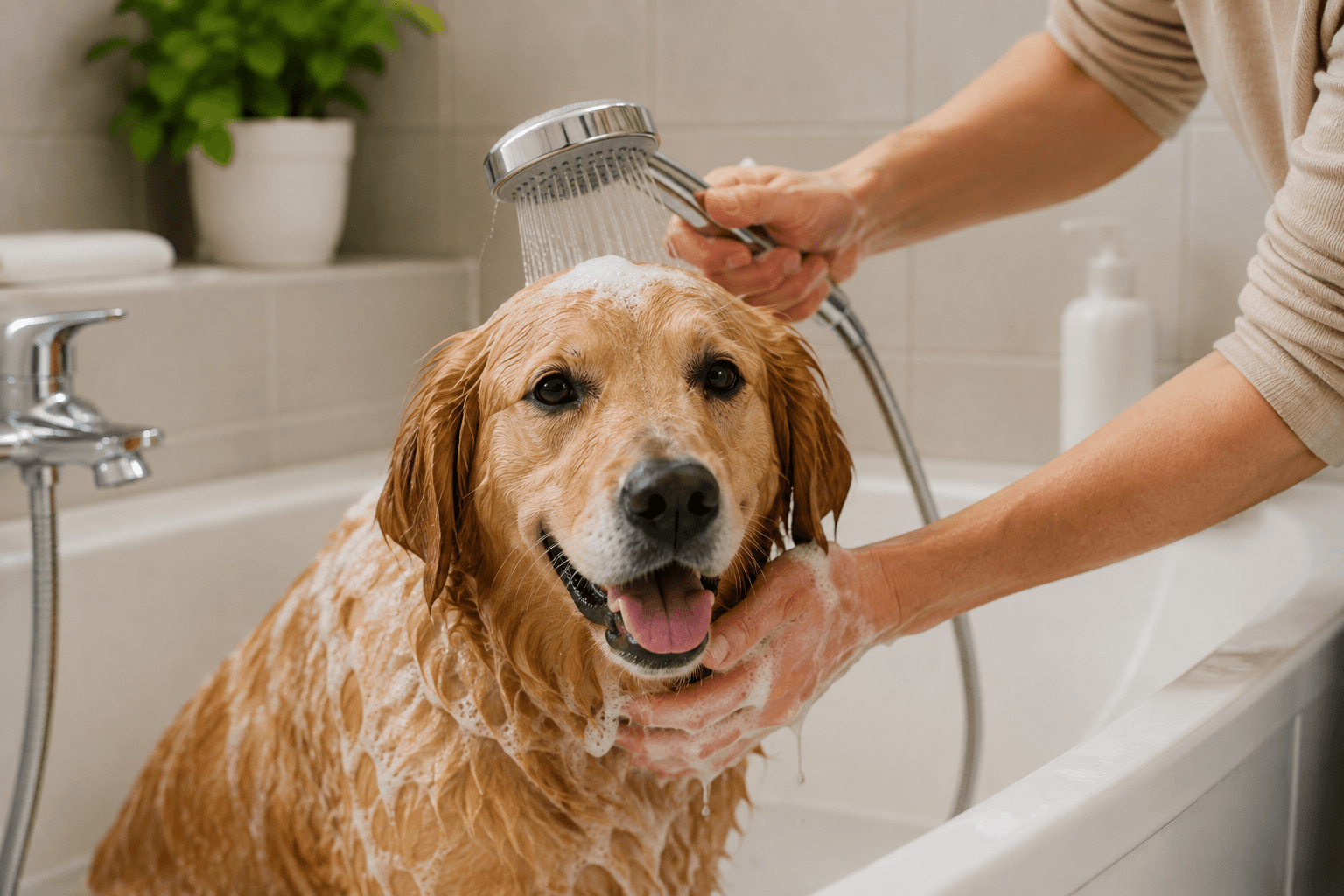
Step 3: Use Lukewarm Water
Water temperature matters.
Use lukewarm or comfortably warm water—not hot water.
Dogs can be sensitive to excessive heat, and AKC guidance recommends checking the temperature before wetting the coat.
Start with a gentle stream rather than a strong spray.
Let the water gradually wet the coat down to the skin.
For nervous dogs, a gentle flow from a cup or handheld sprayer may be easier than a loud shower stream.
Step 4: Choose a Dog-Specific Shampoo
One of the most important rules when learning how to bathe a dog is to use a shampoo formulated specifically for dogs.
Can You Use Human Shampoo on a Dog?
It’s best not to use human shampoo as a routine dog shampoo.
Human and canine skin have different characteristics, and shampoos formulated for people may not be appropriate for a dog’s skin. AKC specifically recommends dog shampoos formulated for canine skin and advises against using human shampoo.
Choose a product appropriate for your dog’s coat and grooming needs.
If your dog has persistent itching, skin irritation, allergies, or another skin problem, ask your veterinarian whether a medicated or specially formulated shampoo is appropriate.
Step 5: Wet Your Dog Thoroughly
Once the water temperature is comfortable, begin wetting your dog.
Work gradually until the coat is wet down to the skin.
For many dogs, starting around the body and working carefully toward the head makes bath time easier.
Avoid spraying water directly into the face.
A damp washcloth can be used around sensitive facial areas instead.
Step 6: Apply the Shampoo Gently
Apply the appropriate amount of dog shampoo according to the product’s directions.
Work it gently through the coat.
Don’t scrub aggressively.
For long-haired dogs, working with the direction of hair growth can help reduce unnecessary tangling.
Make sure you don’t overlook areas such as:
- Chest
- Belly
- Legs
- Paws
- Under the neck
- Around the tail
However, take extra care around the face and ears.
Step 7: Protect Your Dog’s Eyes and Ears
When learning how to bathe a dog, facial safety is especially important.
Avoid getting shampoo or strong streams of water into:
- Eyes
- Nose
- Mouth
- Ear canals
Use a damp cloth to clean around the face instead of directly spraying the head.
Be particularly careful around the ears. AKC recommends taking precautions to prevent water from entering the ears during bathing.
If your dog has an existing ear problem, consult your veterinarian rather than attempting to treat it during a bath.
Step 8: Rinse the Coat Thoroughly
This is one of the most important parts of the entire process.
Rinse until all shampoo has been removed from the coat.
Leftover shampoo can irritate the skin, so don’t stop rinsing simply because the visible bubbles have disappeared.
Run clean lukewarm water through the coat and check areas where shampoo can collect, particularly:
- Under the belly
- Around the neck
- Between the legs
- Under the tail
- Along thick or dense coat areas
AKC specifically emphasizes thorough rinsing after shampooing.
Step 9: Towel-Dry Your Dog
Once the coat is thoroughly rinsed, allow your dog to shake off if safe to do so.
Then use absorbent towels to remove excess water.
Instead of aggressively rubbing a long coat, blot and squeeze gently to reduce unnecessary tangling. AKC recommends absorbing as much water as possible with towels before further drying.
Keep your dog in a warm, safe area while drying.
Step 10: Use a Dryer Carefully
Some dogs can be dried with a pet-safe dryer.
If you use one:
- Use a low or gentle setting.
- Avoid excessive heat.
- Keep the dryer moving.
- Don’t hold hot air directly against the skin.
- Keep an appropriate distance from the dog.
AKC recommends keeping a dryer at least about one foot away and avoiding the hottest setting to reduce the risk of burning the skin.
If your dog becomes frightened by the dryer, don’t force the process. Towel drying and allowing the dog to remain in a warm environment may be more appropriate depending on the coat and circumstances.
How Often Should You Bathe a Dog?
There is no universal bathing schedule for every dog.
Bath frequency can depend on:
- Coat type
- Skin condition
- Outdoor activity
- Lifestyle
- Dirt and odor
- Coat oils
- Professional grooming requirements
- Veterinary recommendations
AKC notes that short-haired dogs may need bathing less frequently, while some oily-coated dogs may need more frequent bathing. Dogs with water-repellent or dense coats may require less frequent bathing but more brushing.
The goal is not to bathe your dog according to an arbitrary fixed number of days.
Instead, consider the condition of the coat and your dog’s individual needs.
For a complete grooming frequency plan, see our [dog grooming schedule] guide.
Internal Link: Link dog grooming schedule → Article #1.
What About Puppies?
Puppies should be introduced to bathing gradually.
The first experiences should focus on making the process calm and predictable rather than turning bath time into a major grooming session.
AKC recommends introducing puppies to water gently, using lukewarm water, positive reinforcement, and dog-specific products when shampoo becomes appropriate.
If your puppy is very young, follow your veterinarian’s guidance regarding bathing and shampoo use.
Common Dog Bathing Mistakes to Avoid
Using Hot Water
Hot water can make bath time uncomfortable and may harm the skin.
Use lukewarm water instead.
Using Human Shampoo
Human shampoo isn’t designed specifically for canine skin.
Use a dog-specific formula instead.
Skipping Brushing
Loose hair and mats can become harder to manage when wet.
Brush before bathing, especially if your dog has a long or dense coat.
Leaving Shampoo in the Coat
Incomplete rinsing can leave residue against the skin.
Rinse thoroughly.
Spraying the Face Directly
Avoid directing strong water streams toward the eyes, nose, mouth, or ears.
Use a damp cloth around the face instead.
Using Excessive Heat While Drying
A very hot dryer can burn the skin.
Use a low, gentle setting and keep the dryer moving.
Bathing Too Frequently
Frequent bathing can remove natural oils and contribute to dry or irritated skin in some dogs. Bath frequency should therefore be individualized rather than treated as one fixed rule.
When Should You Ask a Groomer or Veterinarian for Help?
Home bathing is appropriate for many healthy dogs, but professional help may be safer in certain situations.
Contact a Professional Groomer When:
- The coat has severe matting.
- You cannot safely manage the dog’s coat.
- Your dog needs specialized breed-specific grooming.
- Your dog becomes extremely difficult to handle during grooming.
- You are unsure how to safely remove difficult tangles.
Contact a Veterinarian When:
- Your dog has persistent itching.
- The skin is red, painful, or inflamed.
- You notice sores or unusual skin changes.
- Your dog has significant hair loss.
- There is a persistent unusual odor coming from the skin or ears.
- Your dog appears painful when touched.
- You suspect a skin or ear infection.
A groomer handles coat maintenance; a veterinarian should evaluate suspected medical problems.
Frequently Asked Questions
How often should I bathe my dog?
There is no single frequency that applies to every dog. Coat type, lifestyle, outdoor activity, skin condition, and individual grooming needs all matter. Some dogs need relatively infrequent baths, while others may require more frequent bathing.
Can I use human shampoo on my dog?
It is best to use shampoo specifically formulated for dogs. Human shampoos are designed around human skin characteristics and may not be appropriate for routine canine use.
Should I brush my dog before a bath?
Yes. Brushing before bathing helps remove loose hair, dirt, and manageable tangles and is especially important for longer coats.
What temperature should dog bath water be?
Use lukewarm water rather than hot water. Check the temperature before wetting your dog’s coat.
Can I wash my dog’s face with shampoo?
Be very careful around the face. Avoid getting shampoo or water directly into the eyes, nose, mouth, or ear canals. A damp cloth can be used around sensitive facial areas.
How do I dry my dog after a bath?
Start with absorbent towels and remove as much water as possible. If using a dryer, choose a low, gentle setting, avoid excessive heat, and keep the dryer at a safe distance.
What should I do if my dog hates baths?
Introduce bathing gradually, keep the environment calm, use treats and praise, and avoid forcing a frightened dog through a long session. Puppies can particularly benefit from positive, gradual exposure to grooming.
Final Answer: How to Bathe a Dog Safely
The simplest answer to how to bathe a dog is:
Brush first, prepare everything, use lukewarm water and dog shampoo, wash gently, rinse thoroughly, and dry your dog safely.
Don’t use hot water or routine human shampoo, don’t spray directly into the face or ears, and don’t ignore severe mats or signs of skin problems.
Most importantly, bathing should be based on your dog’s individual coat, lifestyle, and condition rather than a rigid universal schedule.
When bath time becomes part of a consistent dog grooming schedule, it can be a manageable part of responsible coat care rather than a stressful event.