How to Dry a Dog After a Bath: Towels, Air-Drying, and Dryer Safety
Dog grooming · Drying after a bath
After a bath, gently press water from your dog’s coat with an absorbent towel, then decide whether supervised air-drying or a dog-safe dryer is appropriate for that coat and that dog. Avoid vigorous rubbing and hot airflow. If you use a dryer, choose a cool or no-heat setting, keep the airflow moving and away from the face and ears, and stop if your dog becomes distressed. Short coats may dry with towels and time; dense or long coats can need more careful drying.
There is no single drying method that suits every dog. Coat length and density, the amount of water left in the fur, the room, and your dog’s comfort all affect the choice. The aim is to remove excess water without overheating, pulling at the coat, or turning drying into a stressful struggle. If you need instructions for the bath itself, see our separate guide to how to bathe a dog.
1. Prepare a calm drying area
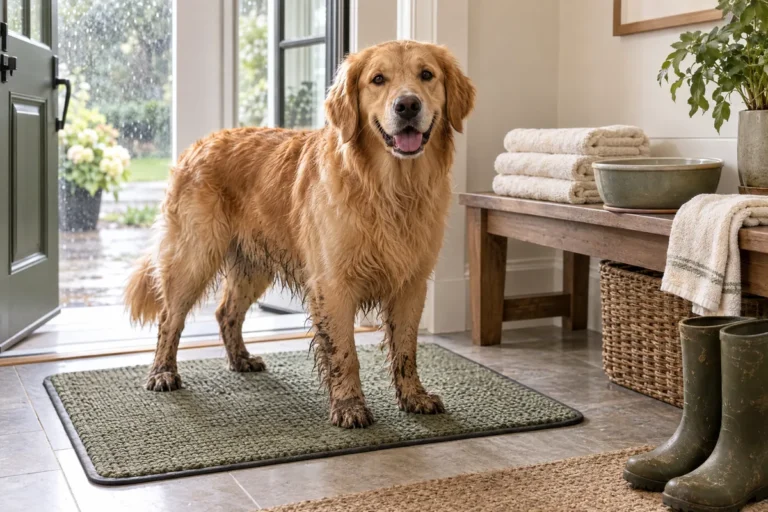
Before your dog leaves the bathing area, have clean towels ready and choose a comfortable place where they can stand or rest without slipping. A nonslip mat or a towel that stays put can help make the surface more stable. Keep the room comfortably warm, but do not try to compensate for a damp coat with hot air or intense heat.
Gather what you need first: two or more absorbent towels if available, a brush or comb suited to your dog’s coat for later use, and a dog dryer only if you plan to use one and your dog tolerates it. Having everything within reach means you can focus on the dog rather than leaving them wet while looking for supplies.
Let your dog shake off excess water if they choose to do so, and give them a moment to settle. Keep the routine predictable and avoid chasing, pinning, or holding a struggling dog in place. If your dog cannot stay comfortable in the chosen spot, pause and reconsider the setup.
2. Towel-dry without rough rubbing
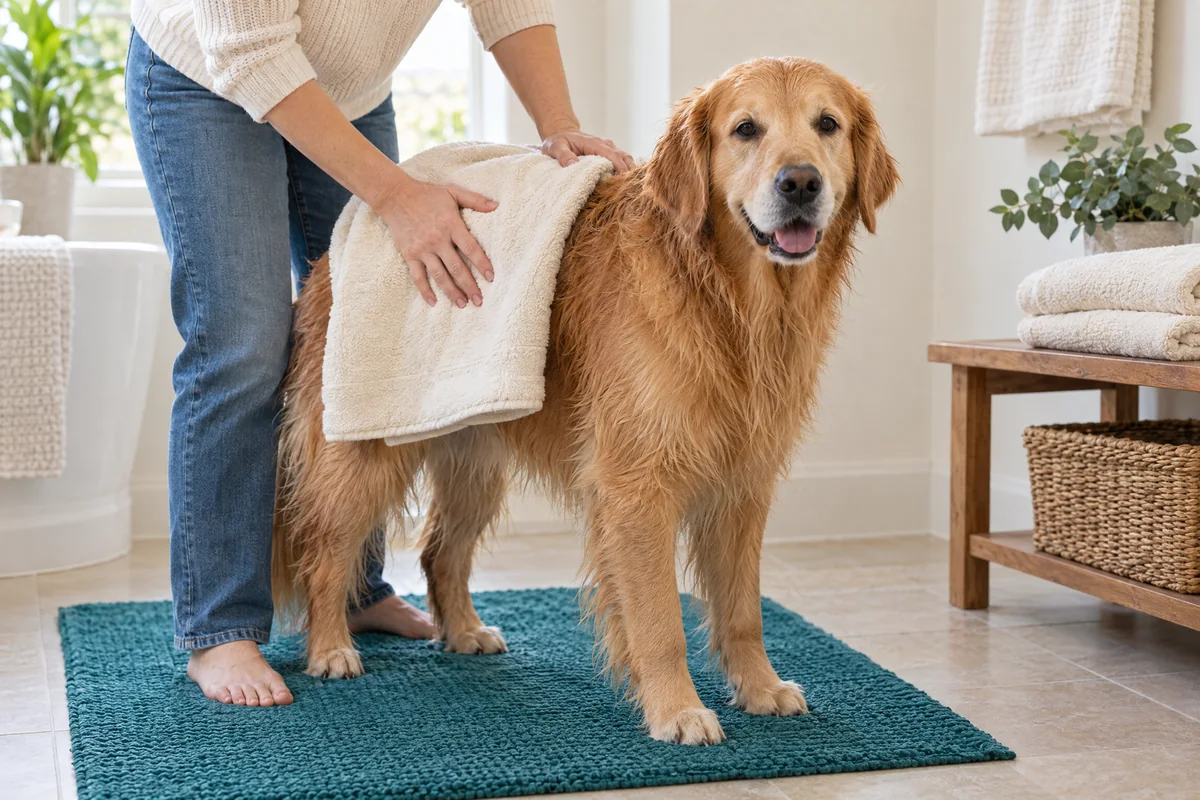
Use an absorbent towel to press gently against the coat, then lift it away. Work through manageable sections, blotting and squeezing water from the fur rather than scrubbing back and forth. The American Kennel Club recommends gentle pressing or squeezing instead of vigorous rubbing, which can tangle the coat (AKC’s dog-drying guide).
Start with the areas that are easiest for your dog to tolerate. Press the towel along the back and sides, then move to the chest, legs, and other accessible areas. Do not twist limbs, pull at the fur, or force your dog into an awkward position to reach underneath them. You can leave a difficult area until your dog is comfortable again or ask a groomer for help.
Switch towels when they become too damp
A towel can absorb only so much water before it starts moving moisture around rather than taking much more up. When the first towel feels soaked, switch to a dry one or use a fresh section. Press gently again instead of rubbing harder. A second towel often makes the process more efficient without requiring stronger handling.
For a short-coated dog, careful towel-drying may remove much of the water. Keep the dog in a comfortable place while the remaining coat dries, and check that the fur is no longer wet in the areas you can easily inspect. Do not assume every dog needs a blow-dryer.
Be especially gentle with long or easily tangled coats
Long, curly, feathered, or dense coats can tangle if rubbed vigorously. Use gentle pressing and squeezing, and avoid twisting a towel around a section of fur. If a comb or brush is part of your normal coat-care routine, use it only when the coat can be handled without pulling and in a way that suits the coat type.
Do not force a brush through a tangle or try to cut a mat out with scissors. Mats can sit close to the skin, and cutting into them can injure the dog. If you find a tight or extensive mat, or the skin beneath a tangle looks irritated, stop working on that area and ask a qualified groomer or veterinarian for guidance.
3. Decide whether air-drying is enough
Air-drying can be a reasonable option for some dogs, especially those with short coats that release water readily after towel-drying. Let the dog rest in a comfortable, supervised area while the coat dries. Choose a place where the dog can settle naturally and where you can check on them without repeatedly disturbing them.
Air-drying is not automatically unsafe, and blow-drying is not required for every dog. The important question is whether the coat is drying adequately and whether thick or dense areas are staying damp. Cornell’s canine health guidance lists a thick, incompletely dried coat and mats among factors that can contribute to moisture being held near the skin; this is a risk factor, not a guarantee that a skin problem will occur (Cornell’s hot-spot guidance).
Check accessible areas of a dense coat gently, without digging fingers or tools down to the skin or pulling at clumps. If the coat remains noticeably wet near the skin, consider whether a dog dryer on a cool or no-heat setting is appropriate and tolerated. If you cannot dry a thick coat comfortably or find extensive tangles, a professional groomer can help.
4. Use a dog dryer cautiously, if your dog tolerates it
A dog dryer can help move moisture out of a long or dense coat, but it should be used only when you can control the airflow and monitor your dog’s response. Prefer a cool or no-heat setting. Never use hot airflow, and do not rely on a fixed distance or number of minutes as a universal safety rule: coat, dryer, airflow, and the individual dog vary.
Keep airflow moving and away from the face
Keep the nozzle moving rather than directing air at one spot. Maintain a comfortable distance, and do not aim airflow at the eyes, ears, nose, or other sensitive areas. The AKC advises keeping dryer airflow away from the face and ears and avoiding heat (AKC’s dog-drying guide).
Watch the dog rather than focusing only on the coat: if they try to escape, repeatedly turn away, freeze, or otherwise appear distressed, stop the dryer.
Do not put a dog in an enclosed space or leave them unattended with a dryer running. Avoid cage or crate drying. You need to remain present to monitor comfort and adjust or stop the airflow immediately.
Introduce the sound and airflow gradually
If your dog is unfamiliar with a dryer, do not begin by directing strong airflow at a wet coat. Start with the dryer switched off while your dog can observe it at a comfortable distance. If your dog remains relaxed, you can briefly turn it on farther away, then stop. Only proceed in small steps if the dog stays comfortable; there is no need to reach direct drying in one session.
VCA recommends positive, gradual introduction to hygiene tools and notes that distance and a cool setting can help when introducing a dryer (VCA’s guidance on preparing a puppy for hygiene care). Although that resource discusses puppies, the general idea of watching the dog’s response and avoiding a forced introduction is useful when considering a dryer for an adult dog, too.
You can also decide not to use a dryer. If the sound or airflow causes distress, turn it off and return to towel-drying or supervised air-drying when appropriate. Do not hold the dog in place to make them tolerate the equipment.
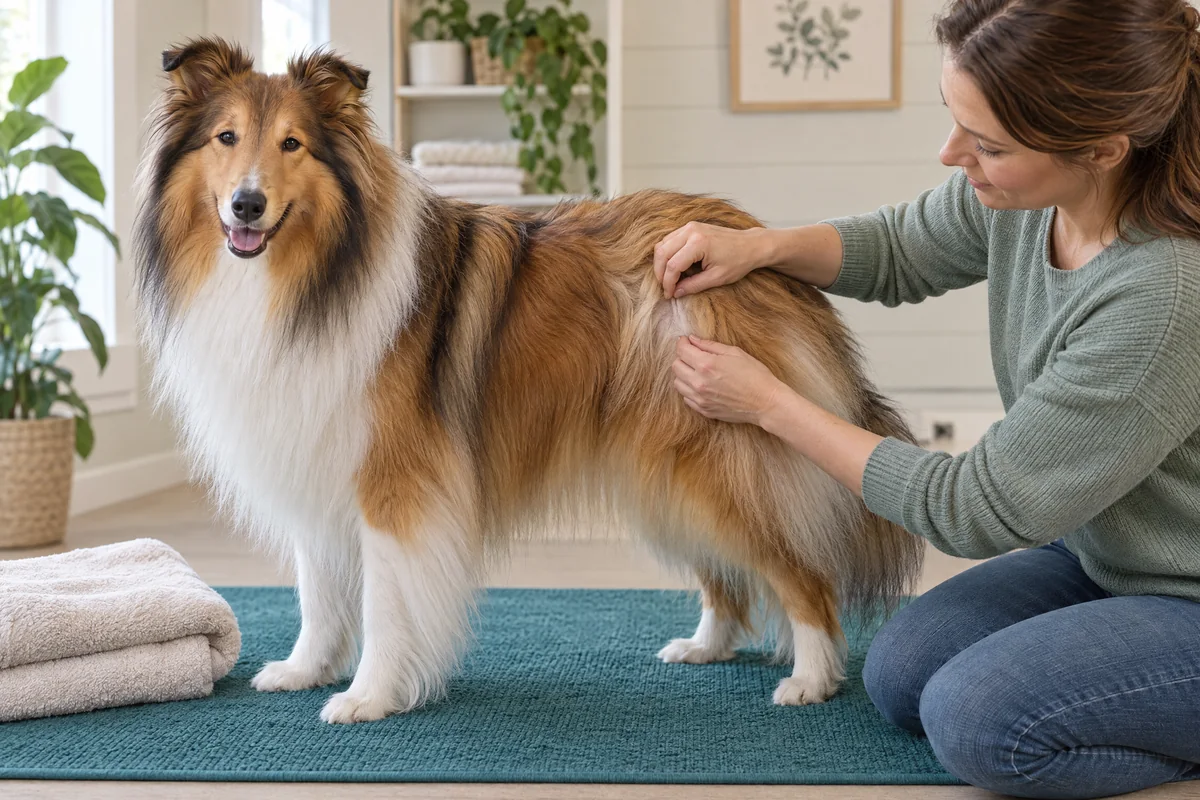
5. Finish with a gentle coat and skin check
Once the coat feels drier, look over the areas you can comfortably access. Check for damp sections, visible tangles, or debris that may have been missed during bathing. On a thick coat, gently feel the outer coat and accessible sections rather than probing down to the skin or tugging through knots.
If brushing is suitable for your dog’s coat, use a brush or comb that moves through the fur without pulling. Our guide to how to brush a dog properly explains general brushing technique. Do not turn drying into a prolonged brushing session if your dog is tired or uncomfortable, and do not try to remove a tight mat with scissors.
Pay attention to the skin as well as the coat. If you notice an area that looks irritated, or your dog shows pain when a spot is touched, stop handling that area and seek veterinary advice as appropriate. Drying is routine grooming, not a way to diagnose or treat a skin problem.
6. Common drying mistakes to avoid
- Rubbing the coat vigorously with a towel. Press and squeeze gently to absorb water without creating avoidable tangles.
- Using hot air to speed things up. Choose a cool or no-heat setting if using a dryer, and keep airflow moving.
- Pointing airflow at the face or ears. Direct it toward appropriate coat areas and stop if the dog is uncomfortable.
- Assuming every dog needs a dryer—or that air-drying is always wrong. Match the method to the coat and the dog’s tolerance.
- Leaving a dog unattended with a running dryer or using enclosed/crate drying. Stay present and able to stop immediately.
- Pulling at tangles or cutting mats with scissors. Leave difficult mats to a qualified groomer or veterinarian.
- Continuing while the dog is distressed. Turn the dryer off, pause, and choose a gentler option.
7. When should you get professional help?
Ask a qualified groomer for help when the coat is dense or difficult to dry thoroughly, the dog cannot comfortably tolerate the process, or tangles and mats make brushing difficult. Explain your dog’s coat type and what parts of the drying routine they accept. Ask what drying method the groomer uses and whether they can work without heat, keep the dog supervised, and stop if the dog becomes distressed. Do not assume every facility offers the same equipment or accommodations.
Contact a veterinarian if the skin appears irritated, your dog reacts with pain, or you are concerned about a skin or other health issue. If the dog has been exposed to a potentially harmful chemical or product, do not try to solve that situation with this routine-grooming guide; contact a veterinarian or an appropriate animal poison-control service and follow their directions.
If you are unsure whether the coat is dry enough or cannot comfortably handle a difficult area, stop rather than force the process and arrange help from a qualified groomer. Explain what your dog tolerated so far and ask for a supervised, coat-appropriate drying approach.
Quick answers
Can I let my dog air-dry after a bath?
Sometimes. Towel-drying followed by supervised air-drying can work for some dogs, particularly those with short coats. Check accessible areas and pay attention to thick or matted sections that may retain moisture.
Is a human hair dryer safe for dogs?
Do not use hot airflow. If considering any dryer, the safer approach is controlled, cool or no-heat airflow and close supervision; a dog dryer may be better suited to coat-drying needs. Stop if the dog becomes distressed, and ask a professional if you are unsure.
How do I dry a dog that is afraid of the dryer?
Do not force the dryer on them. Turn it off and use towels or supervised air-drying if suitable. If you try again another time, introduce the sound and airflow gradually and only continue while the dog remains comfortable.
Should I brush my dog while the coat is wet?
That depends on the coat and the tool. Avoid pulling or forcing a brush through tangles. Follow a coat-appropriate routine and get professional help with tight or extensive mats.
Sources
- American Kennel Club, Dry Your Dog
- Cornell University Riney Canine Health Center, Hot Spots
- VCA Animal Hospitals, Preparing Your Puppy for a Lifetime of Good Hygiene
Routine grooming education, not veterinary diagnosis or treatment. G1 and G2 are original AI-generated editorial illustrations, not photographs of an actual grooming session.