How to Clean a Muddy Dog After a Walk: A Practical Paw-and-Coat Routine
After-walk grooming · A proportionate cleanup
The quickest way to clean a muddy dog is to check where the dirt actually is, then use the smallest amount of cleaning needed: wipe light paw smudges, rinse or wash packed mud from paws, and clean muddy legs, belly, or coat in small sections. Finish by drying the areas you cleaned and checking between the toes and through the coat for leftover debris. A muddy walk does not automatically mean your dog needs a full bath.
1. Set up before you bring your dog in
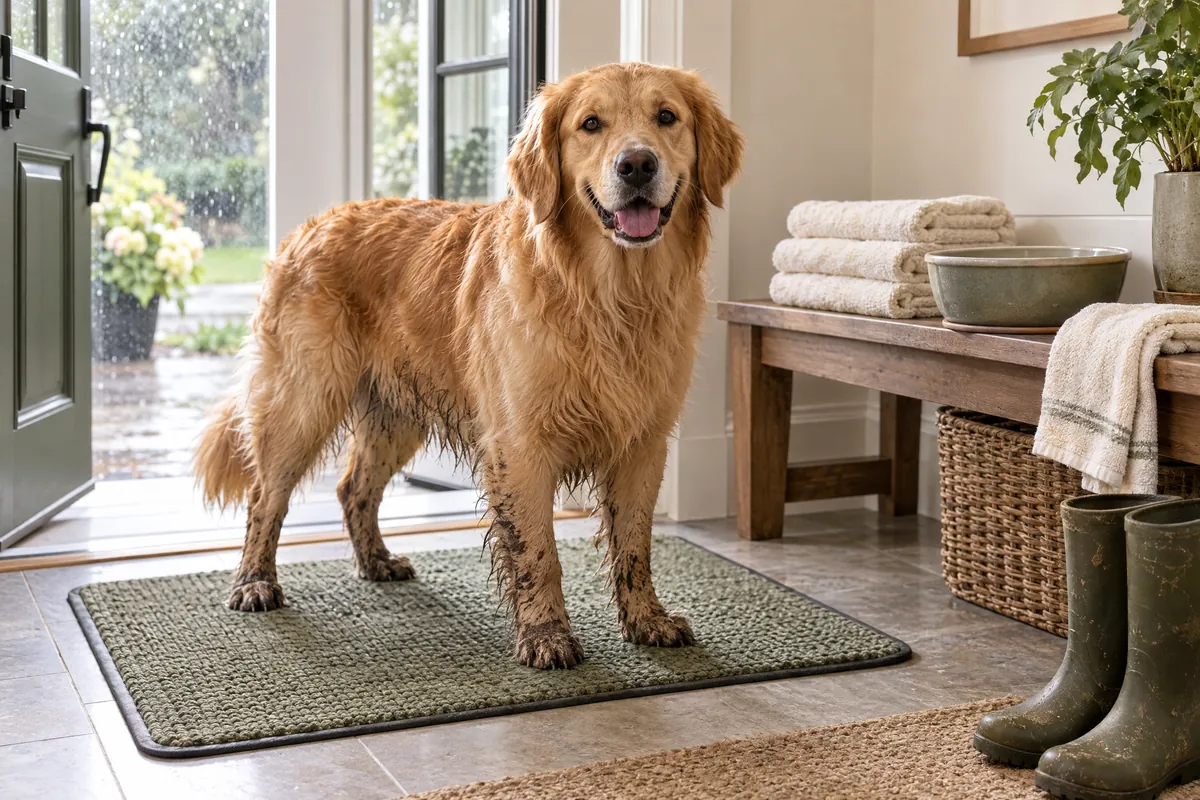
A little preparation makes cleanup calmer and helps keep mud from spreading across the floor. Choose an easy-to-clean spot near the door, on a stable surface where your dog can stand comfortably. If the floor is slippery, put down a non-slip mat or a towel that will stay in place. Keep the door closed if your dog might dash off while wet or muddy.
Have these basics within reach:
A few absorbent towels
A soft, clean washcloth
A small container or gentle stream of lukewarm water
A pet-labeled wipe for light paw dirt, if you already use one
A brush or comb suited to your dog’s coat, for checking accessible areas after cleaning
You do not need a special product for every muddy walk. Start with clean water and a soft cloth when that is enough. If you use wipes, choose ones labeled for pets and follow the label. Our guide to choosing and using dog paw wipes safely covers that narrower task in more detail.
Before handling your dog, place the supplies where you can reach them without twisting or leaving the dog unattended. Keep the session short and matter-of-fact. Do not force a paw into position or pin your dog down to finish a cleanup.
2. Check the mud, coat, and your dog’s comfort first
Take a quick look before you start wiping. Notice whether the mud is only on the paw pads, packed between the toes, splashed up the legs, smeared across the belly, or spread through the coat. Also look for burrs, twigs, and other visible debris after walks through grass or wooded areas; VCA recommends checking the coat for these items and removing them gently when possible (VCA’s coat-care guidance).
Pay attention to your dog’s response. If your dog pulls away repeatedly, seems distressed, or reacts as though an area hurts, pause rather than trying to complete the routine by force. If you see an injury, abnormal-looking skin, a lodged object, or a tangle that cannot be eased without pulling, stop work on that spot and seek appropriate professional guidance.
The aim is ordinary cleanup, not a close inspection that becomes uncomfortable. Look only as closely as your dog comfortably allows, and do not dig between toes or tug at anything embedded in the skin.
3. Choose the lightest cleanup that will work
Light mud on the paws
If the dirt is a thin surface layer, use a pet-labeled wipe or a damp, soft cloth. Wipe the underside of each paw and around the outer toes without rubbing hard. The American Kennel Club notes that pet-labeled wipes can be useful for lightly muddy paws; for heavier dirt, a warm washcloth or washing is more appropriate (AKC’s paw-cleaning guide). That guidance is specifically about paws, not a whole-body bathing method.
Use a fresh part of the cloth as it becomes dirty. A quick wipe should remove surface grime, not grind grit into the skin. If the cloth only spreads the mud around, switch to rinsing instead of repeating the same wipe.
Packed mud around the pads or between the toes
For thicker mud, wet the paw with lukewarm water and let the water loosen the dirt. Gently move the toes only as far as your dog accepts, and clean visible mud from the accessible spaces with your fingertips or cloth. Do not scrape with a hard object, pull at clumps, or try to reach deep into a tight space.
Rinse away loosened dirt, then check the pads and the spaces between the toes without forcing the paw open. Dry thoroughly, including the accessible areas between the toes. The AKC specifically advises checking paw pads and between the toes and drying paws well after cleaning (AKC paw-cleaning advice). If debris appears lodged or the paw is too uncomfortable to handle, stop and ask a veterinarian what help is appropriate.
Muddy lower legs
For splashes or streaks on the legs, clean one small section at a time with a damp washcloth. Work from the dirtiest visible patch toward the edges, rinsing the cloth often so you are not transferring mud to clean fur. For a thicker coating, use a small amount of lukewarm water to loosen it, then wipe or rinse it away without vigorous scrubbing.
Longer feathering around the legs can hold mud near the surface and around tangles. Separate only the fur you can handle gently. If a clump catches, do not yank a brush through it or reach for scissors. VCA advises gentle coat care and recommends professional help for extensive mats or burrs; cutting mats with scissors can injure the dog (VCA grooming and coat-care guidance).
A muddy belly or underside
Ask your dog to stand naturally if comfortable, and clean only the muddy area you can reach without lifting or twisting the body. Use a well-wrung cloth first; add a little water if the mud needs loosening. Keep the cloth and any rinse water away from the eyes, ears, and nose. Avoid spraying or pouring water toward the face or into these sensitive areas, as the ASPCA advises in its dog-grooming guidance (ASPCA dog-grooming tips).
The belly can be a sensitive area for some dogs. If your dog sits down, twists away, or becomes uncomfortable, pause. You can finish a small accessible patch later if your dog settles, but do not force the position to reach every last smear.
Mud spread through much of the coat
When mud covers a large area, repeated spot-wiping may take longer and leave dirt behind. A proper bath may be the more practical choice, depending on your dog’s coat, lifestyle, and comfort. Not every muddy walk calls for a bath, and there is no single schedule that suits every dog.
If a bath is needed, use a dog-appropriate bathing routine rather than improvising with household cleaners. Our guide to bathing a dog walks you through the full-bath process. ASPCA recommends thorough towel drying as part of grooming and cautions against directing water into the eyes, ears, or nose (ASPCA dog-grooming tips).
4. Dry the cleaned areas and recheck the coat
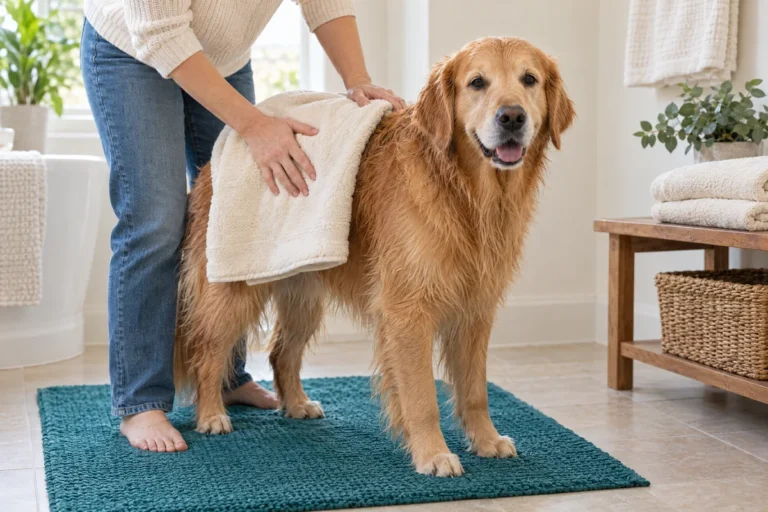
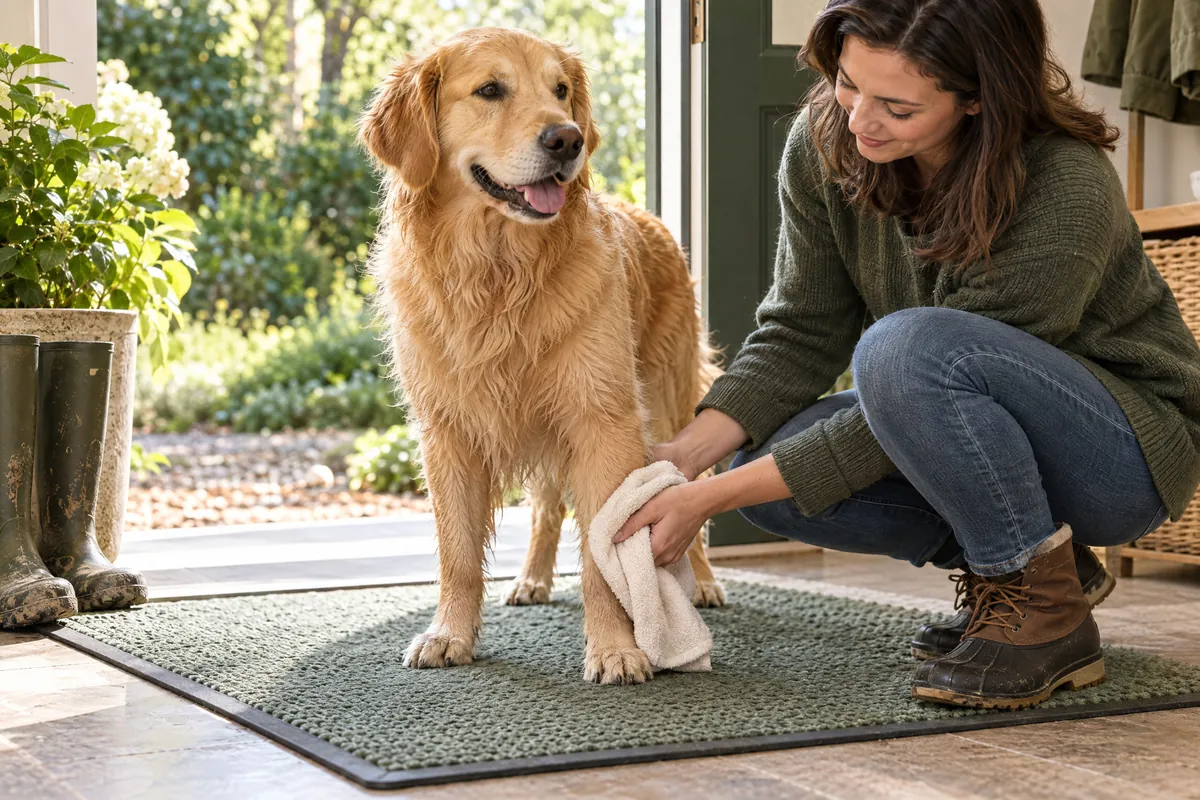
Use a clean, absorbent towel to blot and gently press the cleaned areas. Avoid rough back-and-forth rubbing, especially around toes, thinly coated areas, and any fur that tangles easily. If the towel becomes soaked or muddy, switch to a clean section.
For paws, separate the toes only as far as your dog comfortably allows and dry the accessible spaces. Check that no obvious mud remains around the pads or between the toes. For legs and belly, feel through the fur gently to spot damp patches or clumps that still hold dirt. If you find more mud, clean that small section rather than restarting the entire routine.
Once the coat is clean enough and reasonably dry, check for visible burrs or twigs. Use a suitable brush or comb only where it moves through the coat without pulling. Do not force a brush through a mat or a burr tangled tightly in the hair. If the coat is heavily tangled, or you cannot remove debris without discomfort, leave that area for a veterinarian or professional groomer to assess.
Let your dog finish drying in a comfortable, draft-free place. The goal is to remove the mud and excess moisture from the areas you cleaned, not to make every dog follow an identical drying routine. Coat length, density, weather, and the size of the muddy area all affect what is practical.
5. Common cleanup mistakes to avoid
Rubbing harder when mud will not lift. Add a little water or change to a rinse instead of scrubbing the same patch.
Using ordinary household or human wipes by default. Use a pet-labeled wipe when a wipe is needed and follow its label.
Pulling at clumped fur, burrs, or mats. Stop if the hair does not separate gently; do not cut mats out with scissors.
Forgetting to dry paws. Check the accessible spaces between the toes as well as the pads.
Trying to finish while the dog is struggling. Pause and make the setup easier, or seek help if handling remains difficult.
Giving every muddy walk a full bath automatically. Match the cleanup to how much of the dog is dirty and to the dog’s individual coat and needs.
6. When should you stop and get help?
Stop cleaning a specific area if your dog shows pain, the skin appears injured or abnormal, something seems lodged, or the fur is tightly matted. Do not dig out embedded material, apply home remedies, or attempt to treat an injury as part of routine grooming. Contact a veterinarian when you are concerned about an injury or lodged object. For extensive mats or difficult coat tangles without an apparent injury, ask a qualified groomer or veterinarian for guidance.
If your dog repeatedly finds paw handling difficult, you can make future sessions shorter and work only on comfortable, accessible areas. Do not use force to complete the cleanup. If you cannot safely clean the area without distress, professional help is the better next step.
7. Make the next muddy walk easier
Keep a towel and washcloth near the usual entry point, and decide where your dog can stand comfortably before the next wet walk. If mud tends to collect in the same areas, check those spots first when you return. For a lightly muddy paw, a brief wipe may be enough; for packed mud or a muddy lower coat, plan on water and a little more time.
A repeatable setup matters more than a complicated kit. Keep supplies clean, use fresh water when rinsing, and wash muddy cloths before the next outing. Adjust the routine to your dog rather than expecting every coat and every walk to need the same treatment.
Quick answers
Do I need to bathe my dog after every muddy walk?
No. Clean the areas that are dirty. A wipe or localized wash may be enough for paws, legs, or a small belly patch; a full bath may make more sense when mud is spread through much of the coat.
Can I use a paw wipe on my dog’s belly or legs?
Check the product label before using it beyond paws. For larger or muddier areas, a soft cloth and lukewarm water are a straightforward option. The AKC’s wipe guidance cited above is specifically for paw cleaning.
Should I brush mud out of tangled fur?
Do not force a brush through a tangle or pull at a burr. Brush only where the coat separates gently; leave extensive mats or tightly caught debris for professional help.
What is the most important step after cleaning paws?
Dry the paws thoroughly and check the pads and accessible spaces between the toes. If your dog resists or something appears lodged, stop rather than digging or pulling.
Sources
American Kennel Club — “How to Clean Your Dog’s Paws”: https://www.akc.org/expert-advice/health/how-to-clean-dogs-paws/
VCA Animal Hospitals — “Grooming and Coat Care for Your Dog”: https://vcahospitals.com/know-your-pet/grooming-and-coat-care-for-your-dog
ASPCA — “Dog Grooming Tips”: https://www.aspca.org/pet-care/dog-care/dog-grooming-tips
Routine grooming education, not veterinary diagnosis or treatment. Stop if an area is painful, injured, or cannot be cleaned comfortably. G1 and G2 are original AI-generated editorial illustrations, not photographs of an actual grooming session.