Dog Paw Wipes: How to Choose and Use Them Safely
Dog paw wipes are a convenient way to remove everyday dirt, mud, sand, and road salt from your dog’s paws after walks—but they should be made specifically for dogs and used as a quick cleanup, not a replacement for proper washing when paws are heavily soiled. For routine use, look for pet-safe wipes with a gentle formula, use them around the paw pads and between the toes, and dry the paws afterward.
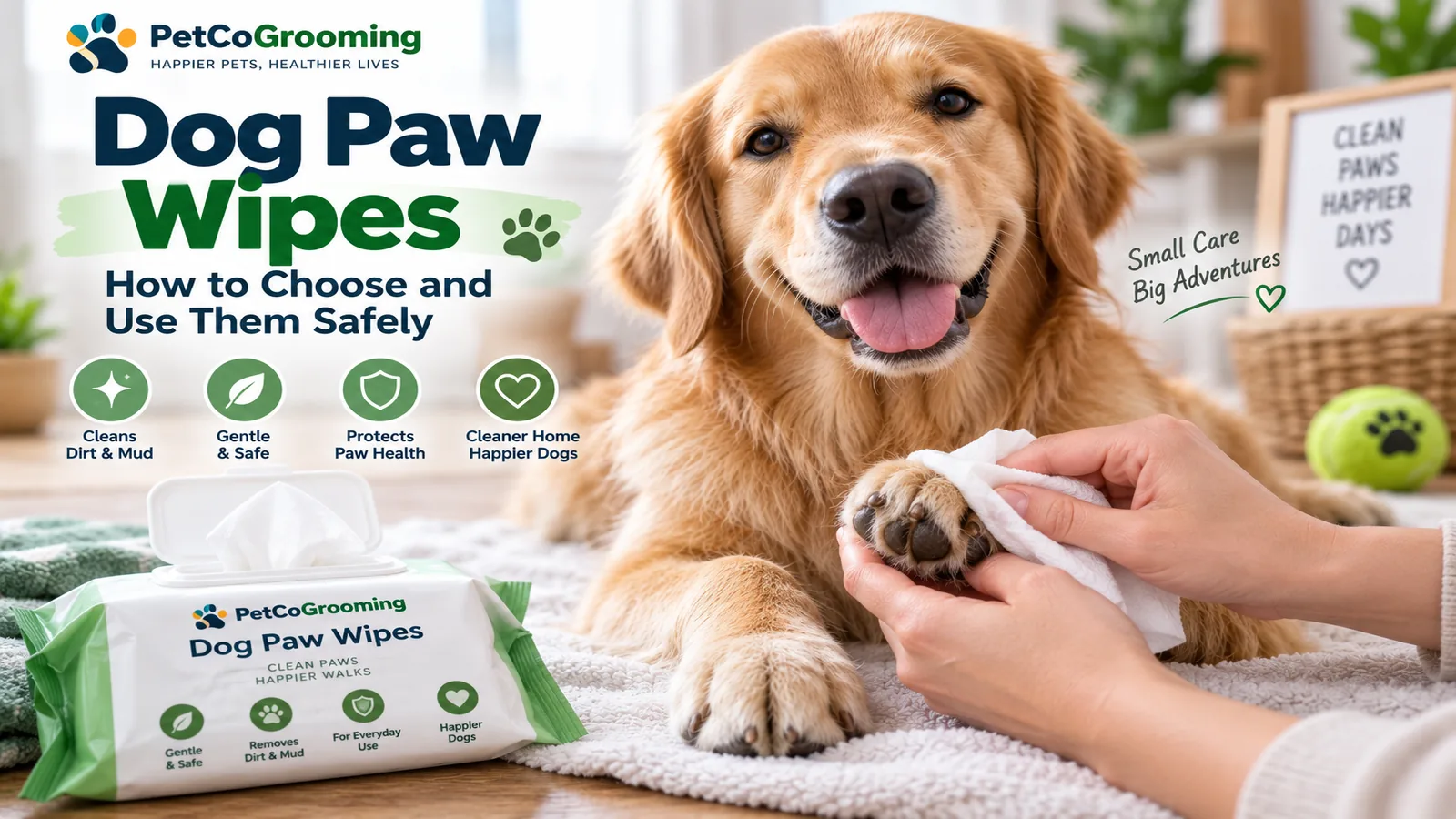
A good pack of dog paw wipes can turn the five-minute battle between a dirty walk and a clean house into a much easier routine. But not every wipe is appropriate for a dog’s paws, and knowing when a wipe is enough—and when you actually need water and a wash—matters.
Why Use Dog Paw Wipes?
Dogs pick up plenty of debris on their feet during normal walks.
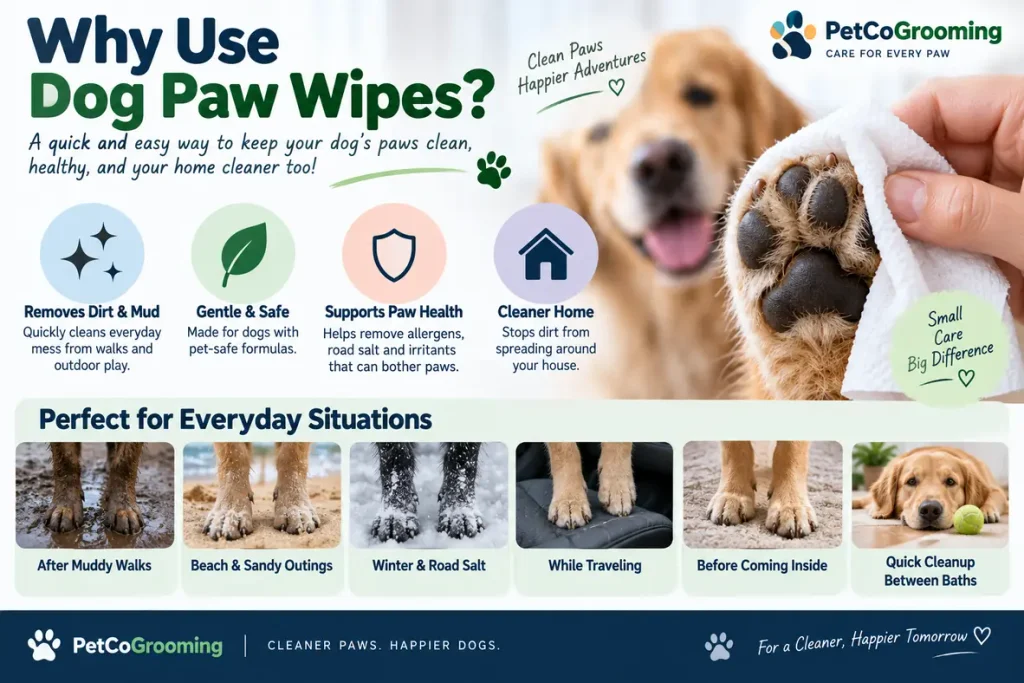
Mud, sand, dust, grass residue, and road salt can collect around the paw pads and between the toes. Wipes give you a fast way to remove that surface mess before your dog tracks it through the house.
The American Kennel Club notes that pet-safe wipes can be useful for cleaning muddy, sandy, or salty paws, particularly when you’re traveling or need a quick cleanup. For heavier messes, however, a thorough wash may be more appropriate.
Dog paw wipes are especially useful:
- After muddy walks
- After beach or sandy outings
- After walking on treated roads or sidewalks
- When your dog comes inside with dirty paws
- While traveling
- For quick cleanup between baths
- When a full bath simply isn’t necessary
What Should You Look for in Dog Paw Wipes?
The wipe itself matters just as much as the convenience.
Choose Wipes Made for Dogs
Start with the simplest rule: use wipes specifically labeled for pet or dog use.
Human wipes may contain ingredients that aren’t appropriate for your dog’s skin. PetMD specifically recommends pet-safe grooming wipes rather than ordinary human wipes for cleaning dogs’ feet.
Look for a Gentle Formula
For routine paw cleaning, you generally don’t need an aggressive medicated product.
Look for a product intended for routine external cleaning and follow its label directions. If your dog has allergies, irritated skin, or a known sensitivity, pay particular attention to the ingredient list and stop using a product if irritation develops.
Some veterinary-reviewed guidance also recommends avoiding unnecessarily harsh ingredients for routine grooming wipes.
Choose a Strong, Textured Wipe
A very thin wipe may tear when you’re trying to clean between toes.
A thicker sheet can make it easier to remove mud and debris without repeatedly rubbing the same area.
Consider Fragrance Carefully
A strongly scented wipe isn’t automatically a better wipe.
If your dog has sensitive skin, a fragrance-free option may be a more sensible starting point. The goal is clean paws—not heavily perfumed paws.
Check the Intended Use
Not every pet wipe is designed for every part of a dog.
A product labeled for general grooming may have different directions from a medicated wipe. Always follow the product label, particularly if it contains active ingredients.
How to Use Dog Paw Wipes Correctly
Using a paw wipe is simple, but a little technique makes the cleanup more effective.
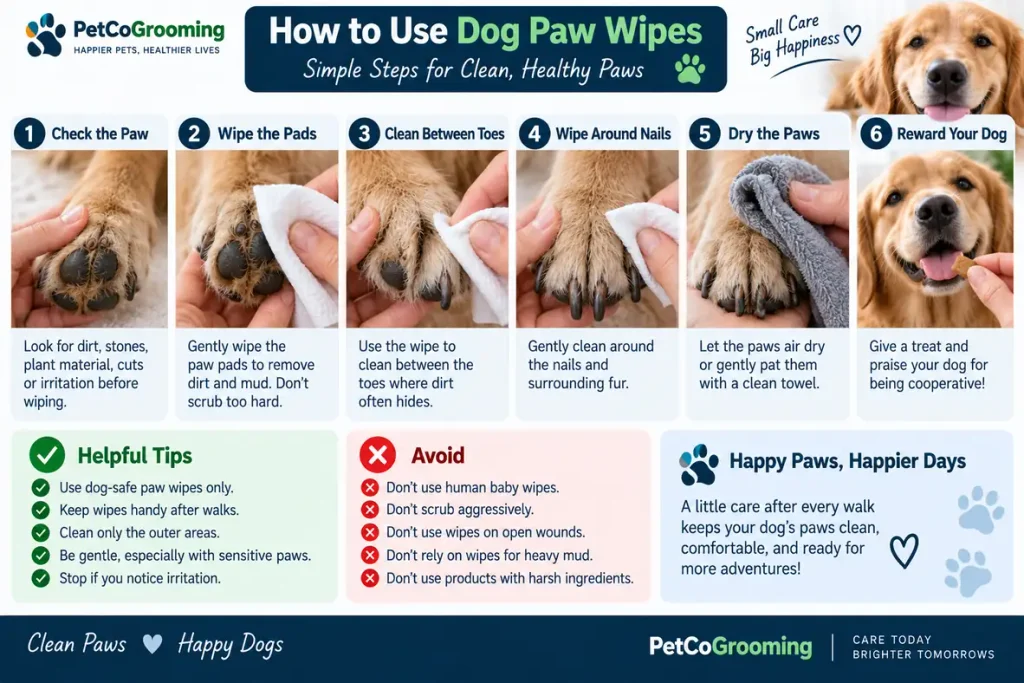
Step 1: Check the Paw First
Before wiping, quickly look at the paw.
Check the pads, between the toes, and around the nails for obvious dirt, stones, plant material, cuts, or irritation.
If something appears embedded or the paw looks injured, don’t simply wipe over it and assume the problem is solved.
Step 2: Wipe the Paw Pads
Gently wipe the visible surface of the paw pads.
Don’t scrub aggressively. The goal is to lift away surface dirt rather than irritate the skin.
Step 3: Clean Between the Toes
Debris can collect between the toes, especially after muddy or sandy walks.
Use the wipe gently around these areas without forcing it deeply into spaces where you cannot see what you’re doing.
Step 4: Check Around the Nails
Wipe around the nails and surrounding fur if dirt has collected there.
This is particularly useful after muddy walks.
Step 5: Dry the Paws
After cleaning, allow the paws to dry or gently pat them with a clean towel.
Some product labels specifically instruct owners to dry paws after wiping, so follow the directions for the product you’re using.
Dog Paw Wipes vs. Washing: Which Is Better?
It depends on how dirty the paws are.
| Situation | Best approach |
| Light dust | Paw wipe |
| Small amount of sand | Paw wipe |
| Minor muddy paws | Paw wipe or damp cloth |
| Road salt residue | Thorough cleaning; wipe may be useful for quick removal |
| Heavy mud | Wash paws |
| Sticky or unknown substance | Wash thoroughly and assess the substance |
| Suspected chemical exposure | Don’t rely on a wipe—seek appropriate veterinary guidance |
| Open wound or significant irritation | Veterinary assessment may be needed |
The key is not to force wipes to do a job they’re not designed for.
What Do Your Dog’s Paws Need?
Choose what happened on the walk and get a quick cleanup guide.
What are you dealing with?
The AKC specifically notes that serious messes may require a warm, soapy washcloth or more thorough washing rather than relying on wipes alone.
Can You Use Baby Wipes on a Dog’s Paws?
It’s better to choose wipes specifically labeled for dogs or pets.
Baby wipes are formulated for human skin, not canine skin, and their ingredients may not be appropriate for your dog.
PetMD recommends pet-safe grooming wipes for minor paw cleanup and also notes that a simple warm-water washcloth can be an effective alternative.
So if you’re out of dog wipes, you don’t necessarily need to reach for a human wipe.
A clean cloth dampened with water can be the better simple option for ordinary dirt.
Are Dog Paw Wipes Safe for Daily Use?
They can be appropriate for frequent routine cleaning when the specific product is labeled for that use and your dog tolerates it, but don’t assume every wipe is suitable for unlimited daily use.
Read the label.
Some products are simple grooming wipes, while others are medicated products with active ingredients and specific precautions.
For example, DailyMed-listed animal products can have directions and warnings that differ substantially depending on their formulation. Some labels instruct users to avoid eyes, stop use if irritation occurs, and contact a veterinarian when appropriate.
If your dog’s paws become red, itchy, swollen, painful, or irritated after using a wipe, stop using that product and speak with your veterinarian.
What Should You Never Use Dog Paw Wipes For?
Dog paw wipes are designed for external cleaning. They aren’t a universal treatment for paw problems.
Don’t use an ordinary grooming wipe as a substitute for veterinary treatment when your dog has:
- A bleeding paw
- A deep cut
- Significant swelling
- Severe redness
- Persistent licking or chewing
- A painful limp
- A suspected burn
- A foreign object stuck in the paw
- A rapidly worsening skin problem
A wipe can clean a surface, but it can’t determine why a paw is repeatedly irritated.
For example, cracked or painful paw pads can have multiple underlying causes, including allergies and other medical conditions.
What About Medicated Paw Wipes?
This is where owners should be more careful.
Some wipes contain active ingredients such as chlorhexidine or ketoconazole and are marketed for specific skin conditions. These are not the same thing as ordinary grooming wipes.
Don’t automatically choose a medicated wipe simply because it sounds more powerful.
If your dog has recurrent redness, odor, itching, sores, or other signs of a skin problem, ask your veterinarian whether a medicated product is appropriate.
Routine cleaning and medical treatment are two different jobs.
A Simple Paw-Wipe Routine After Walks
You don’t need to turn every walk into a major grooming session.
Try this quick routine:
Come inside → Check paws → Wipe pads → Check between toes → Check nails → Dry → Done
That takes only a short time and gives you another opportunity to notice changes before they become bigger problems.
This is especially useful for dogs that regularly walk on muddy, sandy, salty, or dirty surfaces.
Dog Paw Wipes Buying Checklist
Before buying a pack, ask these questions:
- Is it specifically labeled for dogs or pets?
- Is it intended for paws or general external grooming?
- Is the formula appropriate for routine use?
- Is the wipe thick enough to clean without tearing?
- Does your dog have sensitive skin or allergies?
- Are there active ingredients that you actually need?
- Are there clear usage and safety instructions?
- Does the product tell you what to do if irritation occurs?
Don’t buy based on the word “natural” alone. Read the actual label and choose a product appropriate for the job.
Frequently Asked Questions
What are dog paw wipes used for?
Dog paw wipes are mainly used for quick removal of everyday dirt, mud, sand, and similar surface debris from a dog’s paws. They are convenient after walks and while traveling, but heavily soiled paws may need a more thorough wash.
Can I use dog paw wipes every day?
You can use a product frequently if its label supports that use and your dog tolerates it. However, different wipes have different formulations and instructions, so follow the manufacturer’s directions and stop if irritation develops.
Can I use baby wipes on my dog’s paws?
It’s better to use wipes specifically made for dogs or pets. For simple dirt, a clean cloth dampened with water can also work well.
Are dog paw wipes enough after walking on road salt?
They can be useful for quick cleanup, but make sure the paws are thoroughly cleaned when there is significant salt or other residue. The AKC recommends washing paws thoroughly when necessary to remove substances such as road salt.
Should I wipe between my dog’s toes?
Yes, if dirt or debris has collected there. Gently clean the visible spaces between the toes without aggressive rubbing or forcing a wipe into an area you cannot see.
What if my dog’s paws are red or irritated?
Don’t assume that more wiping will fix the problem. Persistent redness, swelling, pain, licking, chewing, cracking, or other changes can have an underlying cause and may require veterinary evaluation.
The Bottom Line
Dog paw wipes are best viewed as a convenient everyday cleanup tool—not a replacement for proper paw washing or veterinary care.
Choose a dog-safe, appropriately labeled wipe, gently clean the pads and between the toes after dirty walks, and dry the paws when the product instructions call for it. For heavy dirt, road salt, unknown substances, injuries, or persistent irritation, step up from a quick wipe to proper cleaning or veterinary advice.
The best paw-care routine is simple:
Clean when needed. Check while you clean. Dry when appropriate. And don’t ignore a paw that looks abnormal.