
How to Brush a Dog Properly: A Step-by-Step Guide
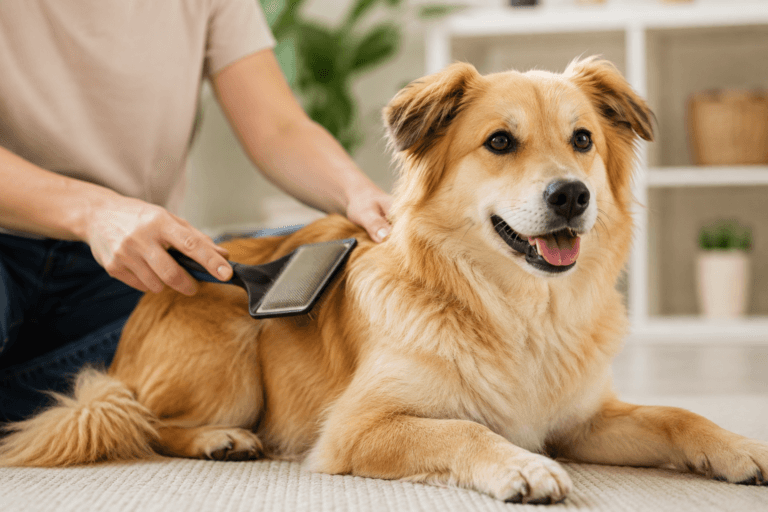
The best way to brush a dog is to choose a brush that matches the coat, work in small sections with gentle strokes, check for tangles, and stop if your dog shows signs of pain or significant distress. Brushing frequency also depends on coat type: short coats may need less frequent maintenance, while long, curly, dense, or heavily shedding coats often need more frequent brushing. Learning how to brush a dog properly starts with choosing the right brush and using a gentle technique that suits your dog’s coat.
If you’re learning how to brush a dog properly, you don’t need to make grooming complicated. The right tool, a calm approach, and a consistent routine can make brushing easier for both you and your dog.
This guide explains which brush to choose, how to brush different coat types, how to handle tangles safely, and when professional help is a better option.
Quick Answer: How to Brush a Dog Properly
To brush your dog properly:
- Choose a brush designed for your dog’s coat.
- Let your dog sniff and become comfortable with the brush.
- Start in an easy, comfortable area.
- Brush in small sections.
- Use gentle pressure rather than pulling hard.
- Pay special attention to areas prone to tangles.
- Check deeper layers of long or double coats.
- Stop if brushing causes pain or significant distress.
- Reward calm behavior with praise or treats.
- Check the coat and skin after brushing.
The exact technique should change according to your dog’s coat type.
Why Regular Dog Brushing Matters
Brushing does more than remove loose hair.
Regular brushing can help:
- Remove loose hair and dirt
- Reduce the buildup of tangles
- Help prevent some mats from developing
- Keep the coat more manageable
- Give you an opportunity to notice unusual skin or coat changes
- Provide a positive handling and bonding experience
The American Kennel Club notes that brushing can also give owners an opportunity to notice things such as cuts or sore areas while maintaining the coat.
Brushing is therefore one part of a broader dog grooming schedule, rather than an isolated cosmetic task.
Step 1: Choose the Right Brush for Your Dog
The first step in how to brush a dog properly is choosing the correct tool.
Slicker Brush
Slicker brushes have closely spaced wire pins and can be useful for many medium-, long-, curly-, and wire-coated dogs.
Use a light touch. Pressing a slicker brush too firmly can cause discomfort.
Bristle Brush
Bristle brushes are commonly useful for short-coated dogs.
They can help remove loose hair and dirt and are also useful as finishing brushes on some other coat types.
Pin Brush
Pin brushes can be useful for longer coats, particularly as a finishing tool for smoothing the hair and removing surface debris.
Undercoat Rake
An undercoat rake is designed to reach the undercoat of double-coated dogs and can help remove loose undercoat hair.
The correct pin length matters, so choose a tool appropriate for your dog’s coat.
Rubber Brush or Grooming Mitt
Rubber brushes and grooming mitts can be useful for some short-coated dogs.
They can help loosen dirt and loose hair while providing a gentler, massage-like experience.
Step 2: Prepare Your Dog Before Brushing
Don’t immediately begin pulling a brush through your dog’s coat.
Especially if your dog is young, nervous, or unfamiliar with grooming, introduce the brush gradually.
Try this:
Show the brush → let your dog sniff it → reward calm behavior → make a few gentle strokes → reward again.
The AKC recommends using treats, short sessions, a calm environment, and gradual exposure for dogs that dislike brushing.
A calm dog is much easier to brush than a dog that feels trapped or frightened.
Step 3: Start With a Comfortable Area
When learning how to brush a dog properly, don’t begin with the most sensitive or tangled area.
Start somewhere your dog normally accepts being touched, such as the:
- Shoulder
- Back
- Side
Use a few gentle strokes and observe your dog’s body language.
If your dog remains relaxed, continue gradually.
If your dog becomes uncomfortable, stop and determine why before continuing.
Step 4: Brush in Small Sections
Instead of brushing randomly, divide the coat into manageable sections.
A simple sequence can be:
Back → sides → chest → legs → tail → sensitive areas
Work through one section before moving to the next.
For longer coats, this approach helps you identify tangles that may be hidden beneath the surface.
It also makes it easier to avoid repeatedly brushing one area while missing another.
Step 5: Use Gentle, Controlled Strokes
A common beginner mistake is assuming that harder brushing produces better results.
It doesn’t.
Use enough pressure to work through the coat without scraping or irritating the skin.
This is particularly important with slicker brushes. The AKC specifically advises maintaining a light touch because excessive pressure can cause discomfort.
If your dog repeatedly pulls away, turns toward the brush, cries, growls, or otherwise reacts as though brushing hurts, stop.
The goal is effective grooming without unnecessary discomfort.
Step 6: Pay Attention to Tangles and Mats
Some areas are more likely to develop tangles because hair rubs together or collects moisture and debris.
Check especially around:
- Behind the ears
- Neck
- Chest
- Armpits
- Inner legs
- Tail
- Areas where legs meet the body
Small tangles may sometimes be gently worked through with an appropriate brush or comb.
But don’t keep pulling when a tangle is tight.
According to the ASPCA, mats can become uncomfortable, and mats that cannot be easily brushed out should be handled by a groomer or veterinarian.
Never Cut a Tight Mat With Household Scissors
This is an important safety rule.
Do not use household scissors to cut mats out of your dog’s coat.
A dog can suddenly move or jerk, creating a serious risk of cutting the skin. Both the ASPCA and AKC advise against attempting to cut mats out with scissors.
Step 7: Check the Coat With a Comb
For long or dense coats, brushing the surface isn’t always enough.
After brushing a section, use an appropriate comb to check whether tangles remain underneath.
A useful routine is:
Brush → check → comb → move to the next section.
If the comb repeatedly catches in the same location, investigate rather than repeatedly pulling through it.
Step 8: Brush the Undercoat When Appropriate
Double-coated dogs have both an outer coat and an undercoat.
If your dog has a double coat, brushing only the surface may leave loose undercoat hair behind.
Appropriate tools such as undercoat rakes or suitable slicker brushes can help reach deeper layers of the coat.
However, don’t assume that more aggressive brushing is better.
The tool should match the coat, and pressure should remain gentle.
How to Brush Different Dog Coat Types
How to Brush a Short-Haired Dog
Short coats are generally easier to maintain.
A bristle brush, grooming mitt, or appropriate rubber brush may work well depending on the individual coat.
A simple routine is:
- Start along the back and sides.
- Use gentle strokes.
- Work around the body systematically.
- Check areas where loose hair accumulates.
- Finish by checking the skin and coat.
For some short coats, brushing against the direction of hair growth can help loosen dead hair before brushing with the direction of growth.
How to Brush a Long-Haired Dog
Long-haired dogs generally need more careful maintenance.
Use an appropriate slicker or pin brush and work in small sections.
Don’t attempt to force a brush through a large knot.
Pay special attention to:
- Behind the ears
- Legs
- Chest
- Tail
- Under the body
A comb can be useful as a final check for remaining tangles.
How to Brush a Curly or Wavy Coat
Curly and wavy coats can be particularly prone to tangling.
A suitable slicker brush and comb may be useful, but technique is important.
Work slowly and avoid pressing hard against the skin.
If you repeatedly find mats despite regular brushing, consider having a professional groomer assess the coat and recommend an appropriate maintenance routine.
How to Brush a Double-Coated Dog
Double-coated dogs require attention to the undercoat as well as the outer coat.
Tools such as slicker brushes and appropriate undercoat rakes can help remove loose undercoat hair.
During heavier shedding periods, some dogs may need more frequent brushing.
The correct frequency depends on the individual coat and shedding pattern rather than one universal schedule.
How Often Should You Brush a Dog?
There is no single brushing frequency for every dog.
A useful starting point is:
| Coat Type | Possible Starting Routine |
|---|---|
| Short / Smooth | About weekly or as needed |
| Medium | Several times per week may be appropriate |
| Long | Often several times per week |
| Curly / Wavy | Often frequent, sometimes daily |
| Double-Coated | Several times per week; more during heavy shedding |
These are starting guidelines, not universal recommendations. Coat condition, shedding, lifestyle, length, and matting tendency should determine the actual routine. AKC sources similarly describe brushing frequency as ranging from weekly to several times per week or daily depending on coat and shedding.
If your dog develops tangles between brushing sessions, your routine may need adjustment.
What If My Dog Hates Being Brushed?
If your dog dislikes brushing, don’t turn the session into a struggle.
Instead:
Start Very Small
Begin with just a few strokes.
Use Rewards
Give treats during calm behavior.
Let Your Dog Sniff the Brush
This can make the tool less unfamiliar.
Use a Grooming Glove if Appropriate
For some dogs, a grooming glove may feel more like normal petting.
Keep Sessions Short
It may take several sessions before your dog comfortably accepts brushing.
The AKC recommends patience, treats, short sessions, and gradually increasing the amount of brushing.
How to Make Brushing a Positive Routine
The goal isn’t simply to finish the grooming session.
You want your dog to become increasingly comfortable with it.
A simple pattern is:
Calm behavior → brush briefly → praise → treat → pause
Over time, gradually increase the amount of coat you can comfortably brush.
Never assume that forcing a dog through a long session will make them accept brushing. For dogs that are fearful or highly reactive, professional guidance may be appropriate.
Common Dog Brushing Mistakes
Using the Wrong Brush
The correct brush depends on the coat.
A brush designed for a short coat may not adequately reach a dense double coat, while an inappropriate tool may cause unnecessary discomfort.
Brushing Too Hard
More pressure isn’t better.
Use controlled, gentle strokes.
Only Brushing the Surface
Long and double coats can hide loose hair and tangles underneath.
Ignoring Small Tangles
Small tangles can become more difficult mats when they are repeatedly overlooked.
Pulling Hard on Mats
If a mat doesn’t come out easily, don’t keep pulling.
Seek professional help when necessary.
Cutting Mats With Scissors
Never use household scissors to cut tight mats. The risk of skin injury is too high.
Making Grooming Sessions Too Long
Long, stressful sessions can make future brushing more difficult.
Short, positive sessions are often a better approach for dogs that resist grooming.
When Should You Stop Brushing and Get Professional Help?
Routine brushing is appropriate for many dogs, but not every grooming problem should be handled at home.
Contact a Professional Groomer When:
- Mats cannot be safely brushed out.
- The coat requires specialized grooming.
- You’re unsure which tools or techniques to use.
- Your dog’s coat has become severely tangled.
Contact a Veterinarian When:
- Your dog appears to be in pain.
- You notice significant skin irritation.
- There are open sores or wounds.
- Your dog has persistent itching.
- There is unusual hair loss.
- A skin problem appears to be developing.
- Your dog reacts painfully when a particular area is touched.
A groomer can help with coat maintenance, while a veterinarian should evaluate suspected medical problems.
How Does Brushing Fit Into a Dog Grooming Schedule?
Brushing should be viewed as one component of your dog’s overall grooming routine.
Your dog grooming schedule may also include bathing, nail care, coat checks, ear care, and professional grooming when appropriate.
The exact frequency should be adjusted to the dog’s coat and individual needs.
Internal link: dog grooming schedule → Article #1.
This creates a natural topical connection between the two articles without making them compete for the same search intent.
Frequently Asked Questions
How do you brush a dog properly?
Choose a brush appropriate for your dog’s coat, introduce it calmly, work in small sections, use gentle strokes, check for tangles, and stop if your dog shows signs of pain or significant distress.
What brush should I use for my dog?
It depends on the coat. Bristle brushes can work well for short coats, slicker brushes are commonly used for many longer or curly coats, and undercoat rakes can help with suitable double-coated dogs.
How often should I brush my dog?
Frequency depends on coat type, shedding, length, lifestyle, and matting tendency. Some dogs may need weekly brushing, while long, dense, curly, or heavily shedding coats may require several sessions per week or daily maintenance.
Should I brush my dog before or after a bath?
Brushing before bathing can help identify and remove loose hair and manageable tangles before the coat becomes wet. AKC guidance also recommends brushing before bathing and removing mats and tangles.
How do I brush a dog with mats?
If a small tangle can be removed gently, work carefully with an appropriate brush or comb. If a mat is tight, extensive, or cannot be brushed out easily, contact a professional groomer or veterinarian.
Can I cut a mat out with scissors?
No. Household scissors can seriously injure a dog if the dog moves suddenly. Have difficult mats removed safely by a qualified professional.
Why does my dog hate being brushed?
Your dog may be unfamiliar with the brush, uncomfortable with handling, or experiencing pain from tangles or sensitive skin. Start slowly, use treats and short sessions, and investigate any signs of discomfort.
How can I make my dog enjoy brushing?
Use a calm environment, introduce the brush gradually, reward calm behavior, and keep early sessions short. Over time, gradually increase brushing duration.
Final Answer: How to Brush a Dog Properly
The simplest answer to how to brush a dog properly is:
Use the right brush, go slowly, work in sections, use gentle pressure, check for hidden tangles, and keep the experience positive.
Short coats may need relatively simple maintenance, while long, curly, dense, and double coats often require more frequent and specialized brushing.
Don’t force a brush through a painful mat and never cut tight mats with household scissors. If your dog has severe matting, pain, skin changes, or another concerning problem, involve the appropriate professional.
A consistent brushing routine can become an easy part of your dog’s dog grooming schedule while also giving you regular opportunities to notice changes in the coat and skin.