
How to Trim a Cat’s Nails Safely: A Calm Home Guide
Cat nail care · Small steps, clear boundaries
Trimming a cat’s nails can feel intimidating when your cat pulls a paw away or the nail’s pink center is hard to see. The safest approach is conservative: understand which part of the claw you can trim, use a suitable tool, and work only while your cat is comfortable. You do not need to finish every nail in one sitting, and home trimming is not the right choice for every cat or every claw.
A good nail-care routine starts with looking at the paws regularly and learning what is normal for your cat. If you cannot clearly identify the safe tip, your cat becomes distressed, or a nail looks damaged or painful, stop and ask a veterinarian or cat-experienced groomer for help.
Quick Answer: What Is the Safest Way to Trim a Cat’s Nails?
Use a cat nail clipper in a quiet, well-lit place. Support your cat gently, press the toe pad only enough to extend one claw, and identify the quick—the living pink area containing blood vessels and nerves. Clip only the sharp, clear tip, keeping well away from the quick. Reward calm cooperation and stop if your cat becomes tense or tries to leave. If you cannot confidently see where the quick ends, do not guess; ask a veterinary professional to demonstrate the technique.
Understand the Claw Before You Clip
A cat’s claw is not a solid, lifeless point from base to tip. The quick is living tissue inside the nail that contains blood vessels and nerves. Cutting into it can cause pain and bleeding. In a light-colored claw, the quick may be visible as a pink area; the hard, curved tip beyond it is the part to consider trimming.
Your aim is modest: remove the sharp hook at the end, not shorten the claw as much as possible. You do not need to make the nails look extremely short. Leaving a conservative margin is more important than removing extra length.
If your cat’s nails are dark, curled, thickened, or difficult to inspect, the safe cutting point may not be obvious. Do not use a guessed measurement or a visual rule you cannot apply confidently. Leave the nail alone and ask your veterinarian or an experienced cat groomer to show you what can safely be removed.
Gather the Right Tools and Set Up First
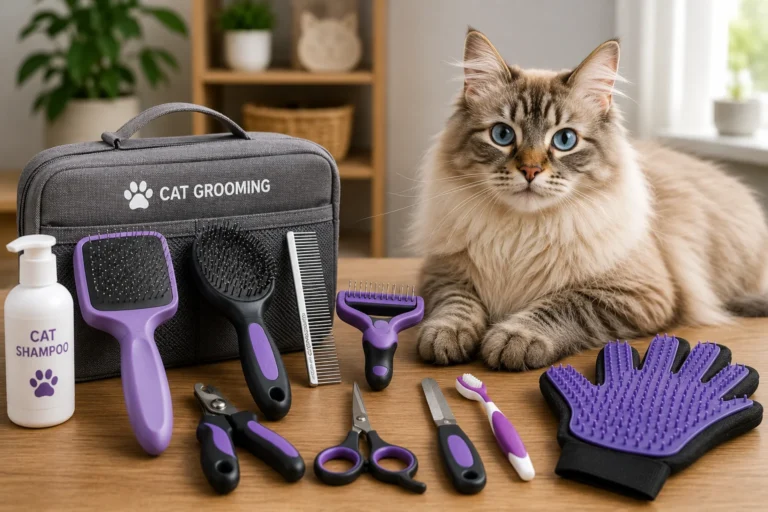
Choose a sharp clipper designed for cat nails. A tool that is dull, awkward to position, or too large for the claw can make controlled trimming harder. For more on selecting appropriate equipment, see our guide to cat grooming tools.
Before you begin, prepare:
The cat nail clipper you know how to use.
A well-lit, quiet spot where your cat can choose to leave.
Small treats or another reward your cat likes.
Pet styptic powder in case you accidentally nick the quick, used according to its label.
A clean place to set the tool down safely if you need to stop.
Choose a time when your cat is settled rather than already agitated. Let them sit in a position they tolerate, such as beside you or on a stable surface. Support the body gently without pinning the cat down, scruffing, or gripping the legs. If the cat repeatedly struggles or tries to escape, end the attempt rather than forcing the paw to stay still.
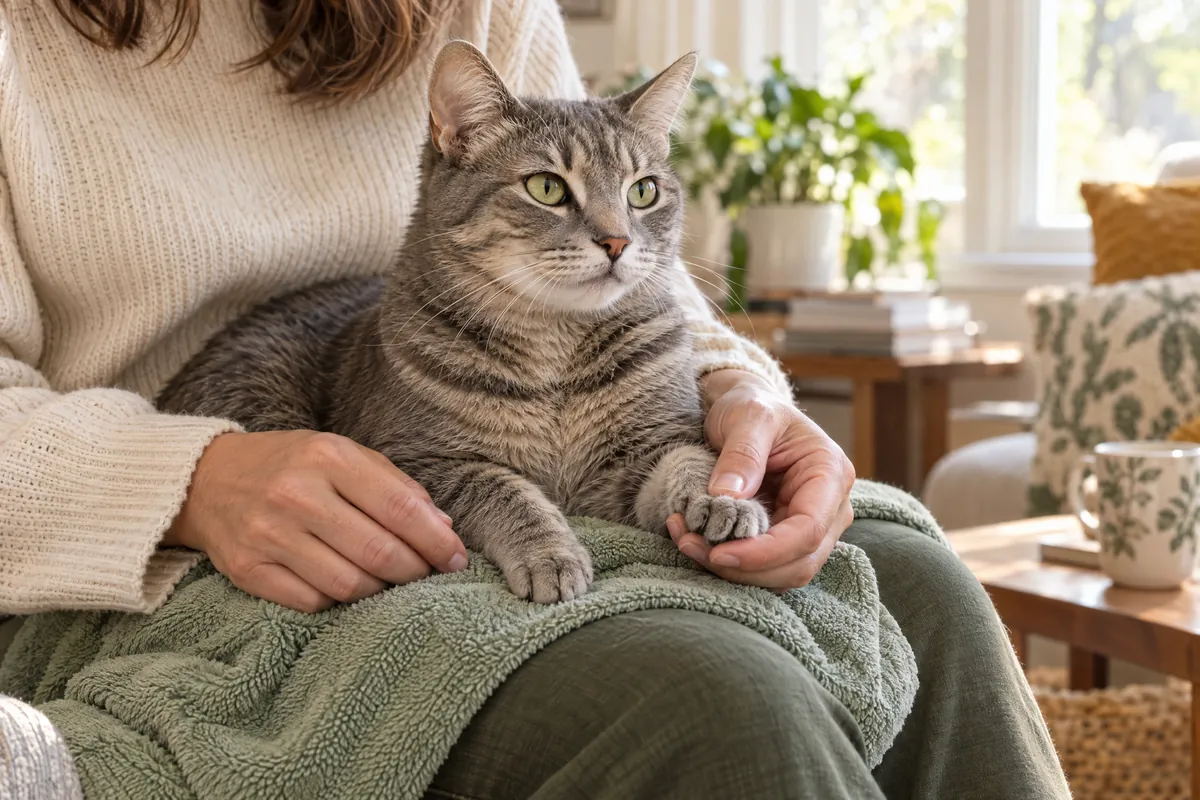
How to Trim a Cat’s Nails Step by Step
1. Start with a comfortable paw check
If your cat is not used to paw handling, do not begin by trying to clip. Let them settle near you and briefly touch an area they comfortably accept, then reward and stop. Build up to a gentle touch on a paw only if the cat remains relaxed. A cat that is already pulling away, tensing, or trying to leave is telling you the session is too much right now.
2. Extend one claw gently
When your cat accepts the handling, support the paw without squeezing it. Apply light pressure to the toe pad and the top of the toe to extend the claw. Use only enough pressure to reveal the nail; do not pull hard on the toe or force the paw into position.
If your cat resists, let the paw go. Repeatedly pressing or extending the claw through distress can make future handling more difficult. You can stop after the paw check and try again another time, or ask a professional to help.
3. Identify the quick and choose a conservative cut
Look carefully at the extended claw. In a light nail, the pink quick is the living area to avoid. Only the sharp, clear tip beyond it should be considered for trimming. Position the clipper so it removes a small amount from the tip rather than cutting across the nail close to the pink tissue.
Veterinary guidance from VCA recommends using the clipper with pressure from top to bottom to help reduce the chance of splintering. Make a controlled cut only when you can see the safe area clearly. If the nail’s shape or color makes the boundary uncertain, stop and get a demonstration rather than guessing.
4. Clip a little, then pause
Remove only the sharp tip. After one nail, pause to see how your cat responds. If the cat stays relaxed and voluntarily remains, you may continue with another nail. If the body becomes tense, the tail starts swishing, the ears turn back, or the cat tries to pull away, stop and give them space.
It is completely reasonable to trim one or two nails and leave the rest for another calm session. The ASPCA’s cat grooming guidance similarly recommends a calm setting, rewards, and limiting early attempts to a small number of claws when that is what the cat tolerates. Do not turn nail trimming into a contest to finish every paw.
5. Check other claws only if your cat remains comfortable
Check other paws only if your cat tolerates the position; do not assume every claw needs the same amount removed. If a nail is hard to see or reach comfortably, ask a veterinary professional to show you how to inspect it. Avoid twisting a leg or forcing a paw.
Scratching posts support normal scratching behavior, but they do not guarantee that every claw stays at a comfortable length. Regularly look at the claws rather than assuming a scratching surface eliminates the need to check them.
How Often Should You Trim a Cat’s Nails?
There is no single schedule that fits every cat. Nail growth, activity, scratching habits, age, and the cat’s ability to wear down claws can affect how often trimming is needed. Indoor cats may need more routine checks, while outdoor activity can change how claws are used; do not assume this means every outdoor cat manages all claws without help.
Rather than automatically clipping on a fixed date, inspect the nails regularly and look for sharp overgrowth, a claw beginning to curve toward the pad, or a nail that catches on fabric. Ask your veterinarian what interval makes sense for your cat. If you are new to trimming, a veterinary demonstration can help you learn what normal nail length and safe tip removal look like.
Mistakes to Avoid
Cutting close to the quick: remove only the sharp tip; do not chase a shorter nail.
Guessing on dark or unclear nails: if you cannot identify the safe area, stop and ask for help.
Holding the cat down: forced restraint can escalate fear and create injury risk. Let the cat leave.
Trying to finish every nail at once: one or two comfortable trims are better than pushing through distress.
Using an unsuitable or dull tool: choose a cat nail clipper that lets you make a controlled cut.
Ignoring a painful or abnormal claw: a nail that is broken, embedded, swollen, or associated with limping needs professional assessment rather than routine clipping.
What If You Accidentally Cut the Quick?
If you nick the quick, stop trimming and keep the situation calm. Apply pet styptic powder according to its product directions. Do not continue the session simply because you have already started. If bleeding continues, the injury appears significant, your cat seems very painful, or you are unsure what to do, contact your veterinarian for guidance.
Do not try to treat a broken, embedded, or badly damaged nail as an ordinary trimming job. A veterinarian can assess the claw and advise on appropriate care.
When Is Professional Help the Better Choice?
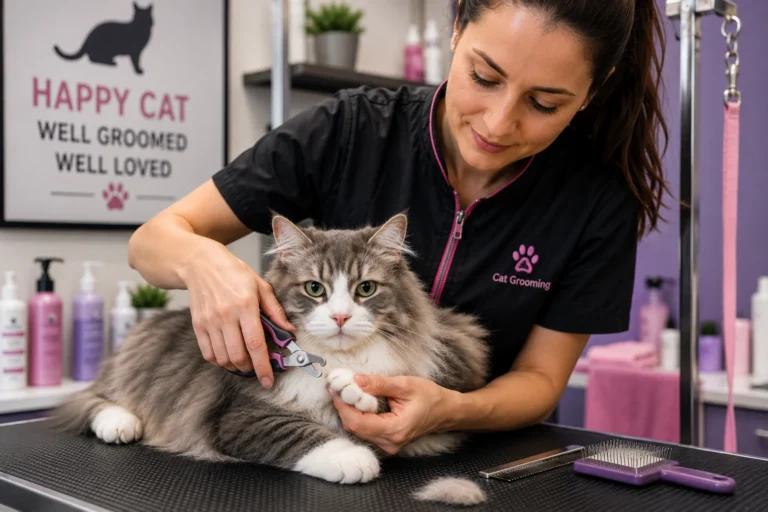
Home trimming may not be suitable if your cat panics when paws are handled, becomes aggressive from fear, has painful or unusually shaped nails, or you cannot see the quick confidently. Ask your veterinarian for a demonstration or have a cat-experienced professional handle the trim. You can also explore cat grooming services and ask what nail-care assistance is available.
If your cat suddenly stops tolerating nail handling, or you notice limping, swelling, bleeding, a claw curling into the paw pad, or other changes, seek veterinary advice rather than assuming the problem is behavioral. Do not give medication or attempt forceful restraint to make trimming possible.
Frequently Asked Questions
Do all cats need their nails trimmed?
Not necessarily on the same schedule, and some cats may need little trimming. Check the claws and ask your veterinarian what is appropriate for your cat rather than assuming every cat needs every nail clipped regularly.
Can I use human nail clippers?
Use a clipper designed for cat nails that allows you to position and cut the claw accurately. If your current tool makes it difficult to see or control the tip, ask a veterinary professional to recommend an appropriate option.
Should I trim all the nails in one sitting?
Only if your cat remains comfortable and you can clearly identify the safe tip. It is fine to do a few nails and stop. Never force the cat to complete the whole set.
What if my cat has dark nails?
If you cannot clearly identify the quick and safe cutting area, do not guess or rely on a fixed measurement. Ask a veterinarian or experienced cat groomer to demonstrate the technique for your cat’s claws.
Sources
VCA Animal Hospitals, How to Trim a Cat’s Nails.
ASPCA, Cat Grooming Tips.
The Humane Society of the United States, Trimming Cats’ Claws.
General grooming education, not veterinary diagnosis or treatment. If you cannot identify the safe tip or handle your cat comfortably, ask your veterinarian for a demonstration. G2 is an original AI-generated editorial illustration, not anatomical cutting diagrams or photographs of an actual trim.