Cat Grooming Services: What to Expect and How to Choose the Right Groomer
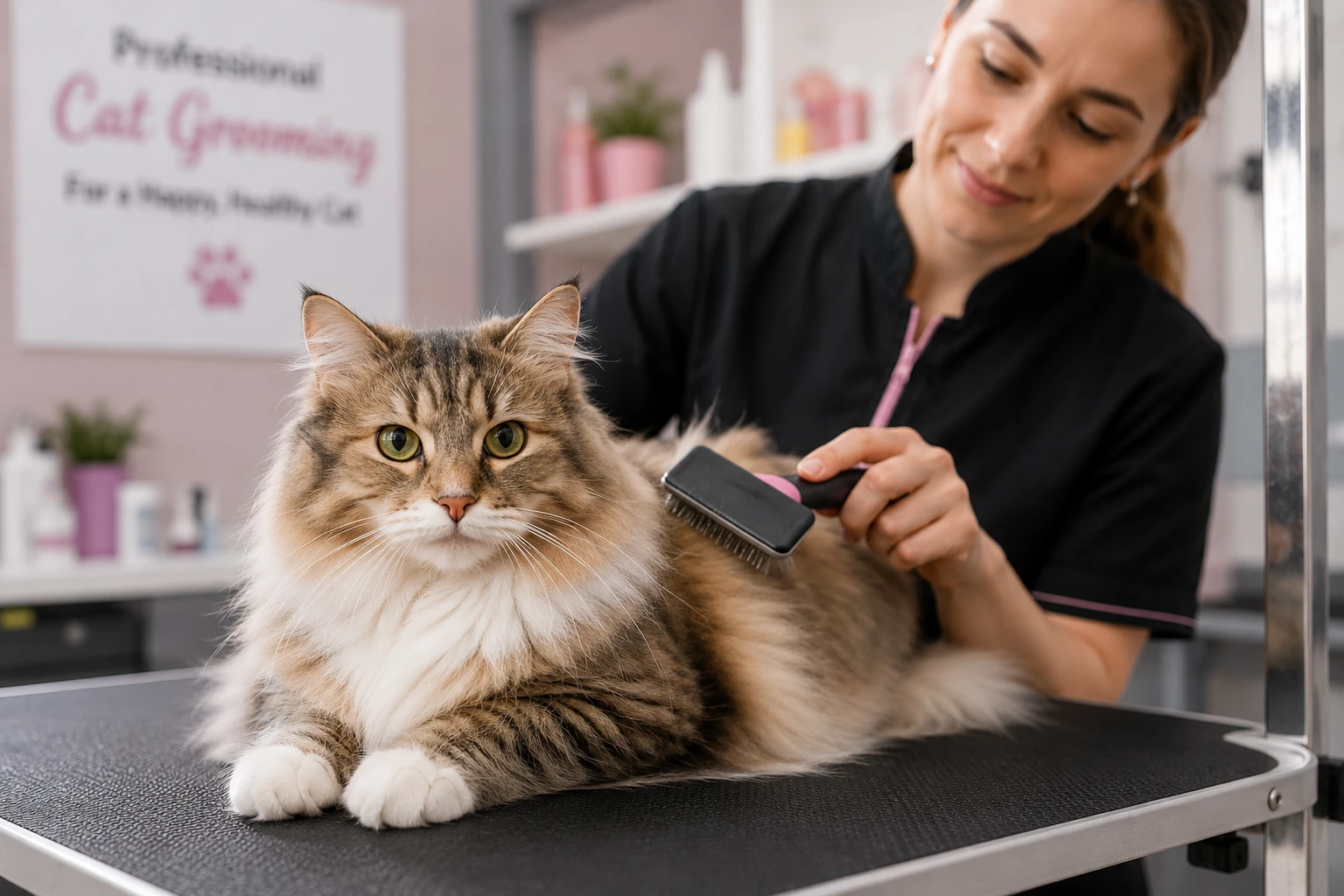
If you’re looking for cat grooming services, a professional groomer can help with coat care, brushing, bathing when needed, nail trimming, and difficult mats that are unsafe to handle at home. The best service depends on your cat’s coat, lifestyle, temperament, and grooming needs. For cats that become highly stressed or may injure themselves or their owner during grooming, professional grooming—or veterinary care when a medical issue is involved—can be the safer choice.
What Do Cat Grooming Services Include?
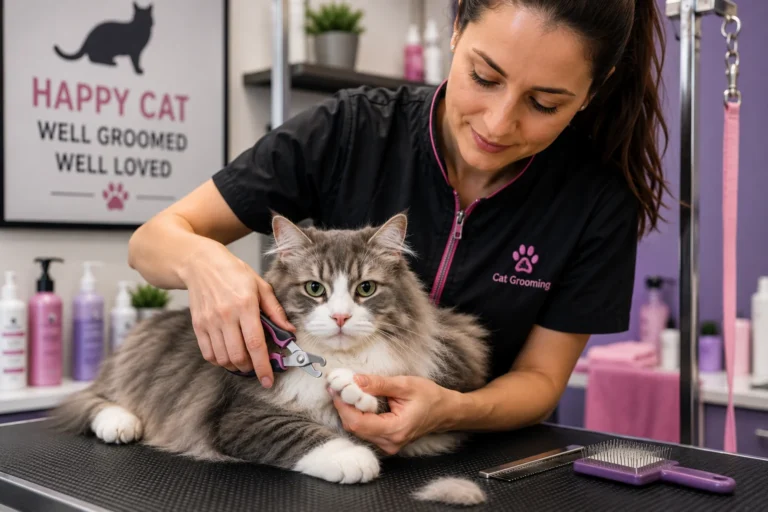
Professional cat grooming services can vary from one groomer to another, so it is worth checking exactly what is included before booking. Depending on your cat’s needs, a grooming appointment may include:
- Coat brushing and combing
- Detangling minor knots
- Deshedding
- Nail trimming
- Bathing and shampooing when appropriate
- Drying and coat finishing
- Hygiene trimming
- Mat removal
- Basic coat and skin observation
A good groomer should also handle your cat carefully and communicate clearly about the condition of the coat and any problems noticed during the appointment. Professional grooming is not simply about making a cat look cleaner; regular coat care can help prevent painful matting and may reveal skin or other concerns that are hidden beneath the fur.
When Does a Cat Need Professional Grooming?
Not every cat needs frequent professional appointments. Healthy cats generally groom themselves well, and many rarely need a bath. However, professional help can become valuable when routine home grooming is difficult or your cat’s coat requires more maintenance.
Consider a professional groomer if your cat:
- Has a long, dense, or easily tangled coat
- Develops recurring mats
- Strongly resists brushing or nail trimming
- Needs a bath but cannot safely tolerate one at home
- Has accumulated debris or dirt in the coat
- Has difficulty grooming because of age, weight, or limited mobility
- Needs regular coat maintenance that you cannot comfortably perform
Long-haired cats can require grooming every few days at home to control tangles, while shorter-haired cats generally need less intensive coat maintenance.
Cat Grooming Services for Long-Haired Cats
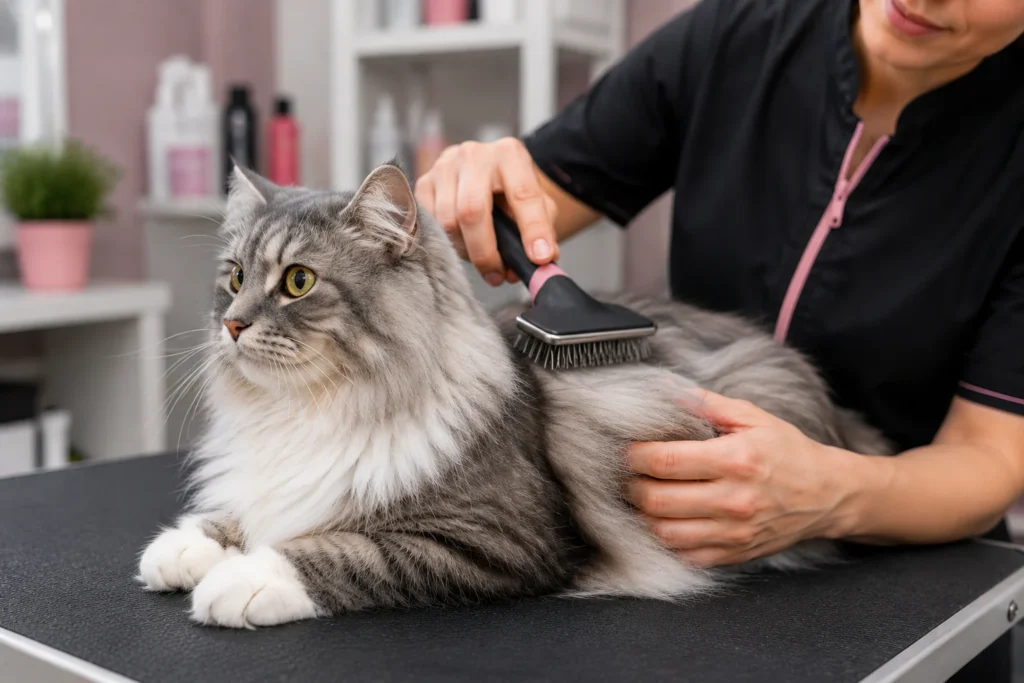
Long-haired cats often need more attention because loose hair and small tangles can develop into mats.
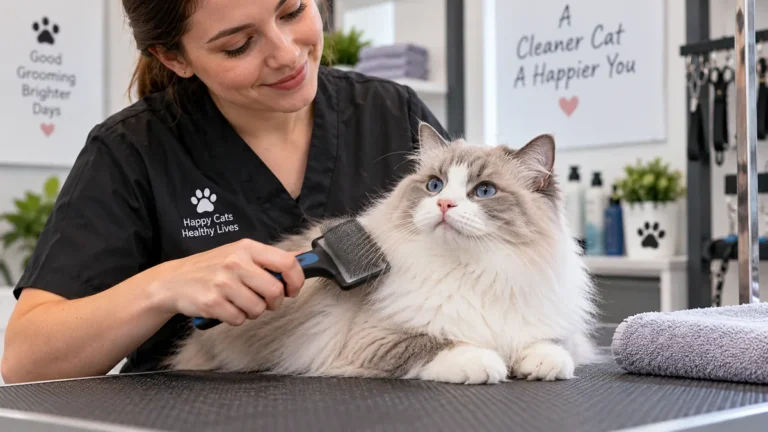
Regular brushing is the first line of defense. ASPCA recommends regular brushing and notes that long-haired indoor cats may benefit from grooming sessions every few days.
A professional groomer can help with:
- Removing loose undercoat
- Managing minor tangles
- Deshedding
- Maintaining difficult areas such as behind the ears and around the legs
- Identifying mats before they become severe
If your cat already has extensive matting, don’t assume that cutting it out at home is safe. VCA specifically advises using clippers rather than scissors for mat removal because cat skin can be accidentally cut, and severe or extensive mats warrant professional or veterinary care.
Do Cats Need Professional Baths?
Usually, not as routinely as dogs.
Most healthy adult cats are efficient self-groomers and rarely require bathing. A bath may be appropriate when a cat becomes unusually dirty, gets into something difficult to remove, cannot groom properly, or has a veterinarian-directed bathing routine for a skin condition.
If bathing is necessary, a professional groomer can reduce the difficulty of handling a cat that dislikes water. Cat-specific shampoo should be used; human shampoo, including baby shampoo, can be too harsh for feline skin.
How to Choose the Right Cat Groomer
Choosing the cheapest appointment is not necessarily the best approach. Look for a groomer who has experience specifically with cats, because feline grooming can require different handling techniques from dog grooming.
Before booking, ask:
- Do you regularly groom cats?
- What services are included in the appointment?
- How do you handle nervous or uncooperative cats?
- How do you approach severe mats?
- Do you offer bathing, deshedding, nail trimming, or hygiene trims?
- What happens if you notice a skin or health concern?
- Do you have experience with my cat’s coat type?
A reputable professional should be comfortable explaining the process rather than promising that every cat will receive the same treatment.
Professional Groomer or Veterinarian?
This distinction is important.
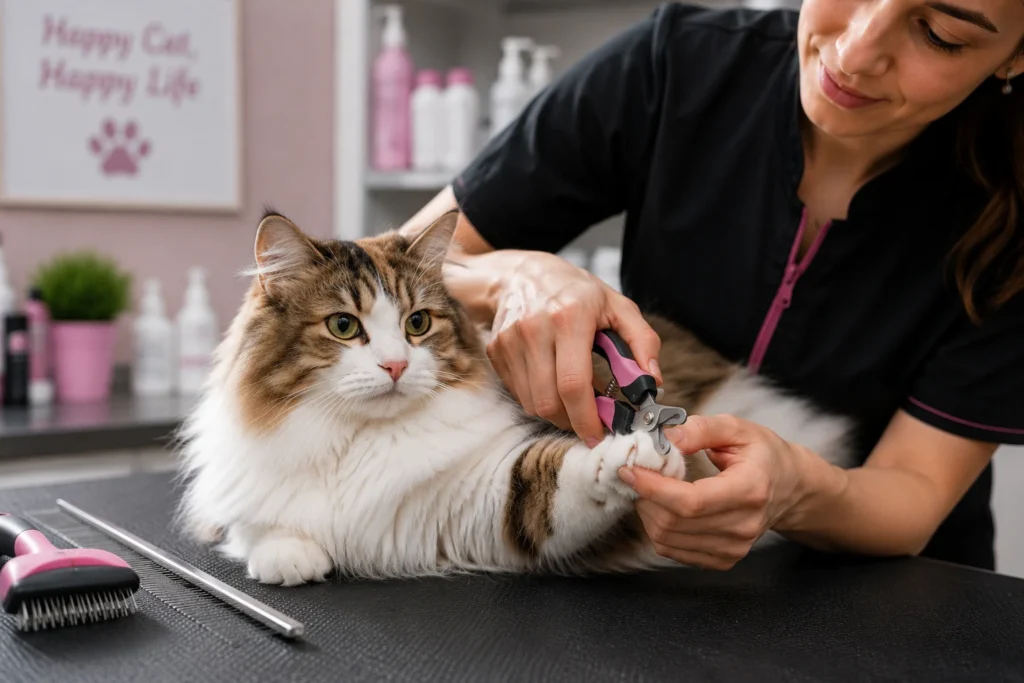
A professional groomer is generally appropriate for routine coat maintenance, brushing, nail trimming, bathing when needed, and non-medical grooming.
A veterinarian should be involved when grooming reveals or involves a potential medical problem, such as irritated skin, wounds, significant inflammation, or a severely compromised coat. Cats with medical conditions may also need veterinarian-directed grooming or bathing.
If your cat becomes extremely aggressive, panicked, or unsafe to handle, don’t force the grooming session. ASPCA recommends professional groomer or veterinary help when grooming creates a realistic risk of injury.
Cat Grooming Services vs. Grooming at Home
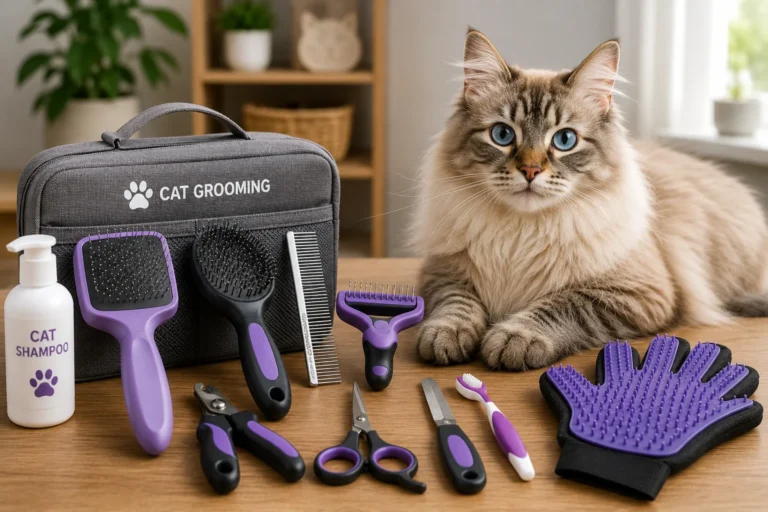
For routine maintenance, home grooming is still important. Brushing helps remove loose hair, dirt, and dead hair while reducing tangles and hairballs.
Professional grooming becomes particularly useful when:
| At-home grooming | Professional grooming |
|---|---|
| Routine brushing | Difficult or extensive coat work |
| Basic coat checks | Severe or recurring mats |
| Simple nail maintenance | Cat strongly resists handling |
| Regular maintenance | Professional bathing when necessary |
| Early detection of tangles | Specialized coat maintenance |
The strongest approach for many cats is both: regular gentle maintenance at home plus professional grooming when the coat or temperament makes additional help necessary.
How Often Should a Cat Be Professionally Groomed?
There is no universal appointment schedule for every cat. Grooming needs depend heavily on coat type, lifestyle, age, health, and how effectively the cat maintains its own coat.
A short-haired indoor cat may require little professional grooming, while a long-haired cat with recurring tangles may benefit from more frequent professional attention.
Instead of choosing a fixed interval, monitor the coat between appointments. If tangles are appearing faster, brushing is becoming difficult, or your cat can no longer maintain certain areas effectively, it may be time to discuss a grooming schedule with a professional.
Cat Grooming Services: What Should You Avoid?
Be cautious if a groomer:
- Cannot explain how cats are handled
- Has no experience with feline grooming
- Wants to remove severe mats with scissors close to the skin
- Dismisses obvious skin irritation or wounds
- Promises identical treatment for every cat
- Cannot explain what happens if your cat becomes distressed
Safety should come before appearance.
FAQs About Cat Grooming Services
How much do cat grooming services cost?
Prices vary by location, coat condition, service type, cat temperament, and the amount of work required. Ask for a clear quote before the appointment and confirm whether mat removal, bathing, nail trimming, or other services cost extra.
Do indoor cats need professional grooming?
Not necessarily. Many indoor cats can maintain their coats with regular brushing at home. Professional grooming can still be useful for long-haired cats, difficult coats, recurring mats, or cats that cannot safely tolerate grooming at home.
Can a groomer remove severe mats?
A professional groomer may be able to safely remove mats, but severe matting can involve skin irritation or other health concerns. Extensive or problematic matting may require veterinary assessment.
Do cats need regular baths?
Most healthy adult cats rarely need baths. Bathing may be necessary in specific circumstances or as part of a veterinarian-directed treatment plan.
Should I groom my cat at home too?
Yes. Regular gentle brushing and coat checks are valuable even when you use a professional groomer. They help you notice tangles, skin changes, wounds, fleas, or other problems earlier.
The Bottom Line
The best cat grooming services are not simply the ones that make your cat look polished. They should provide safe, appropriate, cat-focused care based on the individual animal’s coat, temperament, lifestyle, and health. Keep up with gentle grooming at home, use professional help when coat care becomes difficult, and involve your veterinarian whenever a grooming concern may actually be a medical problem.