How to Clean Dog Brushes and Combs Without Damaging Them
A dog brush can collect an impressive amount of loose fur, skin flakes, dust, and product residue. Leaving that buildup in place makes the tool less pleasant to use and can transfer grime back onto your dog’s coat. But cleaning every brush the same way is a mistake: a metal comb, cushioned slicker brush, wooden-handled brush, and electric grooming tool may not tolerate the same treatment.
The safest approach is simple: remove trapped hair first, follow the manufacturer’s care instructions, wash only parts that can get wet, and let the tool dry completely before using or storing it. Routine cleaning is not the same as disinfecting, and special care is needed if a dog may have a contagious skin condition.
How to Clean Dog Brushes and Combs
1. Check the tool before adding water
Use a tub or cleaning brush reserved for pet items, keep pets away from cleaners, and wash your hands after handling dirty tools. Clean the work surface when you finish.
Look for care instructions on the packaging, product page, or manufacturer’s website. Check whether the brush has a removable head, rubber cushion, wooden handle, glued components, battery compartment, or electric motor. Water can loosen adhesives, swell wood, damage cushions, or reach electrical parts.
If the instructions say to wipe clean or keep the tool dry, follow them. When directions are missing, avoid soaking the whole tool. Clean reachable surfaces with a damp or lightly soapy cloth, keeping water away from seams and joints.
2. Remove trapped hair first
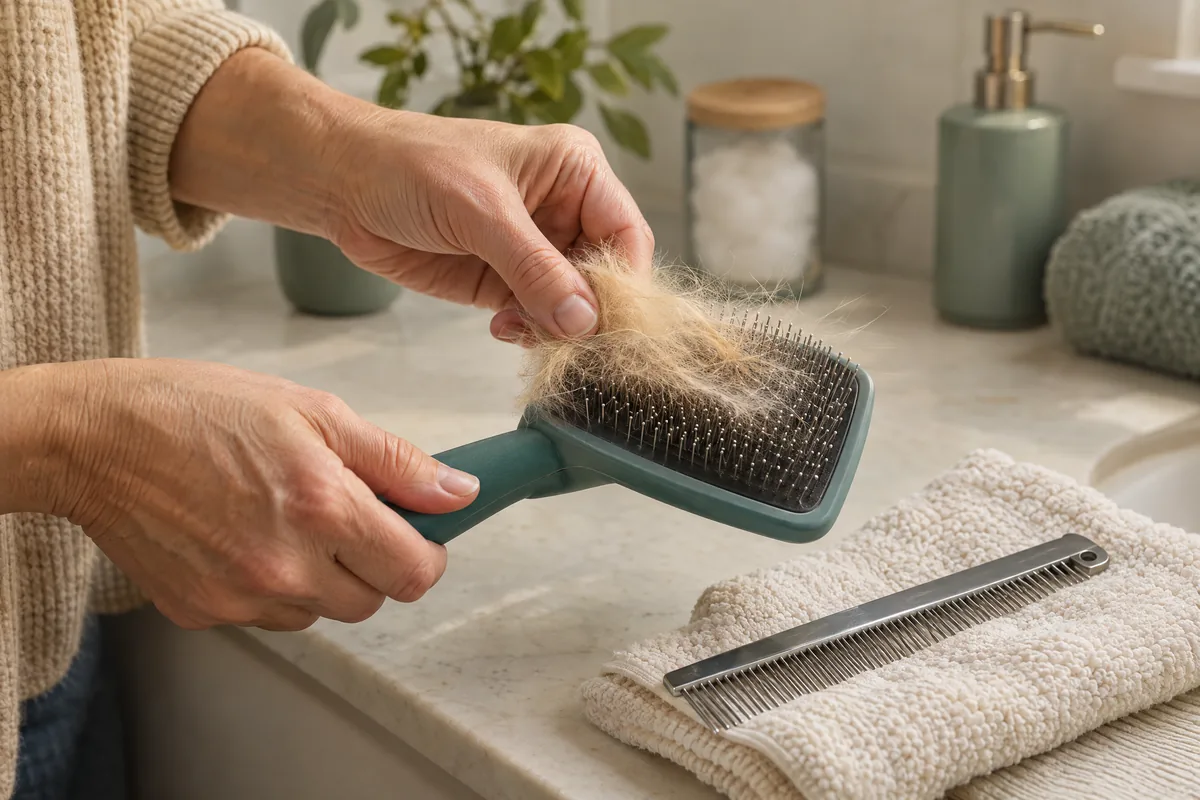
Pull loose fur from the bristles with your fingers, or use a purpose-made brush-cleaning tool if permitted by the manufacturer. Work carefully rather than bending pins or scraping across the brush head. Lift loose hair from a comb carefully without forcing another tool between its teeth.
If hair is packed tightly around bristles, ease it out in small sections. Do not yank hard enough to loosen pins, tear a cushion, or distort the teeth. Removing fur before washing makes it easier to clean the tool without creating a tangle of wet hair.
3. Wash only washable parts
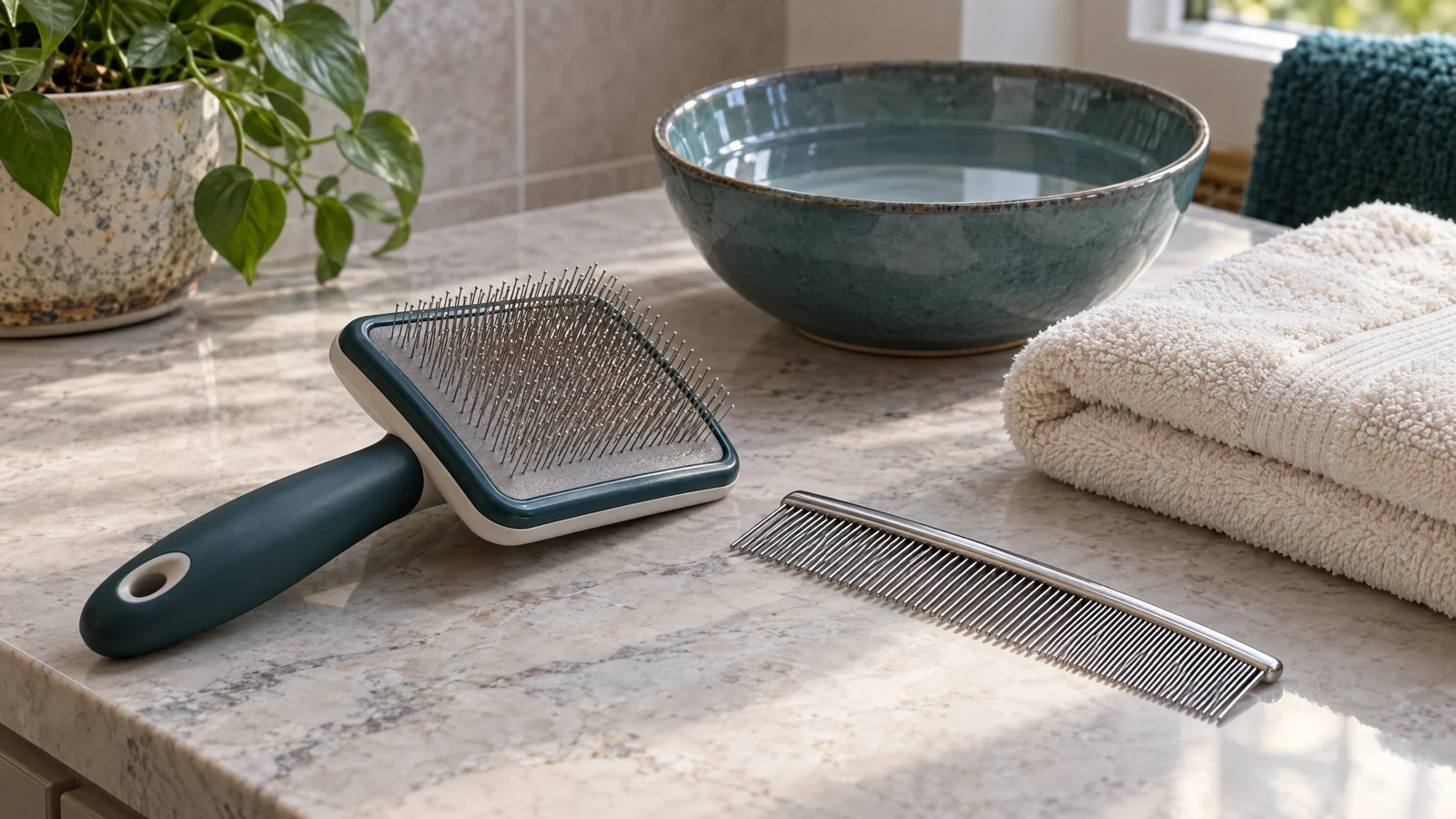
For a plastic or metal brush or comb labeled as washable, use warm water and a small amount of mild soap or detergent. Gently work the suds between the teeth or bristles with your fingers or a soft cleaning brush. Avoid harsh scrubbing that could scratch plastic, bend fine pins, or damage a coated surface.
Rinse thoroughly so no soap or loosened debris remains. If the tool has a wooden handle, cushioned head, or glued joints, do not immerse it unless the manufacturer specifically allows it. Wipe those areas with a well-wrung cloth instead, taking care not to saturate them. Keep motors, batteries, charging parts, and electrical connections out of water. Wash a detachable head only as its manufacturer directs.
4. Dry it fully before storage
Shake off excess water gently and blot the tool with a clean towel. Let it air-dry completely in a well-ventilated place before putting it away. Position a brush so moisture can drain away from its cushion and handle; avoid leaving water pooled around bristles or trapped in a joint.
Wood needs particular care because prolonged moisture can cause swelling, cracking, or finish damage. Do not leave a wooden brush soaking or place it against a heater to speed drying. For electric tools, follow the maker’s drying and reassembly instructions, and do not reconnect or charge a tool while it is wet.
Cleaning Is Not the Same as Disinfecting
Cleaning removes visible hair, dirt, oils, and residue. Disinfection is a separate step intended to inactivate specified germs, and it requires a product and method suitable for both the target organism and the tool’s material. A brush that looks clean is not automatically disinfected.
For ordinary home grooming, routine cleaning may be enough in many situations. Do not improvise a chemical mixture, assume vinegar or another household product disinfects every pathogen, or apply a disinfectant without checking its label and the tool maker’s instructions. Some products can corrode metal, damage finishes, or leave residues. Follow the label exactly, including required contact time, rinsing, and drying directions.
If ringworm or another contagious skin infection is suspected or diagnosed, do not share brushes or combs between pets. Contact your veterinarian for tool-specific decontamination guidance; a damaged or porous tool may not be suitable for reliable disinfection and may need to be discarded. The Iowa State University Center for Food Security and Public Health notes that shared grooming equipment can transfer disease, while the CDC explains the difference between cleaning and disinfecting pet supplies.
A Simple Decision Guide
- Plastic or solid-metal comb: remove hair; wash with mild soap and warm water if permitted; rinse and dry fully.
- Wooden-handled brush: remove hair dry; wipe rather than soak; keep water away from joints and dry promptly.
- Cushioned slicker or pin brush: remove hair carefully; wash only if permitted; avoid saturating the cushion or seams.
- Electric or battery-powered tool: unplug or remove batteries as instructed; use only the approved method; never immerse electrical parts unless explicitly rated for it.
Mistakes to Avoid
- Soaking the whole brush without checking its materials or care instructions.
- Pulling trapped fur so hard that bristles, pins, or teeth bend or loosen.
- Using boiling water, abrasive scrubbers, or unapproved solvents that may damage the tool.
- Putting a damp brush away in a closed drawer or container.
- Treating ordinary washing as proof that a tool has been disinfected.
For help choosing tools that suit your dog’s coat, see our guide to pet grooming tools for dogs. For brushing technique and coat care, read how to brush a dog properly.
Frequently Asked Questions
How often should I clean my dog’s brush?
Remove trapped hair after each use or whenever it builds up. Wash the tool when it becomes visibly dirty or has residue, following its care instructions. If it has been used on a dog with a skin problem, ask your veterinarian whether additional decontamination is needed.
Can I use dish soap on a dog brush?
A small amount of mild dish soap may be suitable for a washable plastic or metal tool if the manufacturer allows it. Rinse thoroughly and avoid soaking wood, cushions, glued joints, or electrical parts.
Can I use the same brush on multiple dogs?
Do not share tools when a dog has suspected or confirmed ringworm or another contagious skin condition. Ask your veterinarian how to decontaminate the tool before reuse. In multi-dog households, keep tools clean and avoid sharing anything contaminated with blood, discharge, or skin debris.
Sources
- CDC, About Cleaning and Disinfecting Pet Supplies.
- Iowa State University Center for Food Security and Public Health, Cleaning and Disinfection: Grooming Equipment.
- Merck Veterinary Manual, Ringworm (Dermatophytosis) in Dogs.
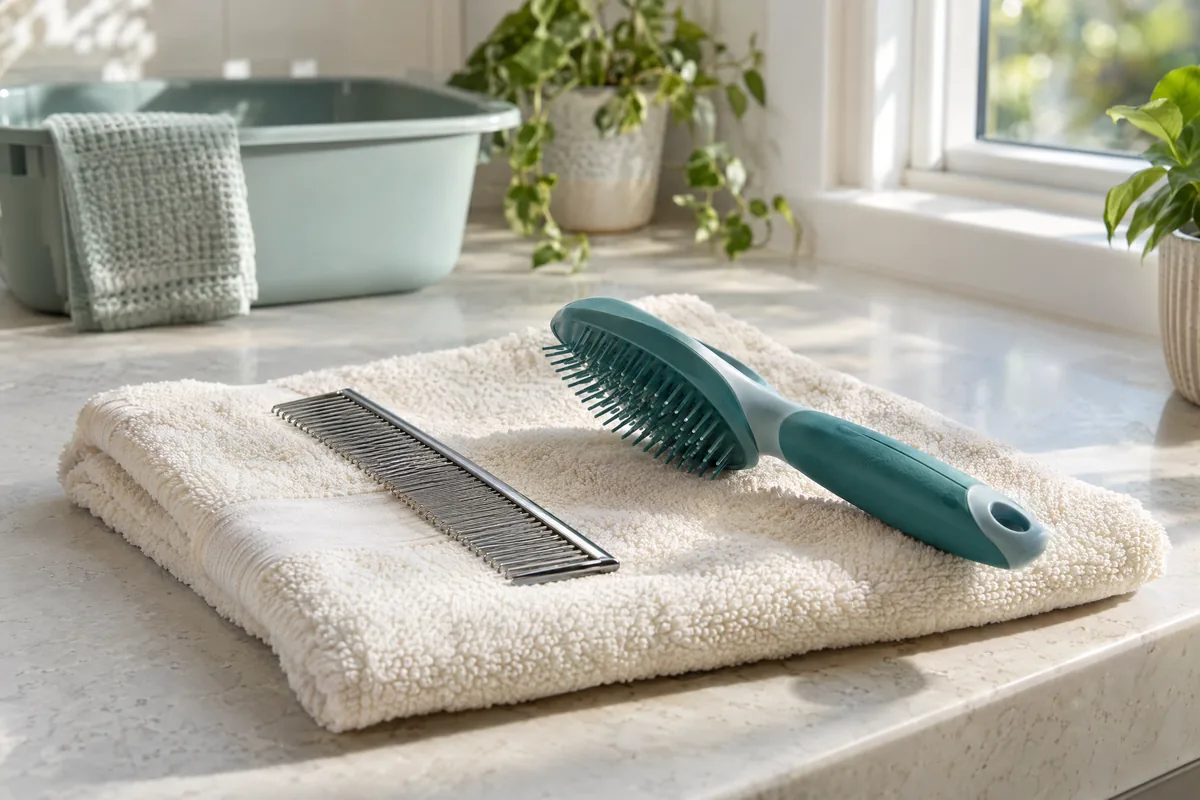
General tool-care information, not veterinary diagnosis or treatment. Follow your tool manufacturer’s care instructions. Cover image is an AI-generated editorial illustration.