Best Brush for Ragdoll Cat: 7 Grooming Tools Compared for Long, Silky Fur
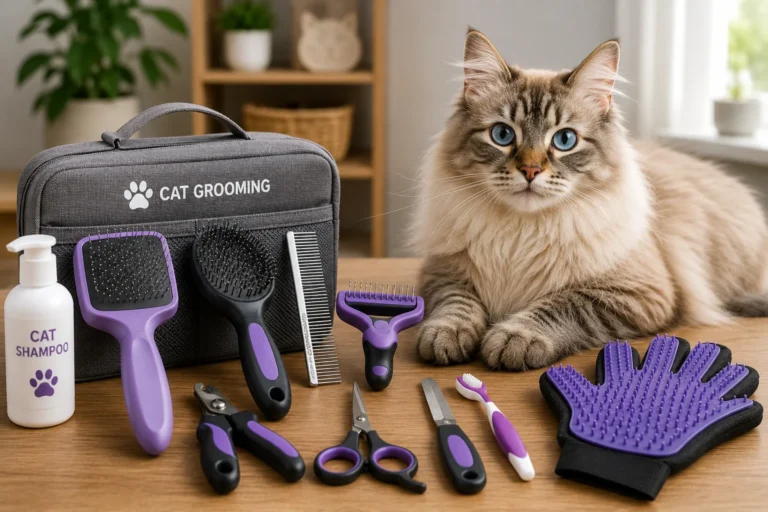
The best brush for a Ragdoll cat is usually a quality stainless-steel comb, often paired with a gentle slicker brush for everyday coat maintenance and light tangles. Because Ragdolls have a moderately long, silky coat, the goal is to reach through the fur without scratching the skin, pulling painfully on tangles, or unnecessarily stripping the coat.

Finding the best brush for a Ragdoll cat is less about buying the biggest or most expensive brush and more about choosing a grooming tool that matches the breed’s coat. Ragdolls have a semi-long, soft coat with abundant guard hairs and relatively little woolly undercoat compared with many other long-haired cats. That coat structure generally makes routine grooming manageable, but regular brushing or combing is still important for removing loose hair and catching tangles before they become difficult to handle.
If you’re shopping for one grooming tool, a stainless-steel or Greyhound-style comb is an especially strong starting point. If you want a more complete grooming setup, combine the comb with a gentle slicker brush and use each tool for a different purpose.
What Is the Best Brush for a Ragdoll Cat?
For most Ragdolls, the best overall grooming setup is:

- Stainless-steel comb — best for reaching through the coat and finding tangles.
- Gentle slicker brush — useful for removing loose hair and working through light tangles.
- Wide-tooth comb — useful for gently separating longer sections of fur.
- Fine-tooth comb — useful for checking whether the coat is completely tangle-free.
- Deshedding tool — use cautiously and only when appropriate for the coat.
- Dematting tool — better reserved for specific tangles and used very carefully.
- Soft finishing brush — useful for a final pass and keeping the coat looking neat.
TICA specifically recommends a good stainless-steel or “Greyhound” comb for Ragdolls because it can work through the coat rather than simply brushing over the surface.
1. Stainless-Steel Comb: Best Overall Choice
If you only want to buy one grooming tool for a Ragdoll, a quality stainless-steel comb is arguably the most useful place to start.
Ragdoll fur can look smooth on the surface while still hiding small tangles underneath. A comb gives you better feedback because you can feel where the teeth encounter resistance.
TICA recommends brushing or combing Ragdolls weekly and specifically identifies a stainless-steel or Greyhound-style comb as an effective option for getting through the coat.
Why it works well
- Reaches through longer fur
- Helps locate hidden tangles
- Removes loose hair
- Doesn’t depend on aggressive pulling
- Makes it easier to check whether the coat is actually tangle-free
Best for
Daily or weekly maintenance, tangles, long coat areas, and checking the finished grooming job.
2. Gentle Slicker Brush: Best for Loose Hair and Light Tangles
A slicker brush can be a useful second tool for a Ragdoll.
Its fine pins can collect loose hair and help separate sections of the coat. However, gentle technique matters more than the brush itself.
Don’t press the pins aggressively into your cat’s skin. A slicker brush should glide through the coat rather than scrape the skin.
A good approach is to use the slicker lightly first and then follow with a metal comb.
Slicker brush vs. metal comb
Think of them as complementary tools rather than competitors.
Slicker brush:
Loose hair + surface grooming + light tangles
Steel comb:
Deeper coat checking + separating fur + finding hidden tangles
For a Ragdoll owner, having both can make grooming much easier.
3. Wide-Tooth Comb: Best for Gentle Detangling
A wide-tooth comb can be useful when you’re dealing with longer sections of fur or mild tangles.
The wider spacing allows the comb to move through the coat with less resistance than a very fine comb.
This can be particularly helpful when your cat isn’t comfortable with grooming yet.
Start at the ends of the fur and gradually work toward the skin rather than forcing a comb from the roots through a knot.
4. Fine-Tooth Comb: Best for Finding Remaining Tangles
Once you’ve worked through the coat with a wider comb, a finer comb can help you check your work.
If the fine teeth pass smoothly through the fur, that’s a good indication that you’ve removed most manageable tangles.
Don’t use a fine comb to aggressively pull through a large knot.
If you encounter resistance, stop and work on that section separately.
5. Deshedding Tools: Are They Good for Ragdolls?
This is where many cat owners make a mistake.
A Ragdoll does shed, particularly around seasonal changes, but the breed does not have the extremely dense insulating undercoat found in some other cats. CFA describes the Ragdoll coat as moderately long with abundant guard hairs and minimal woolly undercoat, while TICA describes the coat as silky and plush with some undercoat.
That means you shouldn’t automatically reach for an aggressive deshedding tool simply because your cat is shedding.
For routine grooming, a comb and gentle brush are generally a better starting point.
If you decide to use a deshedding tool, follow the manufacturer’s instructions and avoid repeated aggressive passes over the same area.
The goal isn’t to remove every loose hair.
The goal is to maintain a healthy, comfortable coat.
6. Dematting Tools: Use With Caution
A dematting tool can be useful for isolated tangles, but it shouldn’t become your everyday Ragdoll brush.
If your cat develops a tight mat, repeatedly pulling at it can be uncomfortable.
Never assume that a difficult mat should simply be attacked with a sharper grooming tool.
For mats that are:
- Tight against the skin
- Large
- Numerous
- Difficult to separate
- Causing your cat pain
professional grooming or veterinary advice may be safer.
And avoid using household scissors to cut mats close to the skin.
7. Soft Finishing Brush
A soft brush can be useful after you’ve completed the deeper grooming work.
It can help distribute loose hair and leave the coat looking neat.
However, it shouldn’t replace the comb.
A fluffy-looking Ragdoll coat can still have tangles underneath, so appearance alone isn’t a reliable test of grooming quality.
How Often Should You Brush a Ragdoll Cat?
Most Ragdolls benefit from regular weekly brushing or combing.
TICA recommends brushing or combing weekly and notes that owners should pay particular attention to tangles around the armpits during shedding season. CFA recommends regular combing at least once or twice a week with a steel comb to remove loose hair and tangles.
For many households, a practical routine is:
Normal weeks:
Brush or comb about 1–2 times per week.
Heavy shedding periods:
Check the coat more frequently and groom as needed.
Tangle-prone areas:
Inspect more often than the rest of the body.
Don’t turn the schedule into a rigid rule. Your individual Ragdoll’s coat, lifestyle, and tolerance should determine how much grooming is actually necessary.
Where Do Ragdolls Usually Get Tangles?
Some areas deserve extra attention.
Behind the front legs
The armpit area can develop tangles because the fur rubs against the body during movement.
TICA specifically calls attention to tangles under the armpits during shedding season.
Around the chest
The longer hair around the neck and chest can become tangled, especially if your cat doesn’t tolerate brushing well.
Behind the ears
Fine hair around the ears can knot more easily than you might expect.
Back legs
The longer feathering around the hind legs can collect loose hair and small tangles.
Tail
Ragdolls have long, full, plume-like tails. Check the tail gently instead of repeatedly dragging a brush through it.
How to Brush a Ragdoll Cat Without Hurting Them
The technique you use matters just as much as the brush.

Step 1: Start When Your Cat Is Calm
Don’t chase your cat around the house with a brush.
Choose a relaxed moment when your Ragdoll is comfortable.
Let your cat sniff the grooming tool before you begin.
Step 2: Start With Easy Areas
Begin around the shoulders or back rather than immediately working on sensitive areas.
Use slow, gentle strokes.
Step 3: Work in Small Sections
Separate the coat into manageable sections.
Don’t try to brush the entire cat with random strokes.
Step 4: Follow the Coat
Brush in the natural direction of the fur.
Avoid forcefully pulling against the coat.
Step 5: Check With a Comb
After brushing, use your steel comb to check whether you can move through the coat smoothly.
This is especially useful for detecting tangles that weren’t obvious visually.
Step 6: Stop Before Your Cat Gets Overwhelmed
If your Ragdoll becomes frustrated, take a break.
A five-minute positive grooming session is better than a 20-minute battle.
How Do You Know If You’re Using the Wrong Brush?
Watch your cat’s reaction.
You may need to change your technique or tool if your cat:
- Constantly tries to escape
- Flattens its ears
- Swats repeatedly
- Vocalizes in discomfort
- Develops skin redness
- Shows sensitivity when a particular area is brushed
A brush that works beautifully for one cat may not work for another.
Your goal is effective grooming without unnecessary discomfort.
Best Brush for a Ragdoll Kitten
Ragdoll kittens should become familiar with grooming early.
TICA notes that Ragdolls can be taught from a young age to tolerate—and even enjoy—grooming-related activities such as bathing and blow-drying.
For a kitten, start with a gentle brush or appropriately spaced comb.
Keep sessions short.
Reward calm behavior.
You don’t need to perform an intense grooming session every time.
The real objective is to teach your kitten that being handled, brushed, and examined is normal.
Do Ragdoll Cats Need a Slicker Brush?
A slicker brush can be useful, but you don’t have to rely on one.
For Ragdolls, the steel comb is particularly valuable because it can reach through the coat and help identify tangles.
A practical grooming combination is:
Gentle slicker brush → stainless-steel comb
The brush helps collect loose hair and separate the coat.
The comb checks the deeper coat.
If you find that your Ragdoll’s coat responds better to the comb alone, there is no need to force a second tool into the routine.
Can You Overbrush a Ragdoll Cat?
Yes.
More brushing isn’t automatically better.
Aggressive or excessive brushing can irritate the skin and make grooming unpleasant for your cat.
Instead of trying to remove every loose hair, focus on:
- Preventing tangles
- Removing manageable loose hair
- Keeping the coat clean
- Checking the skin
- Keeping grooming comfortable
If your cat’s coat is already smooth and tangle-free, there may be no reason to keep brushing the same area repeatedly.
What Brush Should You Avoid?
Be cautious with any tool that:
- Has extremely sharp or aggressive teeth
- Pulls heavily on the coat
- Scrapes the skin
- Requires repeated force
- Makes your cat visibly uncomfortable
Also avoid choosing a grooming tool simply because it removes a large amount of hair.
Maximum hair removal isn’t the same thing as good grooming.
Ragdolls have a distinctive coat structure, so gentle coat maintenance is generally a better objective than aggressively stripping the fur.
Best Ragdoll Grooming Routine
If you want a simple routine, try this:
Once or twice a week
Use a stainless-steel comb to work through the coat.
During shedding season
Inspect the coat more frequently, especially around the armpits and other tangle-prone areas.
Every grooming session
Check:
- Chest
- Armpits
- Behind ears
- Hind legs
- Tail
- Skin for anything unusual
Monthly
Check the nails and maintain them as needed. TICA recommends monthly nail trimming for Ragdolls.
Regularly
Maintain dental care as part of your cat’s overall health routine.
Best Brush for Ragdoll Cat: Quick Comparison
| Grooming Tool | Best Use | Ragdoll Rating |
|---|---|---|
| Stainless-steel comb | Deep coat grooming & tangles | ⭐⭐⭐⭐⭐ |
| Gentle slicker brush | Loose hair & light tangles | ⭐⭐⭐⭐ |
| Wide-tooth comb | Gentle detangling | ⭐⭐⭐⭐ |
| Fine-tooth comb | Final tangle check | ⭐⭐⭐⭐ |
| Soft finishing brush | Final coat grooming | ⭐⭐⭐ |
| Deshedding tool | Seasonal loose hair | ⭐⭐⭐ |
| Dematting tool | Specific difficult tangles | ⭐⭐ |
The important takeaway is that the best grooming setup isn’t necessarily one brush. For many Ragdoll owners, a steel comb plus a gentle brush provides a more versatile routine.
Frequently Asked Questions
What is the best brush for a Ragdoll cat?
A stainless-steel or Greyhound-style comb is one of the best overall grooming tools for a Ragdoll. A gentle slicker brush can complement it for loose hair and light tangles. TICA specifically recommends a stainless-steel or Greyhound-style comb for getting through the Ragdoll coat.
Do Ragdoll cats need to be brushed?
Yes. Although their coat is relatively easy-care compared with some long-haired breeds, regular brushing or combing helps remove loose hair and prevent tangles. CFA recommends at least once- or twice-weekly steel-comb grooming, while TICA recommends weekly brushing or combing.
Is a slicker brush good for Ragdoll cats?
Yes, a gentle slicker brush can be useful, particularly for loose hair and light tangles. However, it shouldn’t replace deeper coat checking with a suitable comb.
What kind of brush should I use on my Ragdoll cat?
Start with a stainless-steel comb. If your cat sheds heavily or benefits from additional surface grooming, add a gentle slicker brush.
How often should you brush a Ragdoll cat?
At least weekly is a useful baseline. Some cats benefit from twice-weekly grooming, especially during periods of increased shedding.
What is the best brush for Ragdoll kittens?
Use a gentle brush or appropriately spaced comb and focus on making grooming a positive experience. Short sessions help kittens become comfortable with regular grooming.
Can you use a deshedding tool on a Ragdoll?
You can use one cautiously when appropriate, but don’t assume aggressive deshedding is necessary. Ragdolls have abundant guard hairs and a relatively minimal woolly undercoat, so regular combing is often a better foundation.
How do you prevent mats on a Ragdoll cat?
Regularly comb through the coat, paying special attention to the armpits, chest, behind the ears, hind legs, and tail. Catching small tangles early is much easier than trying to remove a large, tight mat later.
Final Verdict: Which Brush Should You Buy?
If you’re buying one grooming tool for a Ragdoll cat, make it a quality stainless-steel comb.
If you’re building a more complete grooming kit, pair it with a gentle slicker brush.
That combination gives you the two things a Ragdoll owner needs most: effective coat maintenance and good control over tangles without relying on aggressive brushing.
Remember that Ragdolls have a moderately long, silky coat that generally doesn’t require an elaborate grooming routine. The major cat-breed organizations recommend regular brushing or combing, with TICA specifically recommending a stainless-steel or Greyhound-style comb.
The best brush is ultimately the one that reaches through your cat’s coat, removes loose hair and manageable tangles, and lets you groom without causing discomfort.