Dog Grooming Tips: 15 Simple Ways to Keep Your Dog Clean, Comfortable, and Well-Groomed
Dog grooming tips can help you keep your pet’s coat, nails, skin, ears, and teeth in better condition between professional appointments. The most effective routine is not about grooming more often—it is about using the right tools, following a consistent schedule, and adjusting care to your dog’s coat, lifestyle, and comfort level.
Regular grooming can also help you notice changes such as unusual lumps, irritated skin, mats, damaged nails, or other problems earlier. For routine maintenance, many owners can handle basic grooming at home, while difficult mats, complicated haircuts, or concerning skin problems are better addressed by a professional groomer or veterinarian.
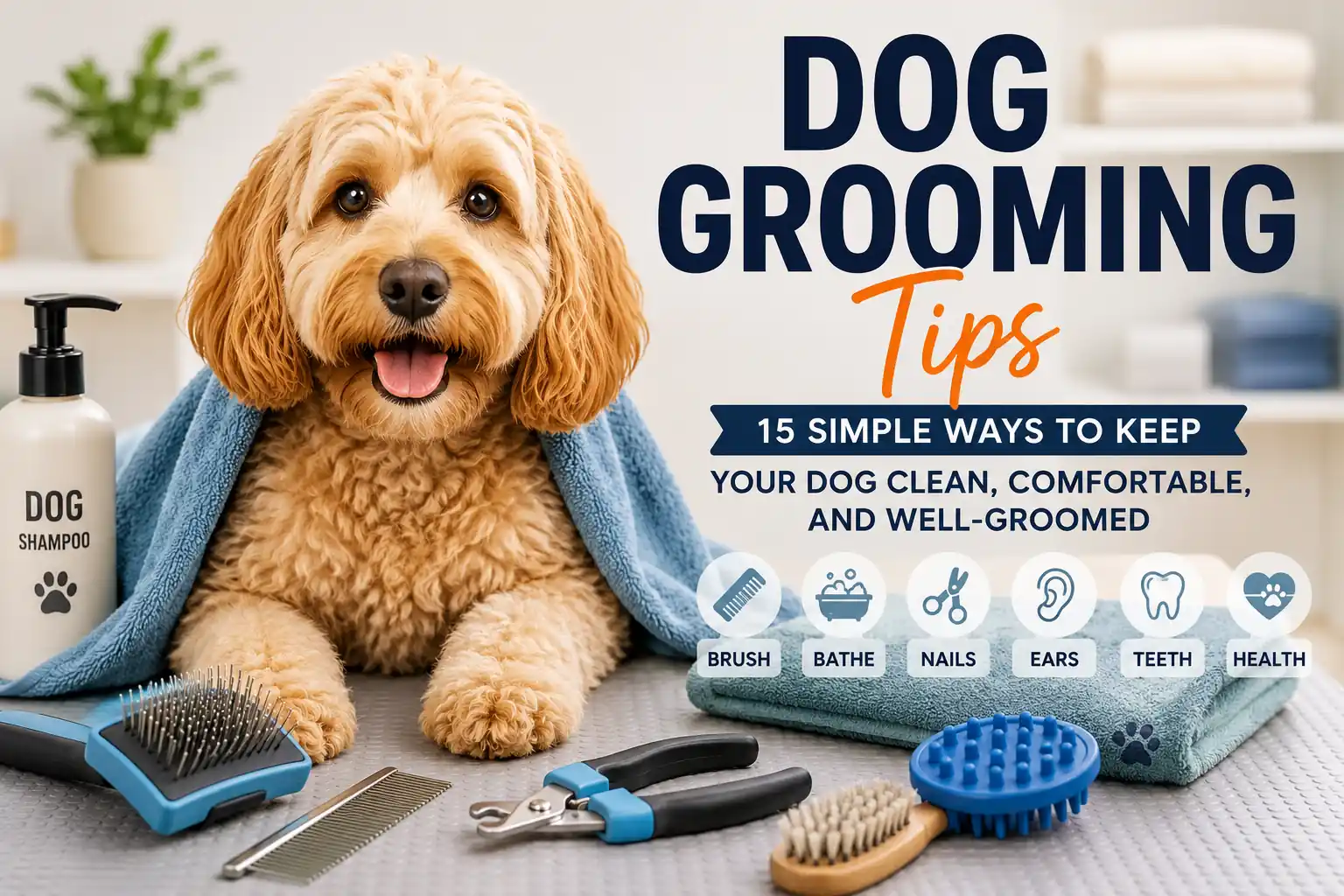
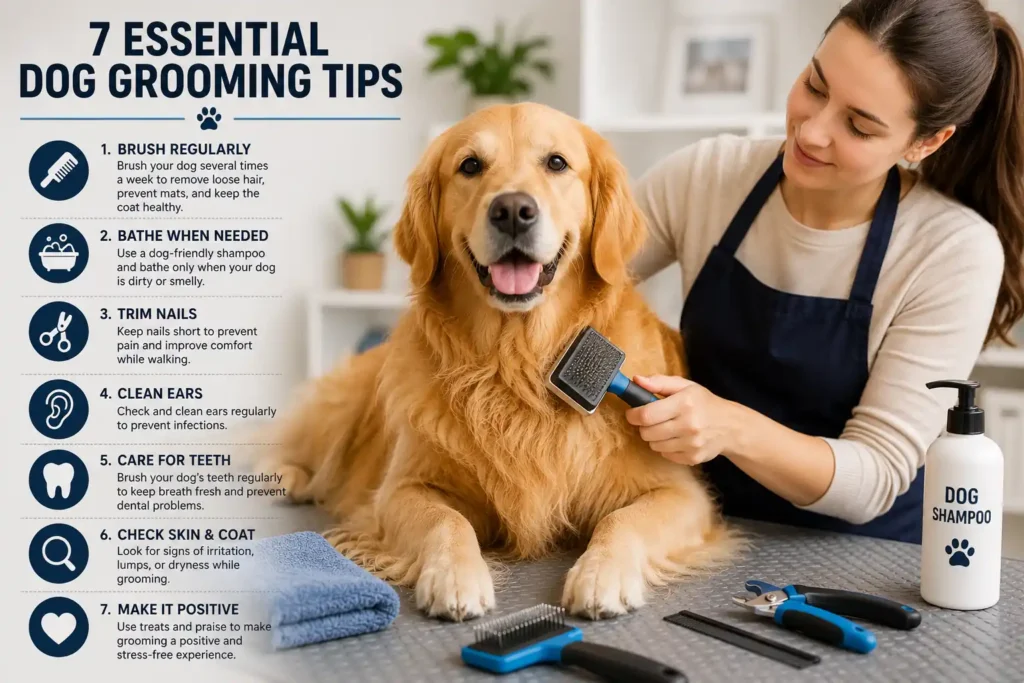
15 Dog Grooming Tips Every Owner Should Know
1. Choose a Grooming Routine That Fits Your Dog
There is no single grooming schedule that works for every dog.
A short-coated indoor dog may need considerably less coat maintenance than a long-haired dog that spends a lot of time outdoors. Your dog’s coat type, shedding, activity level, age, and lifestyle should all influence the routine.
Start with a manageable schedule rather than trying to groom everything in one session.
For a useful starting point, see our guide to dog grooming schedule.
2. Brush Before Your Dog’s Coat Becomes Tangled
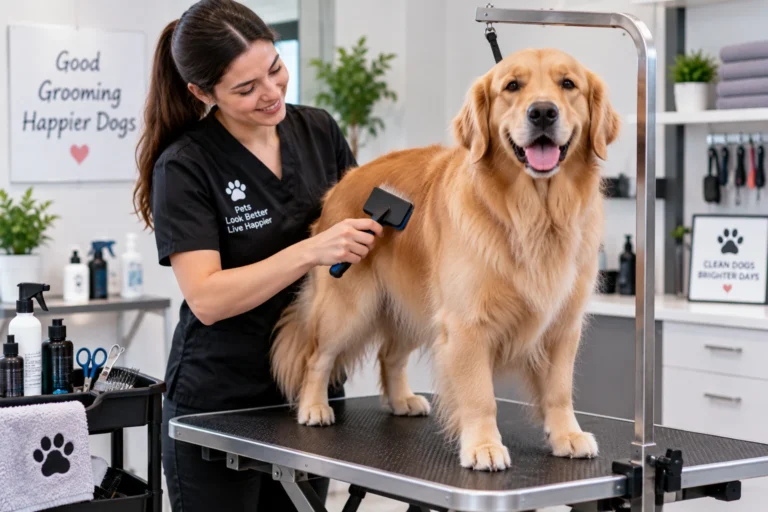
One of the simplest dog grooming tips is to brush consistently instead of waiting until the coat becomes difficult to manage.
Regular brushing can:
- Remove loose hair
- Reduce surface debris
- Help prevent some tangles
- Spread natural oils through the coat
- Give you an opportunity to inspect the skin
Longer or thicker coats generally need more attention than short coats.
If you’re unsure which brush to use, our guide to how to brush a dog properly explains the basic technique and tool selection.
3. Match the Brush to the Coat
A common mistake is assuming that one brush works for every dog.
Depending on the coat, you may need a bristle brush, slicker brush, pin brush, rubber grooming brush, or metal comb. A tool that works well on one coat may be ineffective—or uncomfortable—on another.
The objective is gentle, effective grooming rather than aggressive brushing.
For owners building a home setup, our guide to pet grooming tools for dogs covers the essential equipment.
4. Deal With Mats Early
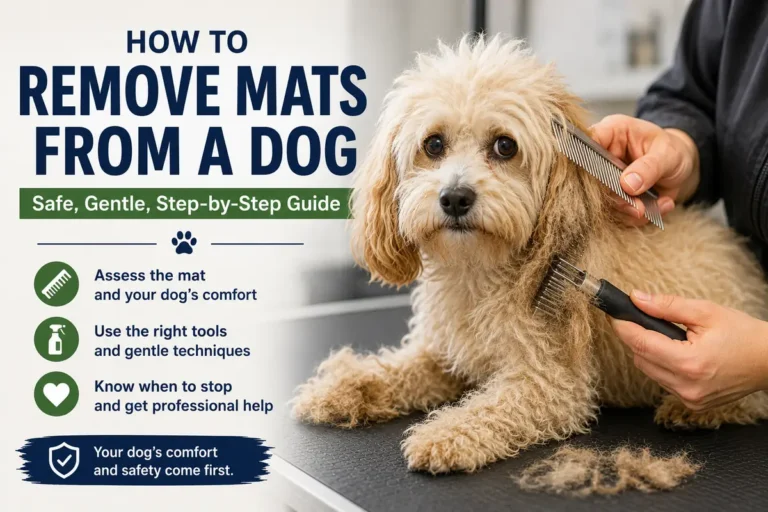
Small tangles are much easier to manage before they become tight mats.
Check commonly neglected areas such as:
- Behind the ears
- Around the collar
- Under the legs
- Around the tail
- Between the toes
Never aggressively pull through a tight mat. Dog skin can be injured easily, particularly when a dog suddenly moves.
If the mat is dense, extensive, painful, or close to the skin, professional grooming is safer than trying to cut it out yourself.
5. Bathe Your Dog When It Actually Needs a Bath
Bathing should be based on your dog’s coat, lifestyle, activity, and individual needs—not simply an arbitrary calendar date.
Dogs that swim, hike, play outdoors, or get visibly dirty may need bathing sooner than dogs with relatively clean indoor lifestyles.
Use a shampoo formulated specifically for dogs and rinse thoroughly.
Our guide to how to bathe a dog covers the process step by step, while how often should I bathe my dog explains how to think about bathing frequency.
6. Keep Nail Care Consistent
Overgrown nails can become uncomfortable and may affect how a dog walks.
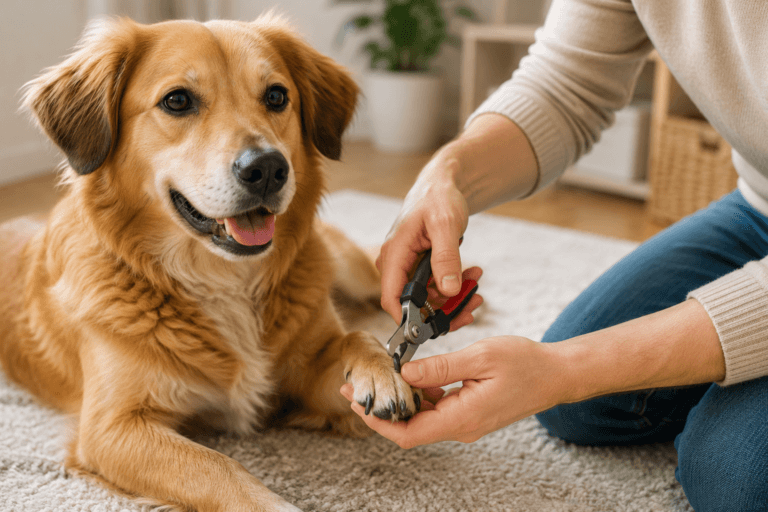
Use dog-specific nail clippers or an appropriate nail grinder, and introduce the process gradually if your dog is nervous.
If you’re unsure where the quick is, particularly with dark nails, ask a veterinarian or professional groomer for guidance before attempting extensive trimming.
For the complete process, see how to trim dog nails.
7. Check Your Dog’s Ears During Grooming
Grooming sessions are a convenient opportunity to look at your dog’s ears.
Watch for changes such as:
- Redness
- Unusual odor
- Excessive discharge
- Swelling
- Obvious irritation
Do not routinely insert cotton swabs or objects deep into the ear canal. If the ear looks painful or abnormal, veterinary advice is more appropriate than trying to diagnose the problem through grooming.
8. Don’t Ignore Dental Grooming
A complete grooming routine should not stop at the coat.
Regular tooth brushing with dog-specific dental products can support oral hygiene. Introduce dental care gradually so your dog becomes comfortable with having its mouth handled.
Never assume human toothpaste is automatically appropriate for dogs.
Dental care is best treated as part of routine maintenance rather than something to address only when bad breath appears.
9. Groom Sensitive Areas Carefully
Paws, ears, eyes, sanitary areas, and other sensitive regions require extra care.
Avoid rushing around these areas, especially with scissors or clippers.
If your dog moves suddenly, even a small grooming tool can cause an injury. Use appropriate equipment, good lighting, and a calm environment.
If you’re uncomfortable trimming sensitive areas, leave that work to a qualified groomer.
10. Make Grooming a Positive Experience

One of the most important dog grooming tips has nothing to do with equipment.
Your dog needs to learn that grooming is safe.
Start with short sessions:
- Let your dog see and smell the brush.
- Touch the body gently.
- Reward calm behavior.
- Brush a small area.
- Stop before your dog becomes overwhelmed.
- Gradually increase the duration.
Rewards and calm handling can help create a better association with grooming.
Do not force a frightened dog through a long grooming session simply to finish the job.
11. Watch for Skin and Coat Changes
Grooming gives you a useful opportunity to inspect your dog’s body.
As you brush or bathe your dog, pay attention to changes such as:
- New lumps
- Red or irritated areas
- Bald patches
- Persistent itching
- Unusual odor
- Excessive flaking
- Sudden changes in shedding
Grooming itself does not diagnose these conditions. If something looks unusual or persists, speak with your veterinarian.
12. Adjust Grooming for Shedding
Shedding can vary significantly between dogs and throughout the year.
Instead of trying to eliminate shedding completely, use a suitable brushing routine to manage loose hair.
A coat-appropriate brush can make a noticeable difference, but excessive brushing or aggressive deshedding can be counterproductive.
If shedding suddenly becomes dramatically different from your dog’s normal pattern, consider discussing the change with your veterinarian.
13. Keep Grooming Equipment Clean
Dirty grooming tools can collect hair, skin debris, product residue, and moisture.
After grooming:
- Remove trapped hair
- Clean brushes and combs
- Wash reusable tools appropriately
- Allow equipment to dry completely
- Store everything in a clean, dry location
Clean equipment is especially important when multiple pets share grooming supplies.
14. Don’t Try to Do a Professional Haircut Without Experience
There is a major difference between maintaining a coat and performing a complicated haircut.
If your dog’s coat requires a specific style, extensive trimming, or detailed work around the face and feet, professional grooming may be the safer option.
Clippers and scissors can cause serious injuries when used incorrectly.
Home grooming should focus on what you can perform confidently and safely.
15. Know When Professional Grooming Is the Better Choice
The best dog grooming tips include knowing when not to DIY.
Consider professional grooming when your dog:
- Has severe or widespread matting
- Needs a complicated haircut
- Becomes extremely anxious during grooming
- Is difficult to safely restrain
- Has skin abnormalities
- Has painful areas
- Requires specialized coat maintenance
Professional grooming can also be valuable for owners who want regular maintenance without handling every aspect of grooming themselves.
Dog Grooming Tips for Different Coat Types
Short-Haired Dogs
Short coats generally require less brushing, but routine brushing can still remove loose hair and give you an opportunity to inspect the skin.
A rubber grooming brush or suitable bristle brush may be enough for some short-coated dogs.
Long-Haired Dogs
Long coats usually require more frequent brushing and closer monitoring for tangles.
A combination of a suitable brush and metal comb may be useful, especially around areas where mats commonly form.
Double-Coated Dogs
Double-coated dogs can shed heavily, particularly during seasonal changes.
Avoid automatically shaving a double coat simply because the dog is shedding. Coat maintenance should be based on the individual dog and breed, with professional guidance when needed.
Dog Grooming Tips for Home: A Simple Routine
If you want to keep home grooming manageable, use a repeatable routine.
Daily:
Quick visual check, remove obvious debris, and monitor anything unusual.
Several times per week:
Brush according to your dog’s coat and shedding level.
As needed:
Bathe when your dog becomes dirty or its coat requires cleaning.
Regularly:
Check and trim nails as needed, maintain dental care, and inspect ears and paws.
Periodically:
Schedule professional grooming when your dog’s coat, haircut, or behavior makes DIY grooming impractical.
The exact schedule should always be adjusted to your dog rather than treated as a universal rule.
When Should You Call a Professional Groomer?
Home grooming works well for routine maintenance, but professional help can save time and reduce risk when a job becomes complicated.
A professional groomer may be especially useful for:
- Breed-specific haircuts
- Heavy shedding
- Severe matting
- Difficult nail trimming
- Sanitary trims
- Dogs that require specialized equipment
- Owners who cannot safely complete grooming at home
If you are considering professional care, our professional dog grooming resources can help you understand when a salon appointment makes sense.
Frequently Asked Questions About Dog Grooming Tips
How often should I groom my dog?
It depends on the dog’s coat, lifestyle, shedding level, and grooming needs. Short coats generally require less maintenance, while long or dense coats usually need more frequent brushing.
What are the most important dog grooming tips for beginners?
Start slowly, choose coat-appropriate tools, keep nails under control, bathe with dog-safe products, brush consistently, and stop when your dog becomes distressed. Do not attempt complicated grooming procedures before learning how to perform them safely.
Can I groom my dog completely at home?
Many owners can handle basic brushing, bathing, nail care, and routine maintenance at home. Complicated haircuts, severe matting, and difficult grooming situations may require professional help.
How can I make grooming easier for my dog?
Keep sessions short, introduce tools gradually, reward calm behavior, and avoid forcing your dog through a stressful session. Consistency usually works better than occasional long grooming sessions.
Should I groom my dog before or after a bath?
For many coats, brushing before bathing can help remove loose hair and surface tangles. After bathing, make sure the coat is thoroughly dried using a method appropriate for your dog.
Final Takeaway
The best dog grooming tips are the ones that turn grooming from an occasional chore into a safe, predictable routine. Brush according to the coat, bathe when needed, maintain nails and dental care, inspect the skin and ears, keep tools clean, and recognize when professional grooming is the safer choice.
You do not need an enormous collection of equipment or a complicated routine. The right tools, consistent maintenance, and careful handling can go much further than simply grooming more often.