Dog Dandruff: Causes, Grooming Fixes & When to Worry
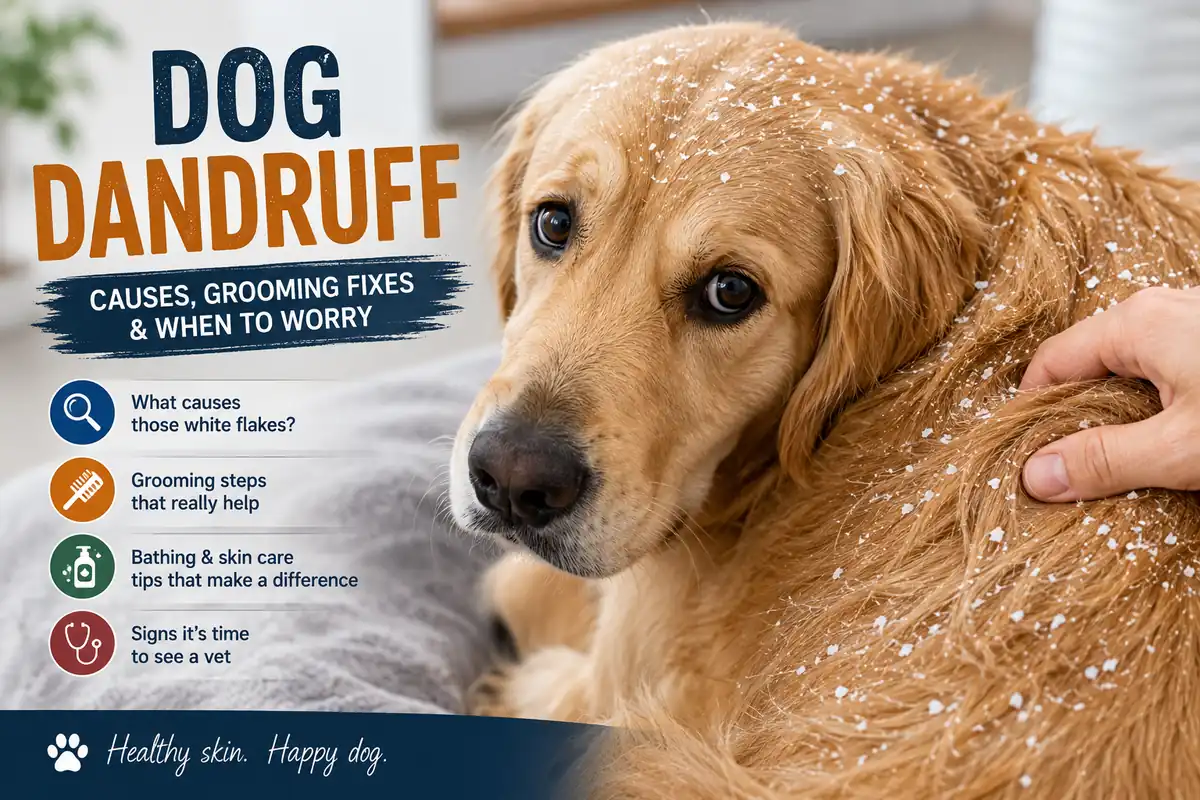
Dog dandruff usually appears as visible white or gray flakes on the coat, but the flakes are a symptom—not a diagnosis. Mild flaking can happen with dry skin or environmental changes, while persistent dandruff, itching, odor, redness, hair loss, or greasy skin can point to allergies, parasites, infection, seborrhea, or another underlying problem.
If you’ve started noticing flakes on your dog’s back, bedding, brush, or favorite sleeping spot, it’s natural to assume the skin is simply dry. Sometimes that’s true. But dog dandruff can have several causes, and the right response depends on what else is happening with your dog’s skin and coat.
The good news is that most cases can be managed once the underlying cause is identified. The mistake is treating the flakes alone while overlooking the reason they appeared.
What Does Dog Dandruff Look Like?
Dog dandruff usually appears as small flakes of dead skin sitting on the hair or falling onto surfaces where your dog rests.
You may notice:
- White or gray flakes
- Dry-looking skin
- Flaking along the back
- Scale around the tail area
- Greasy or waxy skin
- Itching or scratching
- A dull-looking coat
- Skin odor
- Redness or irritation
Not every flaky coat is the same. Veterinary references describe both dry seborrhea, which produces dry scaling, and oily seborrhea, where the skin and coat can become greasy and develop odor.
That’s why simply buying a stronger shampoo isn’t always the answer.
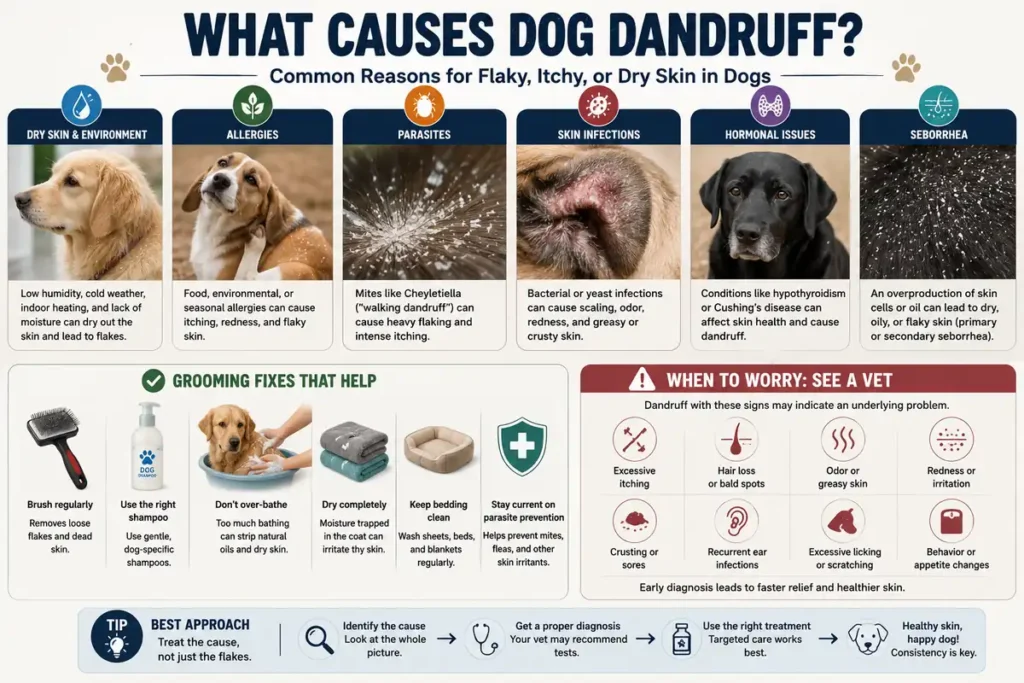
Why Does My Dog Have Dandruff?
There isn’t one universal cause.
Dry air and environmental changes
Low humidity can dry the skin and make flakes more noticeable. Some owners notice the problem more during colder months when indoor heating reduces humidity.
If your dog has mild flakes but otherwise seems completely comfortable, environmental dryness may be part of the picture.
Allergies
Allergies can affect a dog’s skin and may contribute to scaling and dandruff.
Look for other clues such as:
- Frequent scratching
- Paw licking
- Recurrent ear problems
- Red skin
- Seasonal flare-ups
- Repeated skin irritation
Merck Veterinary Manual identifies allergies as one of the important underlying causes of secondary seborrhea.
Parasites
Some parasites can create severe flaking that looks surprisingly similar to ordinary dandruff.
One example is Cheyletiella, commonly called “walking dandruff.” These mites can produce heavy scaling and itching.
If you think the flakes are actually moving, don’t experiment with home remedies. Have your dog examined.
Skin infections
Bacterial and yeast-related skin problems can produce scaling, inflammation, odor, itching, and changes in the coat. Secondary infections are particularly important in dogs with underlying skin disease.
Hormonal or internal disease
Persistent skin changes can sometimes accompany conditions such as hypothyroidism or Cushing disease.
For example, Merck notes that hypothyroidism can cause dry, scaly skin, hair loss, and coat changes.
This doesn’t mean dandruff automatically indicates a serious illness. It means persistent or unusual flaking shouldn’t always be dismissed as dry skin.
Seborrhea
Seborrhea is a skin disorder involving abnormal scaling and, in some dogs, excessive oiliness.
Primary seborrhea is uncommon. Merck notes that secondary seborrhea is much more common and is usually associated with another underlying problem.
That distinction matters because treating the visible flakes without addressing the underlying cause may only provide temporary improvement.
How to Tell if Your Dog’s Dandruff Is Mild or Concerning
A few occasional flakes aren’t necessarily an emergency.
The bigger question is:
What else is happening?
More reassuring signs
Your dog:
- Isn’t excessively itchy
- Has no obvious redness
- Has no unusual odor
- Has no bald patches
- Is eating and behaving normally
- Has only mild, occasional flaking
In this situation, review your grooming routine and environment first.
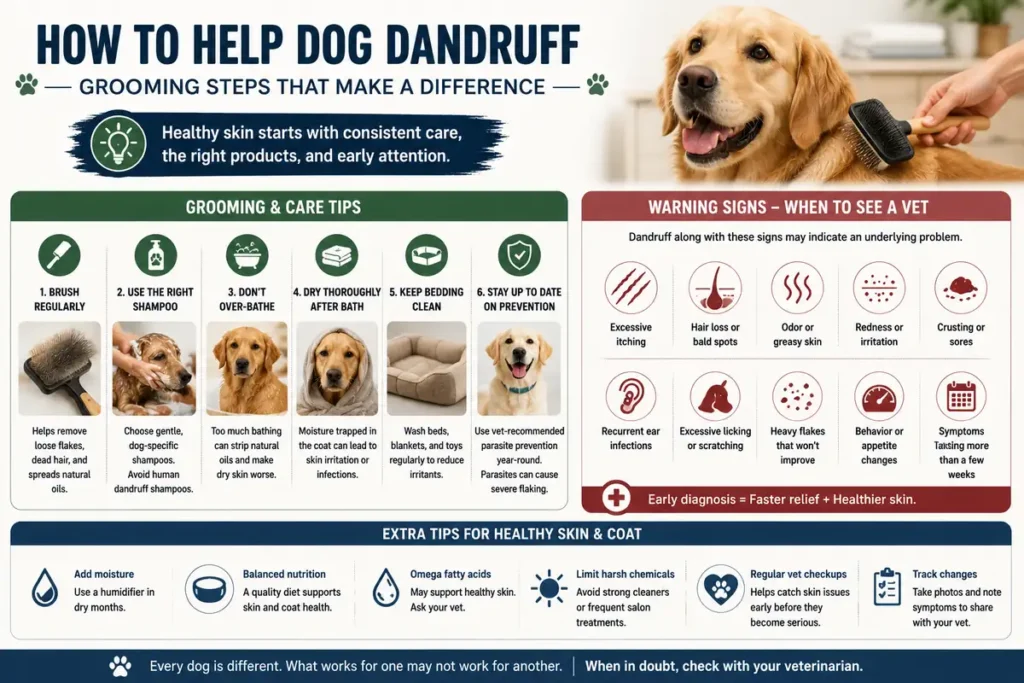
Signs that deserve a veterinary check
Make an appointment if dandruff is accompanied by:
- Persistent itching
- Significant redness
- Hair loss
- Strong or unusual odor
- Greasy skin
- Crusting
- Sores
- Repeated ear infections
- Excessive licking
- Rapidly worsening flakes
- Changes in appetite, weight, or behavior
PetMD and veterinary sources recommend veterinary evaluation when dandruff occurs alongside significant itching, hair loss, skin irritation, or other changes.
Can Grooming Help Dog Dandruff?
Yes, regular grooming can help manage loose skin flakes and dead hair—but grooming isn’t a cure for every cause of dandruff.
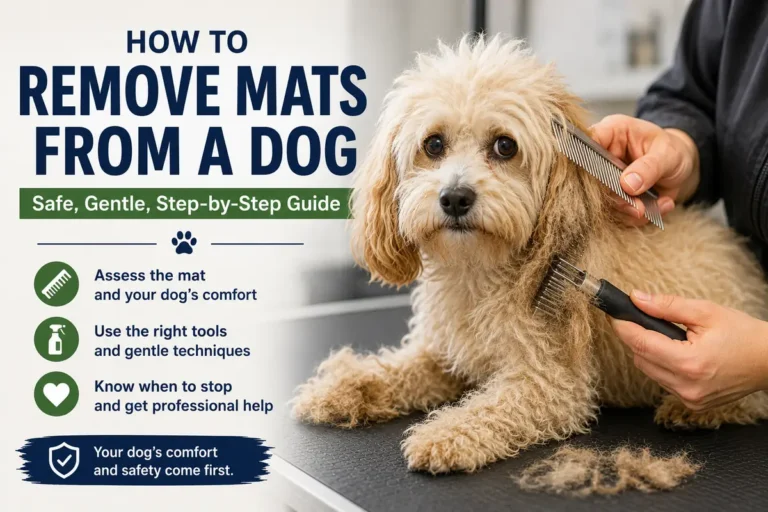
Gentle brushing can remove loose material from the coat and help you notice changes in the skin earlier.
For a dog with mild flaking:
- Use a brush appropriate for the coat.
- Brush gently rather than scraping the skin.
- Check the skin underneath the coat.
- Pay attention to areas with redness or irritation.
- Keep the brush clean.
- Stop if brushing seems painful.
Regular grooming is especially useful because you’re not simply removing flakes—you are getting a closer look at what is happening underneath them.
Could Bathing Make Dog Dandruff Worse?
It can, particularly if you’re bathing too frequently or using an inappropriate product.
Human shampoos aren’t formulated for dogs, and veterinary sources specifically advise against using human anti-dandruff products on dogs without veterinary direction.
For a dog with mild dry skin, a gentle dog-specific shampoo may be appropriate.
But if your dog has persistent scaling, greasy skin, odor, itching, or infection, don’t keep changing shampoos until something works.
Your veterinarian may recommend a medicated product based on what is actually causing the skin problem. Merck notes that medicated shampoos can be used for conditions such as seborrhea and secondary infections, but the appropriate formulation depends on the individual dog’s skin and coat.
What Shampoo Should You Use for a Dog With Dandruff?
There’s no single best dandruff shampoo for every dog.
That’s because dandruff isn’t one disease.
A dog with mild dry skin may need a gentle, moisturizing approach, while another dog with bacterial or yeast overgrowth may need a veterinarian-selected medicated shampoo.
For example, veterinary dermatology references describe different topical ingredients for different skin conditions, including moisturizing, keratolytic, antibacterial, and antifungal products.
So don’t choose a medicated shampoo simply because its label says “dandruff.”
Choose the treatment based on the cause.
What About Coconut Oil for Dog Dandruff?
You’ll see coconut oil recommended online for dry skin, but it shouldn’t be treated as a universal dandruff solution.
If the underlying problem involves yeast, allergies, parasites, or another skin disorder, adding an oil isn’t going to fix the cause.
And if your dog has persistent dandruff, the more useful question is not:
“What can I put on the flakes?”
It’s:
“Why is my dog producing so many flakes?”
That shift in thinking can prevent weeks of trying random home remedies.
Does Diet Cause Dog Dandruff?
Nutrition can affect skin and coat health, but don’t assume that dandruff automatically means your dog needs a supplement.
A balanced, appropriate diet is important for healthy skin. However, adding fatty-acid supplements or changing the diet should be discussed with your veterinarian, particularly if your dog has ongoing skin problems.
If the flaking is persistent, a proper evaluation is more useful than randomly adding supplements.
How to Reduce Dandruff Through Better Grooming
If your veterinarian has ruled out an underlying medical problem, basic grooming can help keep the coat cleaner and easier to monitor.
Brush regularly
Choose a brush suitable for your dog’s coat and use gentle strokes.
Don’t over-bathe
Too much bathing can contribute to skin irritation or dryness in some dogs.
Dry the coat properly
Don’t leave a thick coat damp for long periods.
Keep bedding clean
Wash your dog’s bedding regularly, especially if flakes are accumulating heavily.
Check the skin
During grooming, look for redness, odor, bumps, hair loss, or crusting.
Keep parasite prevention current
Parasites can mimic ordinary skin problems, so prevention is an important part of overall skin care.
When Should You Take Your Dog to the Vet?
The simplest rule is:
If the dandruff keeps coming back, is getting worse, or comes with other symptoms, get the cause checked.
Your veterinarian may examine the skin and coat closely and, depending on the signs, recommend tests such as skin scrapings, cytology, parasite checks, cultures, blood testing, or other diagnostics.
This is particularly important when dandruff appears alongside itching, hair loss, odor, redness, crusting, or recurrent infections.
The goal isn’t simply to confirm that your dog has dandruff.
The goal is to find what is causing it.
Frequently Asked Questions
A small amount of skin shedding is normal, but obvious or persistent flakes can indicate dry skin, allergies, parasites, infection, seborrhea, or another issue
Some forms of seborrhea can cause scaling without significant itching. However, lack of itching doesn’t identify the cause by itself. Merck notes that primary seborrhea is typically non-itchy, while secondary causes can vary.
Dry indoor air and lower humidity can contribute to dry, flaky skin. If the problem is persistent or accompanied by itching or other skin changes, don’t automatically blame the weather.
Don’t use human dandruff shampoo unless your veterinarian specifically recommends it. Dog skin and human skin have different needs, and veterinary sources advise using dog-appropriate products.
Gentle, regular brushing can remove loose flakes and dead hair and help distribute the dog’s natural oils through the coat. But brushing won’t resolve dandruff caused by allergies, parasites, infections, or other medical conditions
Yes. Cheyletiella mites can cause heavy scaling known as “walking dandruff.” Veterinary examination is needed to distinguish this from ordinary dry skin.
Ordinary dry skin or seborrhea isn’t necessarily contagious, but some causes of heavy scaling—particularly certain parasites—can spread between animals. If you suspect mites or another contagious skin condition, contact your veterinarian
There isn’t one universal treatment. The fastest effective approach is to identify the cause and treat it appropriately rather than repeatedly changing grooming products. Persistent dandruff may require veterinary diagnosis and targeted treatment.
The Bottom Line
Dog dandruff is worth paying attention to, but it isn’t automatically a reason to panic.
If your dog has a few flakes and otherwise looks and acts normally, gentle grooming, sensible bathing, good coat care, and a healthy environment may be enough to manage mild dryness.
But if the flakes are persistent—or you also notice itching, redness, odor, greasy skin, hair loss, crusting, or behavior changes—don’t keep treating the flakes as a cosmetic problem.
Dandruff can be the visible clue to an underlying skin or health issue. Finding the cause is what makes long-term improvement possible.