Why Is My Dog Itching After Grooming? 7 Possible Reasons and What to Do
If your dog starts itching after grooming, the most likely explanations include skin irritation from close clipping, grooming products, or the bathing process—but itching can also reveal an allergy, infection, parasite problem, or another skin condition. The important clues are when the itching started, where it is happening, and whether your dog’s skin is becoming red, sore, swollen, or damaged.
You bring your dog home clean, fluffy, and freshly trimmed. Then the scratching starts.
Maybe it’s occasional. Maybe your dog keeps licking one spot. Or perhaps your dog is suddenly rubbing against the carpet, chewing at its legs, or acting too uncomfortable to settle down.
It can be hard to tell whether this is a normal reaction to grooming or a sign that something is wrong.
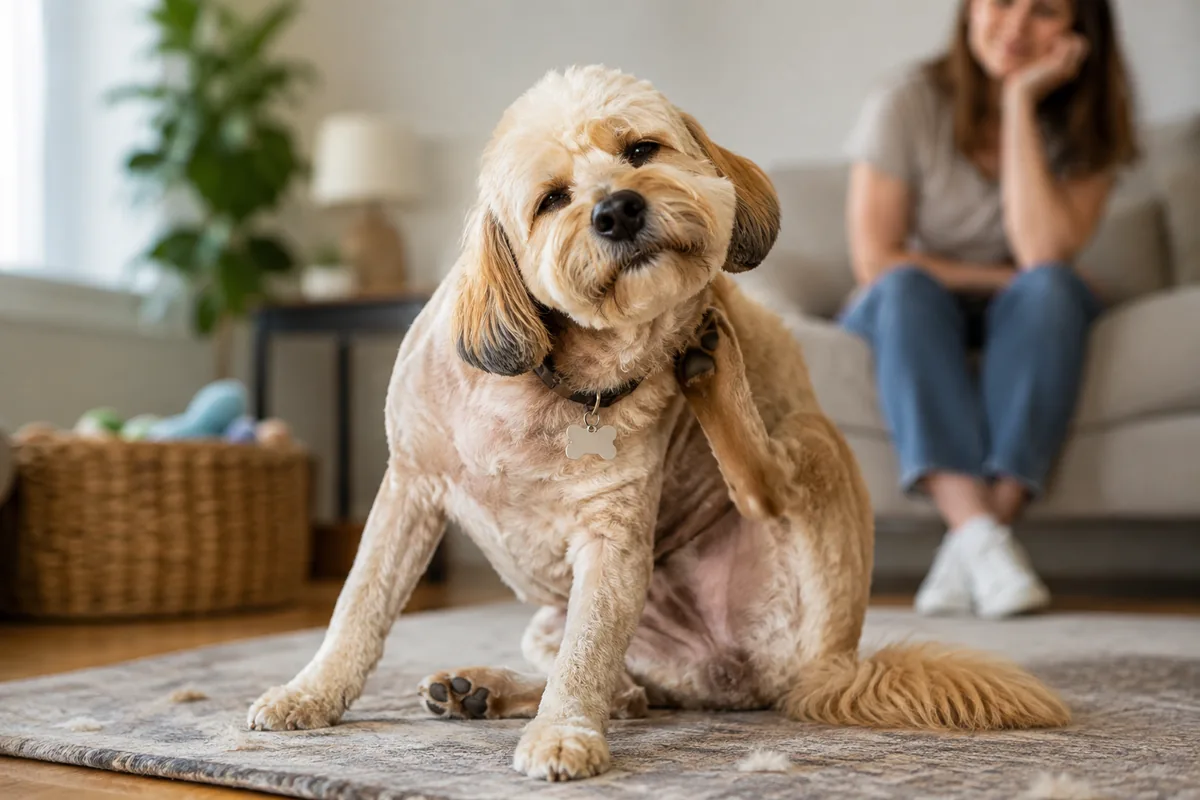
The timing matters, but it doesn’t tell the whole story. A grooming appointment can irritate already-sensitive skin, introduce a new product, expose skin that was hidden under a thick coat, or simply make an existing problem much easier to notice.
Here’s how to sort through the possibilities without jumping straight to a diagnosis.
Why Is My Dog Itching After Grooming?
A dog may itch after grooming because the skin was irritated during clipping, bathing, brushing, drying, or another part of the appointment. Product sensitivity and residue are also possible. In some cases, however, the grooming session isn’t actually the underlying cause.
Veterinary sources describe itching, or pruritus, as a sign rather than a diagnosis. Allergies, parasites, bacterial or yeast infections, and other skin disorders can all make a dog itchy.
That’s why a dog scratching after a haircut shouldn’t automatically be labeled as “clipper burn.”
The useful question is:
What changed during the grooming appointment, and what does the skin look like now?
7 Reasons Your Dog May Be Itching After Grooming

1. The coat was clipped very close
A very short haircut can irritate sensitive skin.
This is especially worth considering when the itching is concentrated around areas that were shaved or clipped closely. Petco’s veterinary Q&A material describes clipper irritation, sometimes called “clipper burn,” as one possible cause of itching and redness after grooming. It is not necessarily a literal burn; the comparison is closer to irritation that can happen after shaving sensitive skin.
You might notice:
- Redness along clipped areas
- Scratching shortly after coming home
- Licking one particular area
- Small irritated patches
- More sensitivity where the coat was shortened
If your dog repeatedly reacts after very close haircuts, tell the groomer before the next appointment. The blade length and grooming approach may need to be reconsidered.
2. A shampoo, conditioner, or grooming spray irritated the skin
Grooming involves more products than just shampoo.
Depending on the salon, your dog may encounter conditioner, fragrance, finishing sprays, cleaning products, ear products, or other substances.
A reaction can be difficult to identify if several products were used during the same appointment.
Petco veterinary answers include shampoo, fragrance, and other grooming products among possible explanations when itching begins soon after a grooming visit.
If this happens, ask the groomer exactly what products were used. Keep a note of them, especially if your dog has the same reaction after another appointment.
3. Product residue was left on the coat or skin
A dog’s skin can also become irritated if bathing products aren’t thoroughly rinsed.
That doesn’t necessarily mean the groomer did anything wrong. Dense coats can make rinsing more difficult, and individual dogs have different levels of skin sensitivity.
The American Kennel Club recommends choosing products appropriate for dogs and notes that shampoo should be thoroughly rinsed from the coat.
If the itching started immediately after a bath and there are no other obvious signs, product exposure is one possibility worth discussing with your groomer or veterinarian.
4. Removing mats exposed irritated skin
Matted fur can hide the skin underneath.
When serious tangles are removed, you may suddenly see redness, scaling, small sores, or areas that were already irritated.
The grooming session may therefore appear to have caused the problem when it actually revealed something that had been developing underneath the coat.
This is particularly important when a dog arrives heavily matted and comes home with a much shorter haircut.
If substantial mats were removed, ask the groomer whether they noticed anything unusual underneath them.
5. Your dog already had an itchy skin problem
Sometimes the timing is misleading.
A dog may have allergies, parasites, an infection, or another dermatological problem before the appointment. Once the thick coat is shortened, the owner may simply notice the skin problem for the first time.
Merck Veterinary Manual lists parasites, allergies, and infections among important causes of canine itching.
This is one reason persistent itching deserves more attention than a brief episode of scratching immediately after grooming.
6. The skin became dry or irritated during the grooming process
Bathing, brushing, clipping, and drying can all affect the skin.
Some dogs tolerate the process without any problem. Others have more sensitive skin and may react to changes in their usual routine.
Petco’s veterinary guidance notes that some dogs may become itchy when their skin becomes dry following grooming.
If your dog has a history of dry or sensitive skin, tell the groomer before the appointment so the grooming routine can be adjusted appropriately.
7. The itching isn’t really caused by grooming
This is the possibility owners sometimes overlook.
A dog can leave the groomer and start scratching for reasons that have nothing to do with the haircut or bath.
Fleas, allergies, mites, yeast or bacterial infections, and other skin conditions can all cause itching.
If the itching continues, gets worse, keeps returning, or starts damaging the skin, don’t keep changing grooming products and hoping one will solve it.
At that point, finding the actual cause matters more than finding another soothing product.
How to Tell If It’s Mild Irritation or Something More Serious
Look at the skin, not just the scratching.
A dog that scratches occasionally but is otherwise comfortable is different from a dog that can’t stop scratching, chewing, or licking.
| What you notice | What it may mean |
|---|---|
| Occasional scratching | Mild irritation may be possible |
| Itching concentrated around clipped areas | Grooming-related irritation is possible |
| Redness that is fading | May be temporary irritation |
| Constant scratching or licking | Needs closer attention |
| Raw or bleeding skin | Veterinary evaluation is warranted |
| Swelling, discharge, crusting, or odor | Possible skin complication |
| Itching that keeps getting worse | Don’t assume it is simply the haircut |
This isn’t a diagnostic chart. Similar-looking skin problems can have very different causes.
The important point is that worsening or self-damaging itching deserves more attention than a few occasional scratches.
What Should You Do If Your Dog Is Itchy After Grooming?
Start with observation rather than immediately applying several different products.
Check where your dog is itching
Look at the neck, back, belly, legs, armpits, groin, ears, and any areas that were clipped closely.
You’re looking for changes such as:
- Redness
- Bumps
- Scratches
- Hair loss
- Scabs
- Moist or raw skin
- Swelling
- Unusual odor
- Discharge
Take clear photos if you see something unusual. A photo taken soon after the appointment can also be useful if the skin changes later.
Ask the groomer what changed
Find out:
- What shampoo was used?
- Was conditioner used?
- Was a fragrance or finishing spray applied?
- How short was the haircut?
- Were mats removed?
- Was anything unusual noticed on the skin?
That information can help narrow down what happened.
Don’t keep experimenting with home treatments
This is where well-meaning advice can become counterproductive.
Putting several creams, shampoos, oils, powders, or human medications on irritated skin can make the situation harder to evaluate and may not be appropriate for dogs.
If the itching is significant, speak with your veterinarian about what treatment is suitable for your dog rather than assuming the cause.

When Should You Call the Vet?
Call your veterinarian if the itching is severe, persistent, getting worse, or causing skin damage.
Veterinary attention is especially important if you notice:
- Bleeding or open skin
- Significant swelling
- Pus or discharge
- Yellow crusting
- Strong or unusual odor
- Extensive redness
- Hair loss
- Pain when the area is touched
- Repeated episodes after grooming
- A dog that cannot settle because of itching
Petco’s veterinary Q&A material also advises veterinary evaluation when redness, bald patches, worsening irritation, or other concerning signs develop after grooming.
If your dog develops facial swelling, trouble breathing, collapse, or rapidly worsening symptoms, treat that as an emergency and seek urgent veterinary care.
How to Prevent Itching After the Next Grooming Appointment
You don’t necessarily need to stop grooming your dog.
Instead, use the previous reaction as information.
Tell the groomer what happened
Before the next appointment, explain exactly what you noticed and how soon it started.
“His skin was irritated after the last grooming” is useful.
“Please don’t use the same shampoo” is even more useful if you know which product was involved.
Keep a grooming-product record
If your dog has sensitive skin, keep the names of products used at each appointment.
If your dog reacts again, you’ll have a better comparison instead of trying to remember what happened several weeks earlier.
Discuss the haircut length
If your dog consistently becomes irritated after very close clipping, ask whether a slightly different length or grooming approach would be appropriate.
Keep the coat manageable between appointments
Regular brushing can help prevent severe matting and gives you an opportunity to notice skin changes while they’re still easy to see.
Don’t ignore recurring itching
If the same problem happens after multiple grooming appointments, don’t simply assume your dog is “sensitive to grooming.”
Repeated itching may point toward an underlying skin issue that deserves veterinary attention.
Frequently Asked Questions
Is it normal for a dog to itch after grooming?
Some mild, temporary itching can happen after grooming, particularly when the skin has been clipped closely or exposed to bathing and grooming products. Persistent, severe, worsening, or skin-damaging itching should not simply be dismissed as normal.
Why is my dog itching after a haircut?
A close haircut can irritate sensitive skin, but allergies, product reactions, parasites, infections, or a pre-existing skin condition can also cause itching. The timing of the haircut alone cannot identify the cause.
How long should a dog itch after grooming?
There isn’t one reliable time limit for every dog because the cause matters. Mild irritation may settle, while itching caused by an allergy, infection, parasite, or other skin problem can continue until the underlying issue is addressed.
Can dog shampoo make a dog itchy?
Yes. A dog may react to an ingredient in a grooming product, or the skin may become irritated if product remains on the coat. If your dog reacts after a particular product is used, tell the groomer and veterinarian.
Should I bathe my dog again if he is itchy after grooming?
Not automatically. Another bath may help in some situations but may worsen irritation in others. If your dog is significantly itchy, ask your veterinarian what makes sense before repeatedly bathing the skin.
Is clipper burn actually a burn?
Not necessarily. “Clipper burn” is a common term for irritation associated with close clipping. Petco’s veterinary guidance describes it more like irritation that can occur when sensitive skin is shaved too closely rather than a literal thermal burn.
The Bottom Line
A dog itching after grooming doesn’t automatically mean the groomer caused a problem. Close clipping, grooming products, residue, mat removal, sensitive skin, and unrelated skin conditions can all be part of the picture.
Pay attention to the timing, check the skin, talk with the groomer about what was used, and don’t keep experimenting with treatments if the problem is getting worse.
And if your dog is intensely itchy, develops damaged or infected-looking skin, or simply isn’t getting better, a veterinarian is the right person to determine why.